
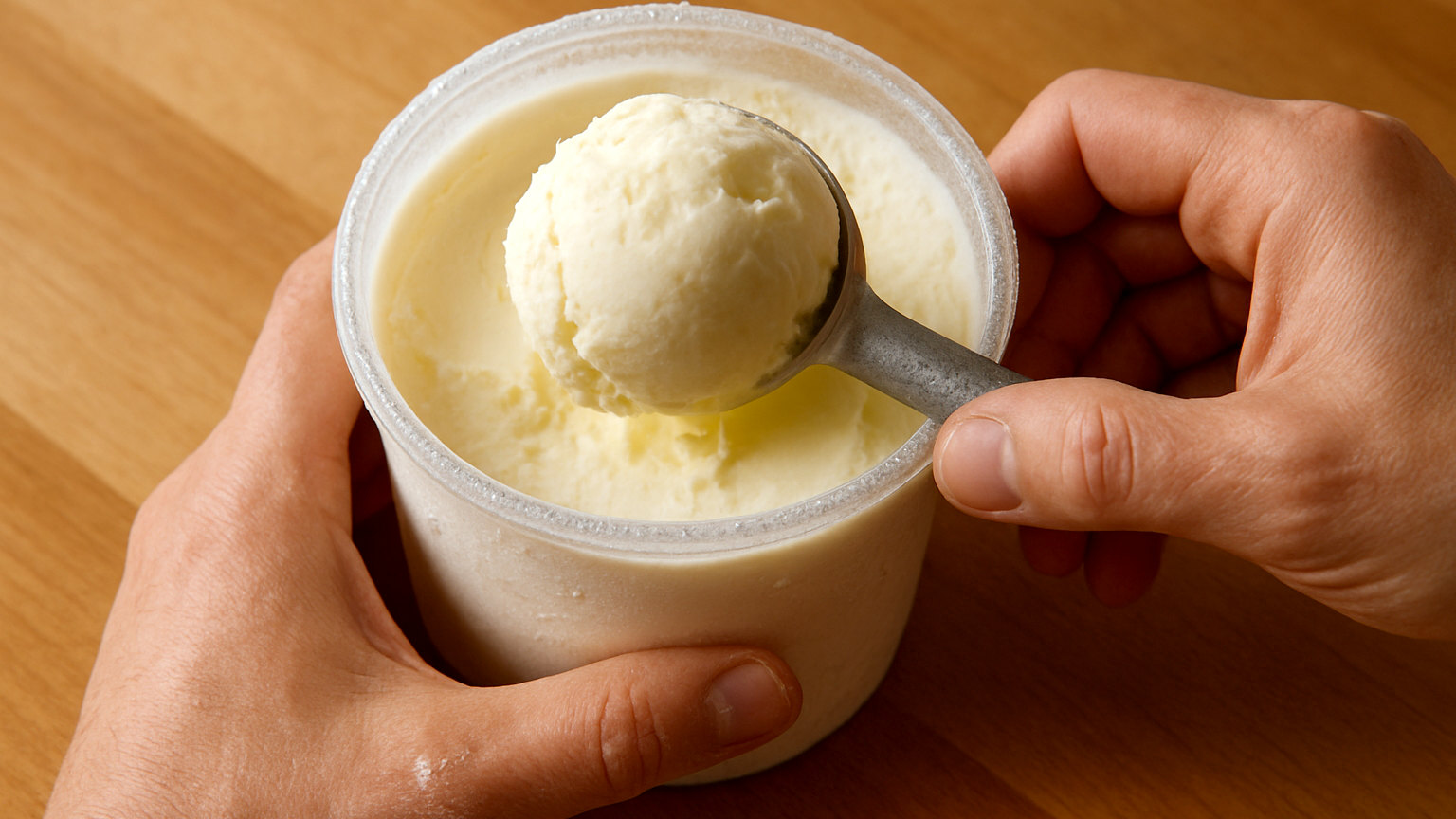
You do not need an ice cream maker to make good ice cream, but you do need to solve the problem the machine exists to solve: stopping large ice crystals forming as the mixture freezes. There are three practical ways to do it at home, and which you choose depends on how much attention you want to give it.
Why does an ice cream machine matter?
A machine freezes the mixture while constantly stirring, so ice crystals stay microscopically small and the texture is smooth. It also beats in air, which lightens it. Left to freeze undisturbed, the same mixture forms large crystals and becomes a solid, grainy block. Every method below is a way around that.
Method one: the whisking method
- Make and chill a custard base as normal.
- Pour it into a shallow metal container, which conducts cold faster than plastic.
- Freeze for 45 minutes, until the edges are setting.
- Whisk hard with an electric whisk or a fork, breaking up all the ice crystals.
- Repeat every 30 minutes for the next three hours, four or five times in total.
- Freeze for a final two hours before serving.
Whisk while the mixture is still slushy: once it has frozen solid at the edges, the crystals are already too large to break down properly and the texture will be grainy.
Method two: the no-churn base
Fold 600ml of whipped double cream into a 397g tin of condensed milk with your chosen flavouring and freeze without stirring at all. This works because condensed milk contains so much sugar and so little free water that few ice crystals can form, and the whipped cream provides the air a machine would add. It is by far the easiest method.
Method three: the food processor trick
Freeze the base in ice cube trays until solid, then blitz the cubes in a food processor with a splash of cream until smooth. Serve immediately as soft-scoop, or refreeze for an hour for a firmer texture. It is quick and surprisingly effective, though the ice cream is denser than a churned one.
Which method gives the best texture?
The no-churn base is the smoothest and the easiest, though it is sweeter than a custard ice cream and the flavour is less rich. The whisking method gives the most authentic result if you do it properly, but it demands attention over three hours. The processor method is the quickest but gives the densest texture.
What else helps without a machine?
A tablespoon of vodka or a spoonful of golden syrup in the base lowers the freezing point and keeps the texture softer. Using a shallow metal container speeds the freezing, which means smaller crystals. And making sure the base is thoroughly chilled before it goes into the freezer matters as much as it does with a machine.
Should you buy a machine?
If you make ice cream more than a few times a year, a simple bowl-freeze machine costs relatively little and gives better results with less work. If you make it occasionally, the no-churn method is genuinely good enough and takes ten minutes. A compressor machine is only worth it for regular use.
How long does it keep?
The same as any homemade ice cream: about two months in an airtight container with baking paper pressed onto the surface. Ice cream made without a machine tends to firm up more in storage, so allow ten to fifteen minutes out of the freezer before serving.
Which container should you use?
A shallow metal container, such as a small roasting tin or a loaf tin, conducts cold far faster than plastic, so the mixture freezes more quickly and the crystals stay smaller. Once the ice cream is made, transfer it to a lidded plastic tub for storage.
Can you use these methods for sorbet?
Yes, and the whisking method works particularly well for sorbet, which contains no fat to complicate matters. Whisk every 30 minutes as it freezes. The condensed milk method is not suitable, as sorbet is dairy-free by definition.


