
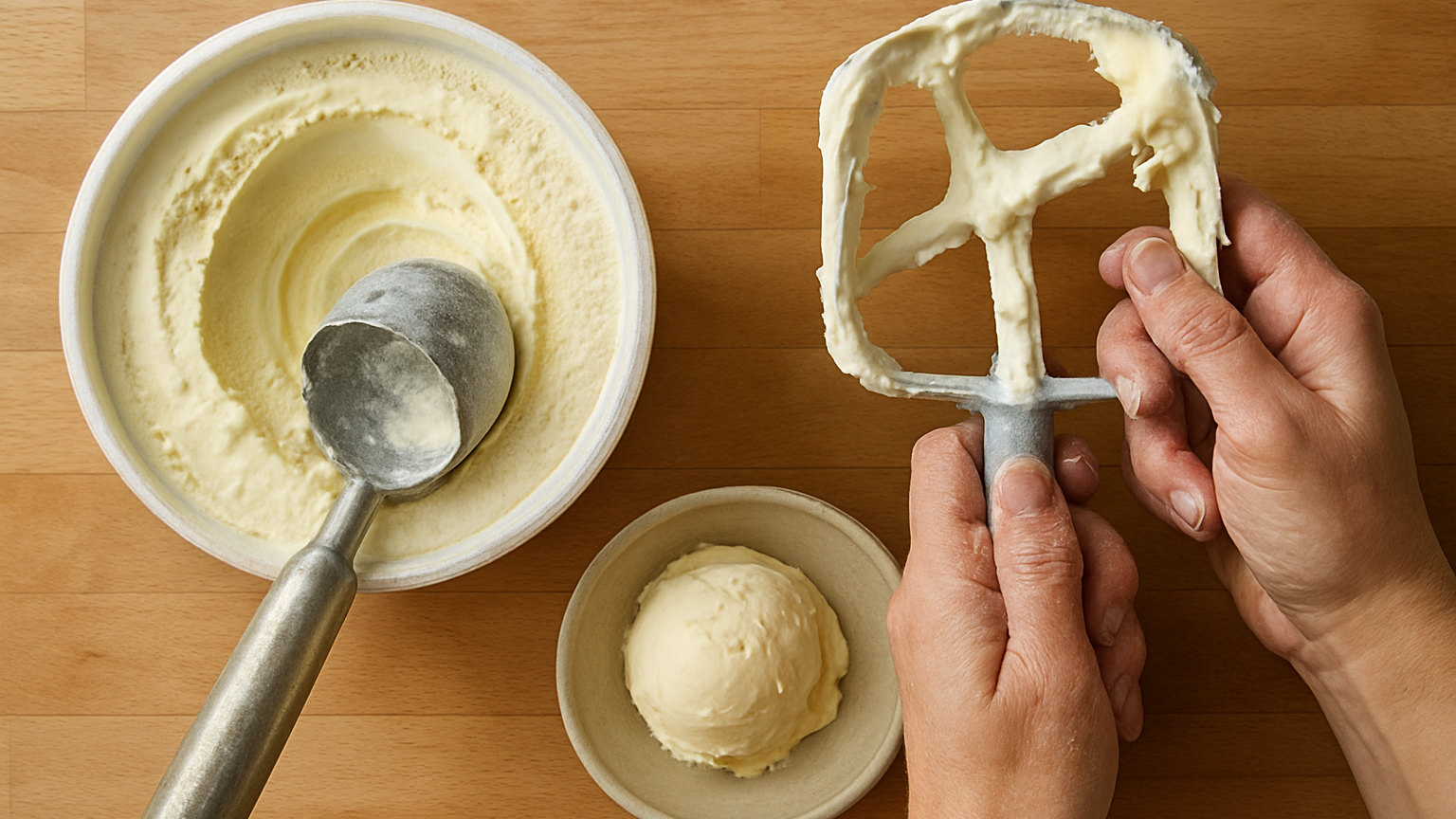
No-churn ice cream is made by folding whipped cream into sweetened condensed milk and freezing it. There is no custard to cook, no chilling to wait for and no machine required, and the result is genuinely smooth rather than icy. It takes ten minutes of work, which makes it the recipe worth knowing even if you own an ice cream maker.
Why does it work without churning?
Two reasons. Whipping the cream beats in the air that a machine would normally add, and condensed milk contains so much sugar and so little free water that very few ice crystals can form. Between them, they solve the two problems churning exists to solve, which is why the texture stays soft and scoopable.
What ingredients do you need?
Makes about 1 litre.
- 397g tin condensed milk
- 600ml double cream, well chilled
- 2 tbsp vanilla bean paste or extract
- A pinch of fine salt
How do you make it?
- Whisk the condensed milk with the vanilla and salt in a large bowl until smooth.
- In a separate bowl, whip the very cold double cream to soft peaks. Do not take it further.
- Stir a large spoonful of the cream into the condensed milk to loosen it.
- Fold in the rest of the cream in two additions, gently, until no streaks remain.
- Pour into a shallow freezer container and level the surface.
- Press a piece of baking paper onto the surface and put the lid on.
- Freeze for at least six hours, or overnight.
Stop whipping at soft peaks: over-whipped cream folds in as lumps and gives a grainy, buttery texture that never smooths out in the freezer.
Why must the cream be very cold?
Cold cream whips faster, holds more air and is less likely to split. Take it straight from the fridge, and on a warm day chill the bowl and whisk as well. Cream that has been sitting out will whip eventually but holds noticeably less air, which gives a denser ice cream.
How does it compare with a custard base?
A custard base is richer, with a deeper flavour from the egg yolks, and it has a firmer, more traditional texture. No-churn is sweeter, lighter and softer straight from the freezer. Most people cannot tell the difference once a strong flavour is added, which is why no-churn suits chocolate and caramel particularly well.
Can you make it less sweet?
Only within limits. The sugar in the condensed milk is doing structural work, keeping the mixture soft enough to scoop, so reducing it makes the ice cream hard and icy. Adding something sharp is the better approach: lemon zest, a pinch of salt, or a swirl of tart fruit purée.
What can you add to it?
Almost anything, folded in at the end. Crushed biscuits, chocolate chunks, honeycomb, fruit purée swirled through, chopped fudge, or a ripple of salted caramel. Add up to about 200g in total. Anything wet, such as fruit purée, should be swirled rather than mixed, or it makes the base icy.
Why is it soft straight from the freezer?
The high sugar content lowers the freezing point, so no-churn ice cream never becomes as hard as a custard-based one. This is convenient, since it needs no softening time, but it also means it melts faster in a bowl. Keep it at the back of the freezer where it is coldest.
How long does it keep?
It keeps for two months in an airtight container, and the texture holds up better than custard-based ice cream because of the sugar. Always press baking paper onto the surface to stop ice crystals forming on top.
Can you flavour it?
Yes, and this is where no-churn is at its most useful. Whisk cocoa, coffee, fruit purée, biscuit spread or melted chocolate into the condensed milk before the cream goes in. Because there is no custard to cook, a new flavour takes no longer than the plain version.


