
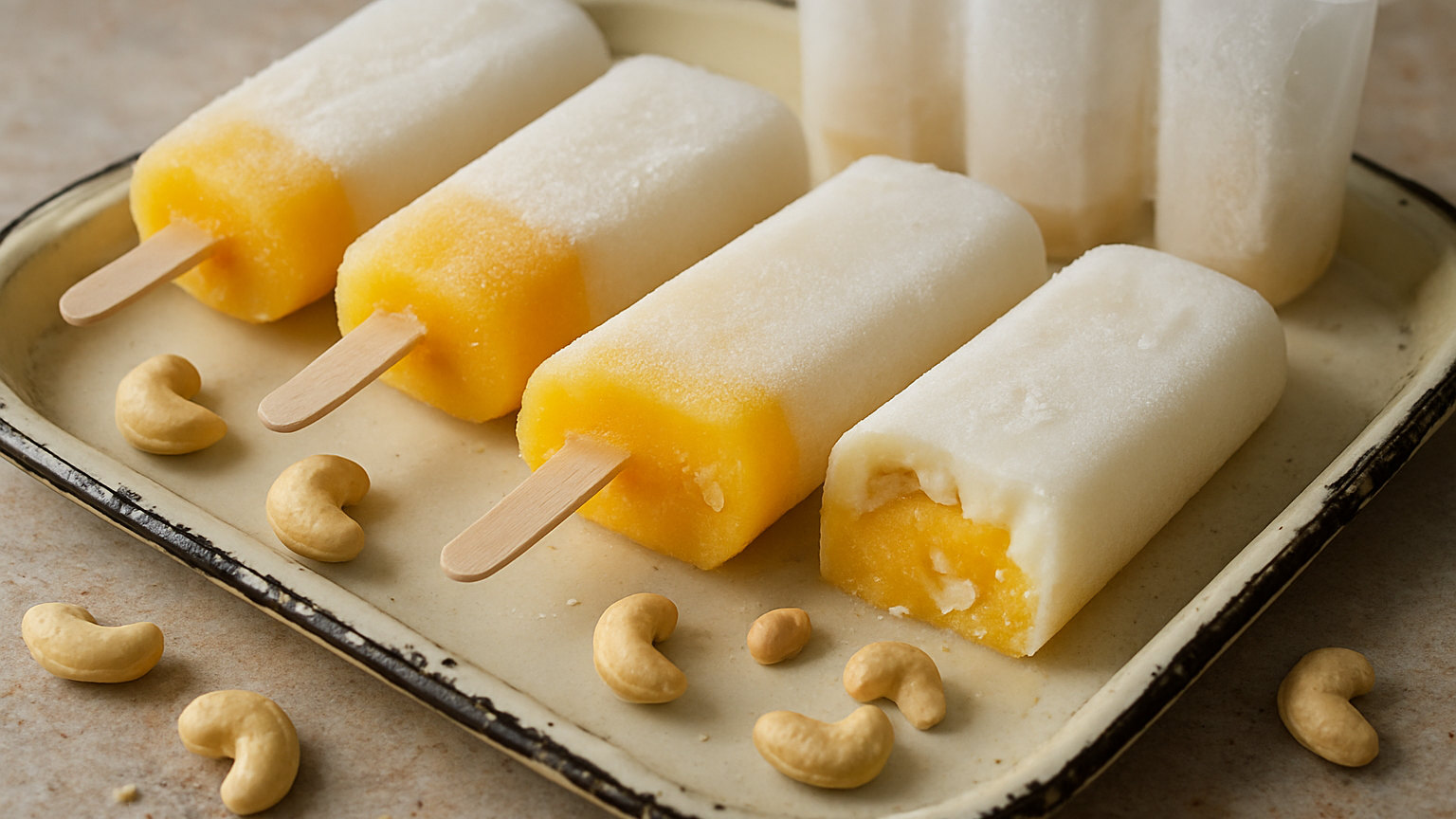
Coconut and mango lollies are creamy rather than icy, dairy-free and naturally vegan. The fat in full-fat coconut milk does the same job that cream does in a dairy lolly, keeping the texture soft, while the mango brings sweetness and the lime keeps it from being cloying. They are among the best lollies you can make.
What do you need?
Makes 6 lollies.
For the coconut layer
- 400ml tin full-fat coconut milk
- 3 tbsp maple syrup
- 1 tsp vanilla extract
- A pinch of fine salt
For the mango layer
- 300g ripe mango flesh
- 2 tbsp maple syrup
- Juice of 1 lime
How do you make them?
- Shake the tin of coconut milk hard before opening, as it separates on standing.
- Whisk the coconut milk with the maple syrup, vanilla and salt until completely smooth.
- Blend the mango with the maple syrup and lime juice, and sieve if it is fibrous.
- Spoon alternate layers of the two mixtures into each mould.
- Push a skewer down through the middle and twist once as you pull it out.
- Tap the moulds to settle the mixture, leave 1cm at the top and insert the sticks.
- Freeze for at least six hours.
Use tinned coconut milk, not the carton kind: cartons of coconut drink are mostly water at around 2% fat, and they freeze into solid ice rather than anything creamy.
Why does the coconut milk need to be full-fat?
Fat interrupts the ice crystals as the lolly freezes, which is what keeps the texture creamy. Full-fat tinned coconut milk is around 17 to 20% fat, comparable to single cream. Reduced-fat versions are mostly water and freeze hard, which defeats the point of using coconut at all.
Why does the tin separate?
Coconut milk naturally separates into a thick layer of cream and a watery layer underneath, particularly if it has been stored somewhere cool. Shaking the tin hard before opening recombines it. If it is stubbornly solid, tip the contents into a bowl and whisk until smooth.
Why add lime?
Mango is very sweet and contains almost no acid, and coconut is rich and mild, so without something sharp the lolly tastes flat and cloying. Lime suits tropical flavours better than lemon. The juice of one lime for 300g of mango is about right, and you will not taste it as lime.
Are they suitable for vegans?
Yes, as written, provided you use maple syrup rather than honey. Coconut milk, mango and lime are all plant-based, which makes these a genuinely useful recipe when you are catering for a mixed group and want something everyone can eat.
Can you use tinned mango?
Yes, and tinned mango purée made from Alphonso mangoes is excellent. It is usually sweetened, so reduce or omit the maple syrup in the mango layer and taste before freezing. Frozen mango chunks also work, thawed and blended, and they are cheaper than fresh out of season.
What else can you add?
Passion fruit pulp stirred into the mango layer is excellent, and toasted desiccated coconut sprinkled into the moulds adds texture. A little finely chopped chilli in the mango is a surprising and very good combination with coconut.
How long do they keep?
They keep for three months in the freezer. Once solid, unmould and store in a sealed bag. Coconut-based lollies hold their texture better than fruit-only ones, so they stay good for longer than most.
Which moulds suit these best?
Silicone moulds release creamy lollies most easily, since a coconut-based lolly is softer than a fruit one and can break if you pull hard. Rigid plastic moulds work too, dipped briefly in warm water first. Wide moulds show the marbled swirl better than narrow ones.
Are they suitable for children?
Yes, and they are a good option, being lower in sugar than most shop-bought lollies and free of dairy and eggs. As with any ice lolly, supervise young children while they eat them, and choose moulds with chunky integrated handles rather than thin wooden sticks.


