
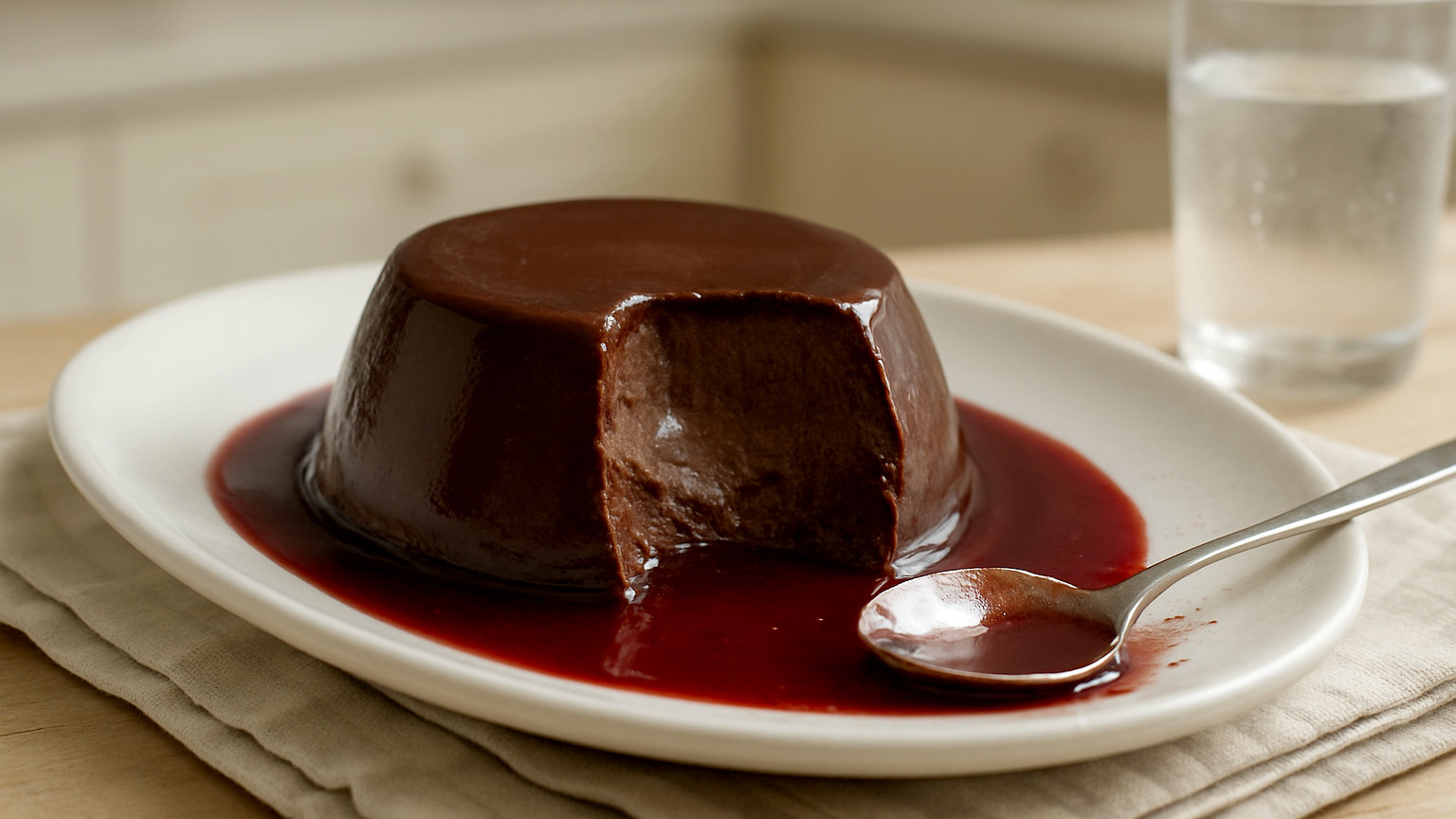
A chocolate panna cotta is cream and milk warmed with dark chocolate and set with a small amount of gelatine. Because the cocoa butter in the chocolate firms as it chills, it does some of the setting itself, which means less gelatine is needed than for a vanilla version. The result should still wobble.
What do you need?
Serves 6.
- 400ml double cream
- 200ml whole milk
- 150g dark chocolate, 60 to 70% cocoa solids, chopped
- 60g caster sugar
- 2 sheets of leaf gelatine
- A pinch of fine salt
- 1 tsp vanilla extract
How do you make it?
- Soak the gelatine leaves in cold water for five minutes, until soft.
- Put the chopped chocolate and salt in a large heatproof bowl.
- Heat the cream, milk and sugar together, stirring, until steaming and the sugar has dissolved. Do not boil.
- Pour over the chocolate and leave for three minutes, then stir gently from the centre until smooth.
- Squeeze the water from the gelatine and stir it in until completely dissolved.
- Stir in the vanilla, then strain into a jug.
- Pour into six 125ml moulds or glasses and chill for at least six hours.
Use two sheets, not three: the cocoa butter sets as it chills and does part of the work, so the usual quantity of gelatine gives something closer to a chocolate jelly.
Why does it need less gelatine?
Dark chocolate is roughly a third cocoa butter, which is solid at fridge temperature. As the panna cotta chills, that fat firms and contributes to the set, so the gelatine only has to do the rest. Using the same quantity as a vanilla panna cotta gives a noticeably rubbery result.
Which chocolate should you use?
Between 60 and 70% cocoa solids. Below 50%, the panna cotta is sweet and sets softly, so you may need an extra half sheet of gelatine. Above 75%, it can turn slightly grainy and the flavour becomes austere against the cream. Chop it finely so it melts evenly.
Why strain it?
Straining catches any specks of unmelted chocolate or undissolved gelatine, both of which show up clearly in something otherwise completely smooth. It takes seconds. Straining into a jug also makes it far easier to pour neatly into small moulds without dribbles down the sides.
Should you reduce the sugar?
Sixty grams is already less than a vanilla panna cotta, since the chocolate brings its own sweetness. You can cut it to 50g with a 60% chocolate, but going much lower makes the dessert taste flat rather than sophisticated. A pinch of salt does more to sharpen it than removing sugar.
What can you flavour it with?
Orange zest infused into the cream is excellent with dark chocolate, as are coffee beans, cardamom, chilli or a tablespoon of rum stirred in at the end. Keep any liquid addition to a tablespoon, since more will loosen the mixture enough to affect the set.
What should you serve with it?
Something sharp: raspberries, a berry coulis, poached cherries or a spoonful of crème fraîche. Flaked sea salt scattered over just before serving works very well. A crisp biscuit gives the contrast in texture that a smooth dessert needs.
How long does it keep?
It keeps for three days in the fridge, covered, and firms very slightly over that time. Take it out 15 minutes before serving, as chocolate tastes muted when fridge cold. It does not freeze, as the cream separates when thawed.
Can you make it with milk chocolate?
Yes, but adjust both the chocolate and the gelatine. Use 200g of milk chocolate, reduce the sugar to 40g since it is already sweeter, and keep the gelatine at two sheets. The result is milder and sweeter, and children usually prefer it.
Why must the cream not boil?
Boiling weakens gelatine above about 85°C, and it also risks scorching the chocolate once the two are combined. Heat the cream only until it steams and small bubbles appear at the edges of the pan, which is more than hot enough to melt chopped chocolate.


