
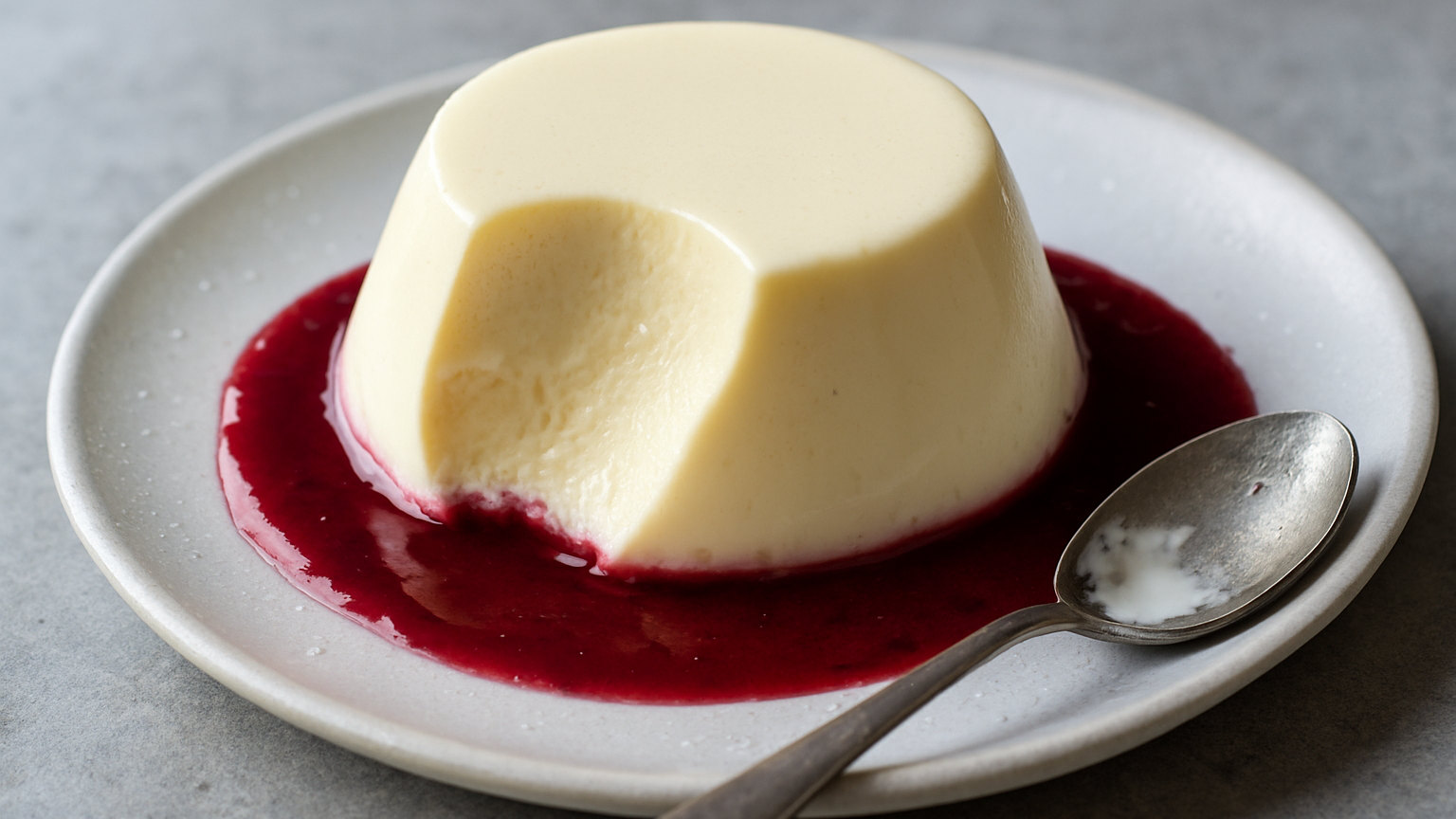
Panna cotta means cooked cream, and it is exactly that: cream and milk warmed with sugar and vanilla, set with a small amount of gelatine and chilled. The whole art of it is using as little gelatine as you can get away with, so the finished dessert barely holds its shape and collapses gently under a spoon.
What do you need?
Serves 6.
- 400ml double cream
- 200ml whole milk
- 75g caster sugar
- 1 vanilla pod, split, or 2 tsp vanilla bean paste
- 2½ sheets of leaf gelatine
- A pinch of fine salt
- Berry coulis, to serve
How do you make it?
- Soak the gelatine leaves in cold water for five minutes, until soft.
- Put the cream, milk, sugar, salt and split vanilla pod in a pan.
- Heat gently, stirring, until the sugar dissolves and the mixture steams. Do not let it boil.
- Take off the heat and leave to infuse for 15 minutes.
- Remove the vanilla pod, scraping the seeds back in.
- Squeeze the water from the gelatine and stir it into the warm cream until completely dissolved.
- Strain into a jug, then pour into six 125ml moulds or glasses.
- Chill for at least six hours, or overnight.
Use less gelatine than feels safe: two and a half leaves for 600ml is deliberately low, and the result should wobble alarmingly. A firm, bouncy panna cotta is a failed one.
How much gelatine is right?
Two and a half leaves per 600ml of liquid gives a panna cotta that just holds its shape when turned out and quivers when the plate is moved. Three leaves makes it firmer and easier to unmould but noticeably more rubbery. Four leaves gives something closer to a jelly.
Why must it not boil?
Boiling gelatine above about 85°C weakens its setting power considerably, so a boiled mixture may not set at all. It also causes the cream to develop a slightly cooked, skin-like flavour. Heat it only until it steams and small bubbles appear at the edge of the pan.
How do you turn it out?
Dip the mould in hot water for three to five seconds, no longer, then run a fingertip around the top edge to break the seal. Put a plate over the mould and invert, giving it one firm shake. Lightly oiling the moulds with a flavourless oil beforehand makes this considerably easier.
Should you serve it in glasses instead?
It is far easier, and there is nothing wrong with it. Set in glasses, you can use even less gelatine, around two leaves per 600ml, since it does not need to support itself. The result is silkier still. Turning it out is for show rather than flavour.
Can you flavour it differently?
Yes. Infuse the cream with coffee beans, cardamom, lemon zest, bay leaves, mint or Earl Grey tea, straining them out before the gelatine goes in. Buttermilk in place of some of the milk gives a pleasant tang. Keep any addition subtle, as panna cotta is a delicate thing.
What should you serve with it?
Something sharp: a berry coulis, poached rhubarb, roasted plums or fresh raspberries. The dessert is rich and mild and needs acidity against it. A crisp biscuit gives contrast in texture. Keep the portions small, at around 125ml, as it is very rich.
How long does it keep?
It keeps for three days in the fridge, covered, and firms very slightly over that time. It does not freeze, as the cream separates and the set breaks down when thawed.
Why strain it before pouring?
Straining catches any small pieces of gelatine that have not fully dissolved and any skin that has formed on the cream while it infused. Both would show as small firm flecks in a dessert that is otherwise completely smooth, and straining takes only a few seconds.
Can you make it dairy-free?
Yes. Full-fat tinned coconut milk works well and sets in the same way, with a coconut flavour that suits mango or passion fruit coulis. Oat cream is the more neutral option. Both need the same quantity of gelatine, or a vegetarian setting agent if you want it fully plant-based.


