
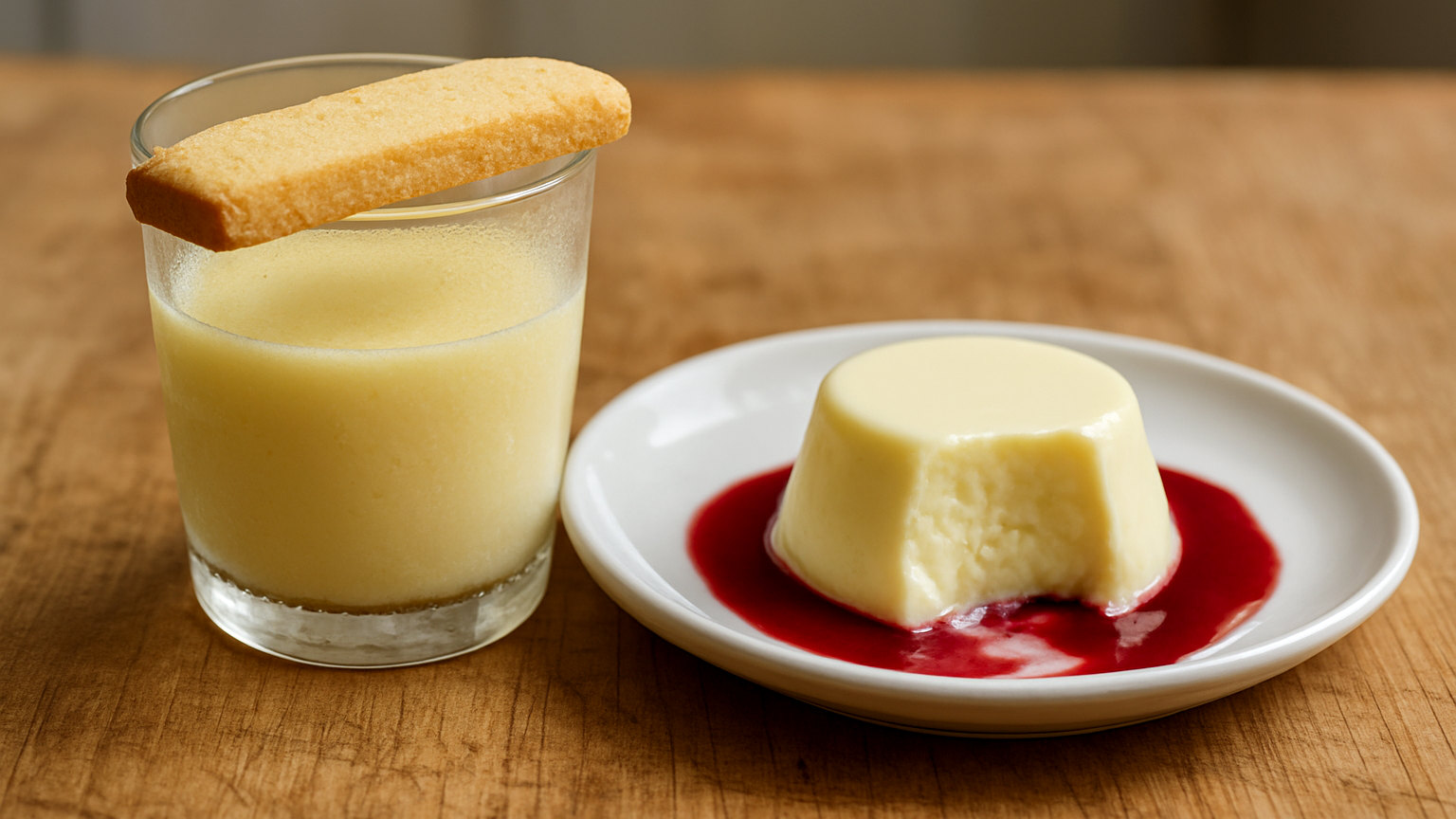
Gelatine is made from animal collagen, so anyone cooking for vegetarians needs an alternative. There are three in common use, and none of them behaves quite like gelatine. Substituting them gram for gram will not work, because they set at different temperatures, need different treatment and give noticeably different textures.
How do they compare?
| Agent | Source | Must boil | Sets at | Texture |
|---|---|---|---|---|
| Gelatine | Animal collagen | No, never | Fridge temperature | Soft, melts in mouth |
| Agar | Seaweed | Yes, 1 to 2 min | Room temperature | Firm, brittle, clean break |
| Carrageenan | Seaweed | Yes, briefly | Fridge temperature | Closest to gelatine |
| Pectin | Fruit | Yes, with sugar | As it cools | Soft, jam-like |
What is agar?
Agar, sometimes sold as agar agar, is extracted from red seaweed and comes as flakes or powder. It is the most widely available vegetarian setting agent. It must be boiled for a minute or two to activate, and it sets at room temperature, which means it firms up much faster than gelatine.
How much agar do you need?
Roughly one teaspoon of agar powder per 500ml of liquid for a soft set, or two for a firm one. Flakes are weaker: allow about a tablespoon per 500ml. Brands vary considerably, so check the packet. Agar is far more powerful than gelatine by weight, so err on the low side.
Agar must be boiled: unlike gelatine, which is ruined by boiling, agar will not set at all unless it reaches boiling point and holds it for a minute or two. This is the single most common reason an agar jelly fails.
How is the texture different?
Agar gives a firmer, more brittle set that breaks cleanly rather than wobbling, and it does not melt in the mouth the way gelatine does. Some people find it slightly chalky. Carrageenan gives a softer, more yielding set that is much closer to gelatine, which is why it is used in commercial vegetarian jellies.
Does agar work with acidic fruit?
Less well. Strongly acidic juices such as lemon or cranberry weaken agar and it may set poorly, so increase the quantity by about half. Unlike gelatine, though, agar is unaffected by the enzymes in fresh pineapple, kiwi and mango, which makes it the better choice for those fruits.
What about pectin?
Pectin is the setting agent in jam, extracted from apples and citrus peel. It needs sugar and acid to set, which is why it suits jams and fruit glazes rather than jellies and creams. Low-sugar pectin is available for preserves but is not a general substitute for gelatine.
Can you use agar in a panna cotta?
You can, but the texture will be firmer and less silky than the original. Use half a teaspoon of agar powder per 500ml, which is the lightest set it will reliably give. Many people prefer a carrageenan-based vegetarian gel here, since it keeps more of the softness.
How do you fix a set that has gone wrong?
Agar can be remelted and reset, unlike gelatine, which is a genuine advantage. If your jelly has set too firmly, melt it down, add more liquid and boil again. If it has not set, melt it, add more agar, boil for two minutes and pour again.
What is carrageenan?
Carrageenan is also extracted from red seaweed but behaves differently from agar, setting at fridge temperature and giving a softer, more yielding texture much closer to gelatine. It is what most commercial vegetarian jelly sachets are based on, and it is the best choice where you want gelatine's exact character.
Can you use pectin instead?
Only for fruit preparations. Pectin needs both sugar and acid to set, which is why it works in jam and fruit glazes but not in a milk pudding or a cream. There is no general vegetarian substitute that behaves identically to gelatine in every recipe, so it is worth choosing the agent to suit the dessert rather than looking for a single replacement.


