
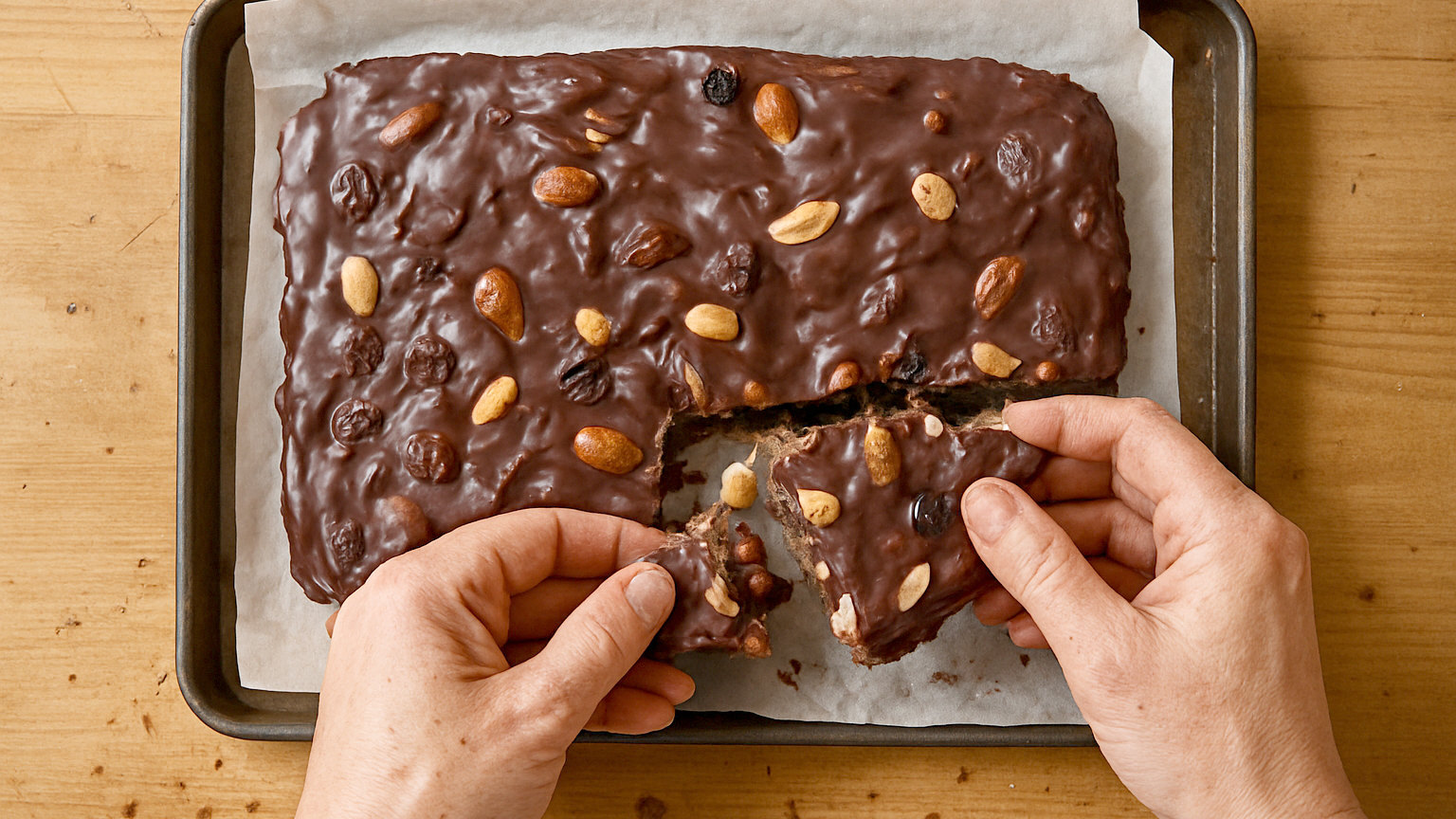
Chocolate bark is melted chocolate spread thinly on a tray, scattered with whatever you like and left to set, then broken into irregular shards. It takes fifteen minutes, requires no skill and makes a very good present. It is also the most forgiving way to use up odds and ends of nuts, dried fruit and half-finished bags of sweets.
What do you need?
Makes about 400g.
- 300g dark, milk or white chocolate, or a mixture
- 50g pistachios or almonds, toasted and chopped
- 50g dried cranberries, cherries or apricots, chopped
- Flaked sea salt, to finish
- Optional: freeze-dried raspberries, cocoa nibs, crushed honeycomb, orange zest
How do you make it?
- Line a large baking tray with baking paper.
- Melt the chocolate gently over barely simmering water, or in short bursts in the microwave on medium power.
- Pour onto the tray and spread with a palette knife to about 4mm thick.
- Working quickly, scatter over the nuts, fruit and anything else.
- Press the toppings down very lightly so they embed in the chocolate.
- Finish with a few flakes of sea salt.
- Leave to set at cool room temperature for two hours, then break into irregular pieces.
Scatter the toppings immediately: chocolate begins setting within a minute or two, and anything added to a surface that has already firmed will simply fall off once the bark is broken.
How thin should you spread it?
About 4mm, thin enough to snap cleanly but thick enough to hold the toppings. Too thin and it shatters into crumbs when you break it; too thick and it is hard work to bite. A palette knife or the back of a spoon spreads it evenly.
Should you set it in the fridge?
Better not to. Chocolate set in the fridge often develops a dull, pale bloom on the surface and can sweat when it comes back to room temperature. Setting at cool room temperature takes an hour or two longer and gives a glossier finish. Only use the fridge if your kitchen is very warm.
Can you marble two chocolates?
Yes, and it looks striking. Spread dark chocolate first, then drizzle melted white chocolate over in lines and drag a skewer through once or twice. Do not over-swirl, or the two blend into a uniform beige. The two chocolates must be melted and ready at the same time.
Does it need tempering?
Not really. Properly tempered chocolate sets with a sharper snap and a better shine, but for bark scattered with toppings the difference is minor. If your chocolate sets dull or streaky, that is untempered chocolate, and it tastes exactly the same. Setting it in a cool room rather than a warm one helps.
What toppings work best?
Anything dry. Toasted nuts, dried fruit, freeze-dried raspberries, crushed biscuits, honeycomb, cocoa nibs, crystallised ginger, mini marshmallows, pretzels or crushed candy canes at Christmas. Avoid anything wet or fresh, such as fresh fruit, which will cause the chocolate to seize and spoil within a day.
How do you break it neatly?
Once fully set, lift the sheet off the paper and snap it with your hands into irregular shards. That uneven shape is what makes it look like bark. Cutting it with a knife gives neat rectangles, which is a different and less appealing thing entirely.
How long does it keep?
It keeps for three weeks in an airtight container in a cool place. Do not refrigerate it, as condensation dulls the surface. If it contains fresh orange zest, eat it within a week, since the moisture shortens its life considerably.
Can you make it as a gift?
It is one of the better homemade presents, since it looks impressive, keeps for weeks and costs very little. Break it into large shards, layer them with baking paper in a box or a cellophane bag, and tie it with ribbon. Include a note of what is in it, particularly any nuts.


