
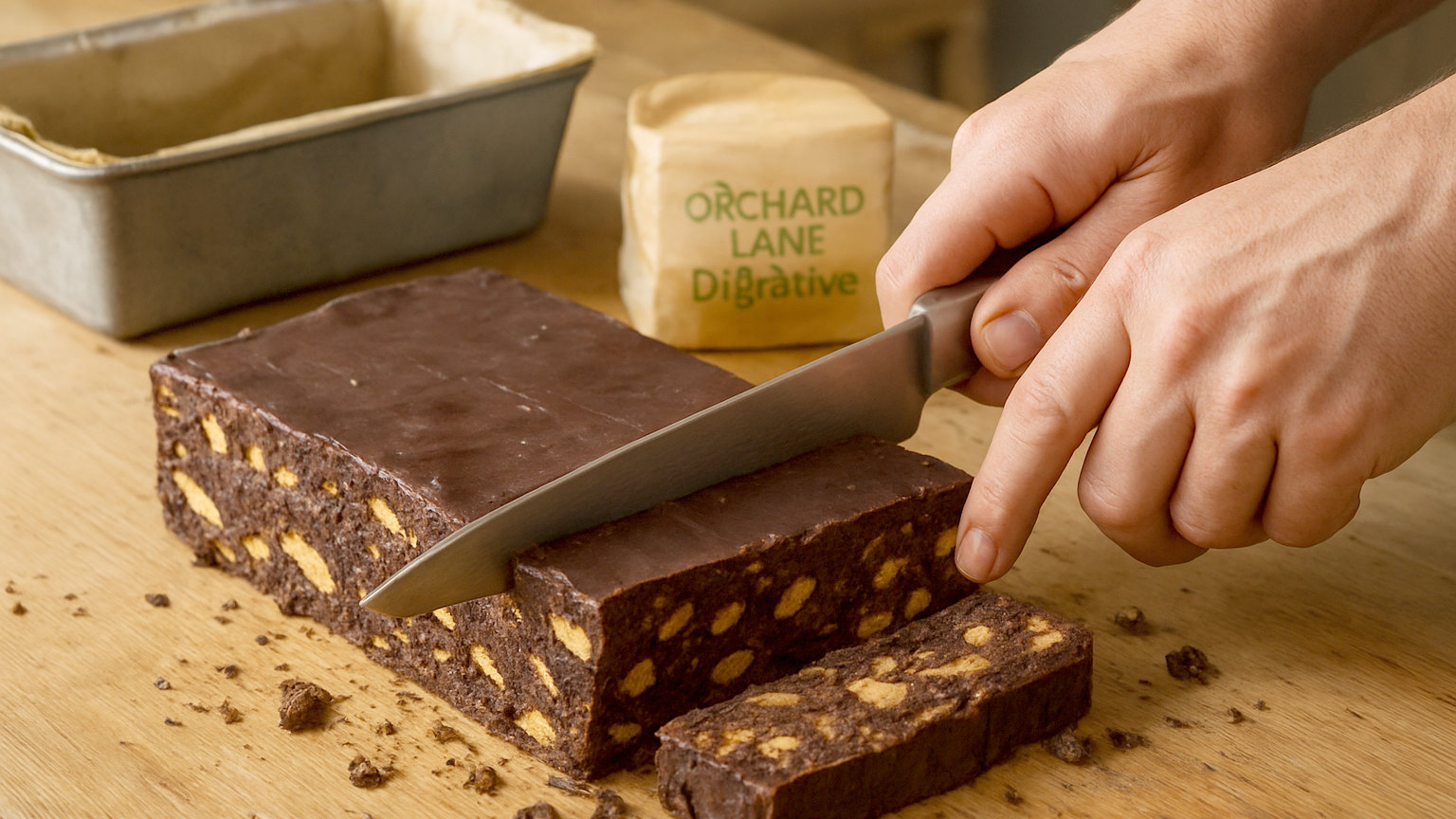
A no-bake base is crushed biscuits bound with melted butter and pressed firmly into a tin. Which biscuit you choose changes the flavour, the texture and, importantly, how much butter is needed, since a buttery biscuit like shortbread needs far less added fat than a dry one like a rich tea.
How much butter does each need?
| Biscuit | Butter per 250g | Suits |
|---|---|---|
| Digestives | 125g | Almost anything, the default |
| Rich tea | 140g | Delicate fillings, very neutral |
| Ginger nuts | 110g | Lemon, berry, rhubarb, pumpkin |
| Shortbread | 90g | Rich chocolate or caramel |
| Chocolate sandwich biscuits | 90g | Chocolate and mint fillings |
| Hobnobs | 115g | Banoffee, caramel, nutty fillings |
Biscuits with a filling, such as chocolate sandwich biscuits, are crushed whole including the cream, which is why they need so little added butter.
Which is the safest default?
Digestives. They are neutral in flavour, crush evenly, hold together reliably and suit any filling. Most no-bake recipes assume them, which is why the standard ratio of 250g of biscuits to 125g of butter is worth remembering. If a recipe does not specify, use digestives.
Which biscuits suit which filling?
Ginger nuts are excellent under anything sharp, since the warmth of the ginger lifts lemon, lime, rhubarb and berries. Shortbread suits rich chocolate and caramel fillings because it is already buttery. Chocolate sandwich biscuits suit mint, chocolate and coffee. Hobnobs give an oaty texture that works well with banoffee.
Press the base far harder than feels necessary: compression is doing half the work of holding it together, and a loosely pressed base crumbles the moment a slice is lifted out.
Should you use a food processor?
It is quicker and gives even crumbs, which is what you want for a base that holds together. Pulse rather than running it continuously. Crushing in a bag with a rolling pin works and gives a slightly coarser, more rustic texture, which some people prefer.
How fine should the crumbs be?
Fine and even, like coarse sand, with no large pieces. Unlike a fridge cake, where chunks are wanted, a base needs uniform crumbs so it compacts into a solid layer. Large pieces leave gaps that cause the base to break apart when cut.
Why does my base go soggy?
Moisture from the filling soaking into it, which happens with very wet fillings such as fresh fruit purées. Chilling the base for 30 minutes before the filling goes on helps considerably, and a thin layer of melted chocolate brushed over the set base creates a waterproof barrier.
Can you make a gluten-free base?
Yes. Gluten-free digestives are widely available and behave identically. Crushed gluten-free oat biscuits work well, as do ground almonds mixed with a little sugar and butter, which gives a richer base. Check the butter and any additions if you are baking for someone with coeliac disease.
How do you get a neat edge?
Press the crumbs into the base first, then push them up the sides with the back of a spoon if the recipe calls for it, using a flat-bottomed glass to compact the base itself. Chill for 30 minutes before filling. A loose-bottomed or springform tin makes releasing it far easier.
What is the standard ratio?
Two parts crushed biscuits to one part melted butter by weight is the baseline, so 250g of biscuits to 125g of butter. That is the quantity for a 20cm to 23cm tin. Adjust downwards for buttery biscuits such as shortbread and upwards for dry ones such as rich tea.
Does the filling change what you should use?
It does. A rich chocolate or caramel filling wants a plainer base, so digestives or shortbread. A sharp filling such as lemon or berry benefits from ginger nuts, which add warmth and stand up to the acidity. A very sweet filling is better under a slightly bitter base.
Can you add anything to the crumbs?
Yes. A tablespoon of cocoa darkens the base and adds bitterness. Ground almonds give richness, ground ginger or cinnamon add warmth, and a pinch of salt sharpens the flavour of any base. Keep additions to a few tablespoons so the butter still binds everything.


