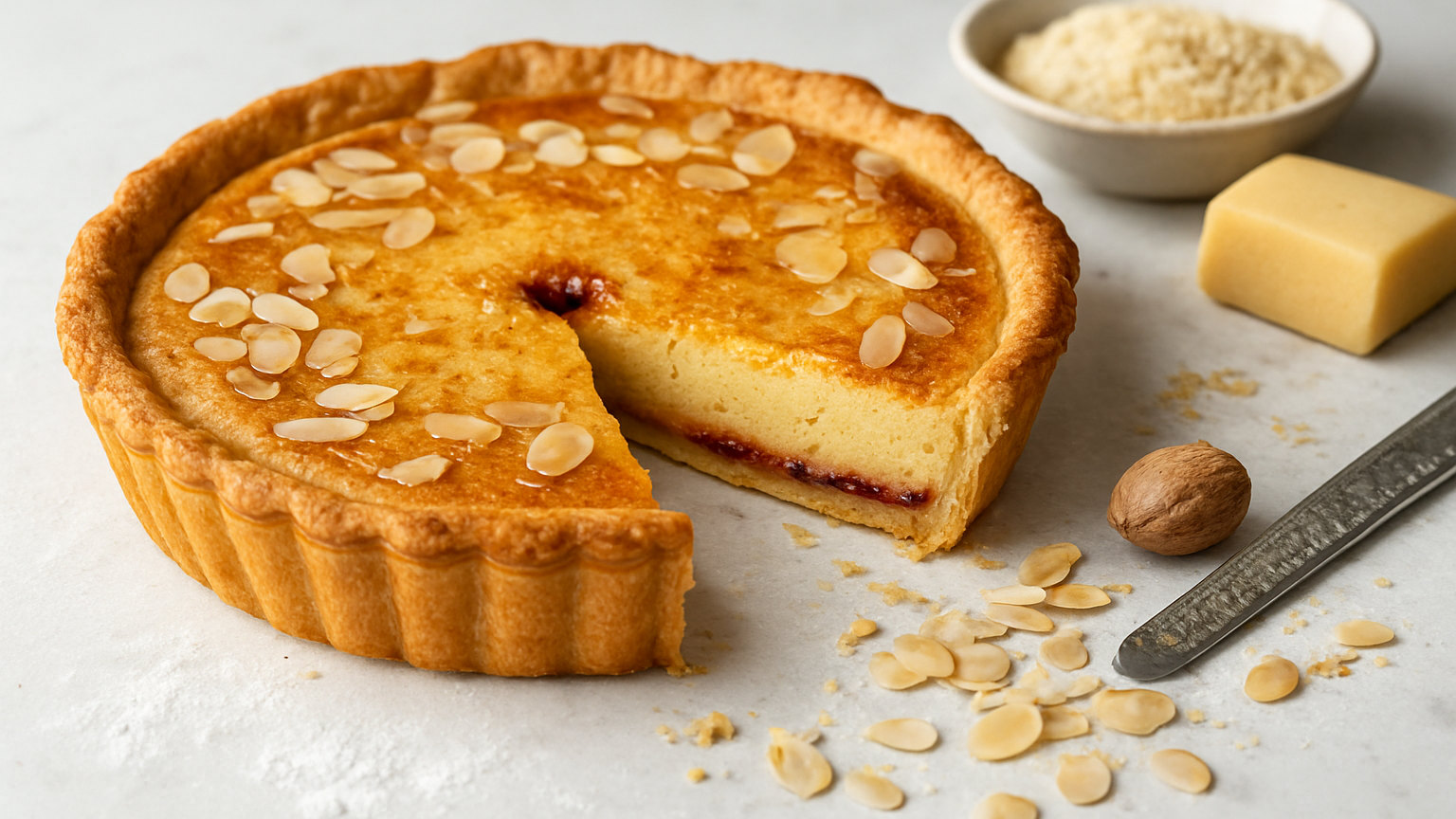
A Bakewell custard tart brings together two much-loved British bakes. A crisp pastry case is spread with raspberry jam and a thin layer of almond frangipane, then topped with a delicate baked custard and a scattering of flaked almonds. Each slice shows three distinct layers: dark red jam, golden almond sponge and pale, silky custard. It is a little more work than either tart alone, and well worth it.
How is it different from a classic Bakewell tart?
A traditional Bakewell tart is jam and frangipane in pastry, with no custard at all. A Bakewell pudding, the older Derbyshire original, has jam under an egg and almond filling that is closer to a custard. This tart sits between the two: it keeps the jam and frangipane of the modern tart, then adds a proper baked custard on top for a softer, creamier finish.
What ingredients do you need?
For the sweet pastry
- 200g plain flour
- 50g icing sugar
- 115g cold unsalted butter, cubed
- 1 egg yolk and 1 to 2 tbsp cold water
For the jam and frangipane
- 4 tbsp raspberry jam
- 75g unsalted butter, softened
- 75g caster sugar
- 1 large egg
- 75g ground almonds
- 1 tbsp plain flour
- ½ tsp almond extract
For the custard
- 300ml double cream
- 100ml whole milk
- 3 large egg yolks
- 50g caster sugar
- 1 tsp vanilla extract
- 2 tbsp flaked almonds
How do you make a Bakewell custard tart?
- Make the pastry, line a deep 23cm loose-bottomed tart tin and chill for 30 minutes.
- Blind bake at 190°C (170°C fan), gas 5, for 15 minutes with paper and beans, then five minutes without.
- Spread the raspberry jam over the base of the warm case.
- Beat the butter and sugar until pale, beat in the egg, then fold in the ground almonds, flour and almond extract.
- Spread the frangipane carefully over the jam in an even layer.
- Bake at 180°C (160°C fan), gas 4, for 20 minutes, until the frangipane is set and lightly golden. Cool for 15 minutes and lower the oven to 140°C (120°C fan), gas 1.
- Heat the cream and milk until steaming. Whisk the yolks and sugar gently, pour on the warm cream while whisking, then add the vanilla.
- Strain into a jug and skim off any foam.
- Pour the custard over the cooled frangipane and scatter with flaked almonds.
- Bake for 30 to 35 minutes, until set at the edges with a wobble in the centre.
- Cool completely, then chill for two hours before slicing.
Bake in two stages: the frangipane needs a hotter oven than the custard. Setting it first means the custard can then bake slowly without overcooking the almond layer.
How do the layers stay separate?
Each layer is set before the next goes on. The jam is spread on warm pastry so it firms slightly, the frangipane is baked until springy, and only then is the liquid custard poured on top. Pouring custard onto raw frangipane would let the two merge into a single muddy layer.
Which jam works best?
Raspberry jam is traditional and its sharpness balances the sweet almond. A good jam with a high fruit content gives the best flavour. Cherry jam is a lovely alternative, and apricot or blackcurrant both work well. Avoid very runny jams, which can seep into the frangipane.
Can you make it without nuts?
Frangipane depends on ground almonds, so it cannot be made nut-free. For a similar effect, spread the jam directly in the pastry case and pour the custard over it, making a jam custard tart. Check your other ingredients if you are baking for someone with a nut allergy.
How long does it keep?
Keep the tart in the fridge for up to three days. It is best on the first or second day, while the pastry is crisp. Serve at room temperature, on its own or with a little pouring cream. A few fresh raspberries alongside echo the jam layer beneath.