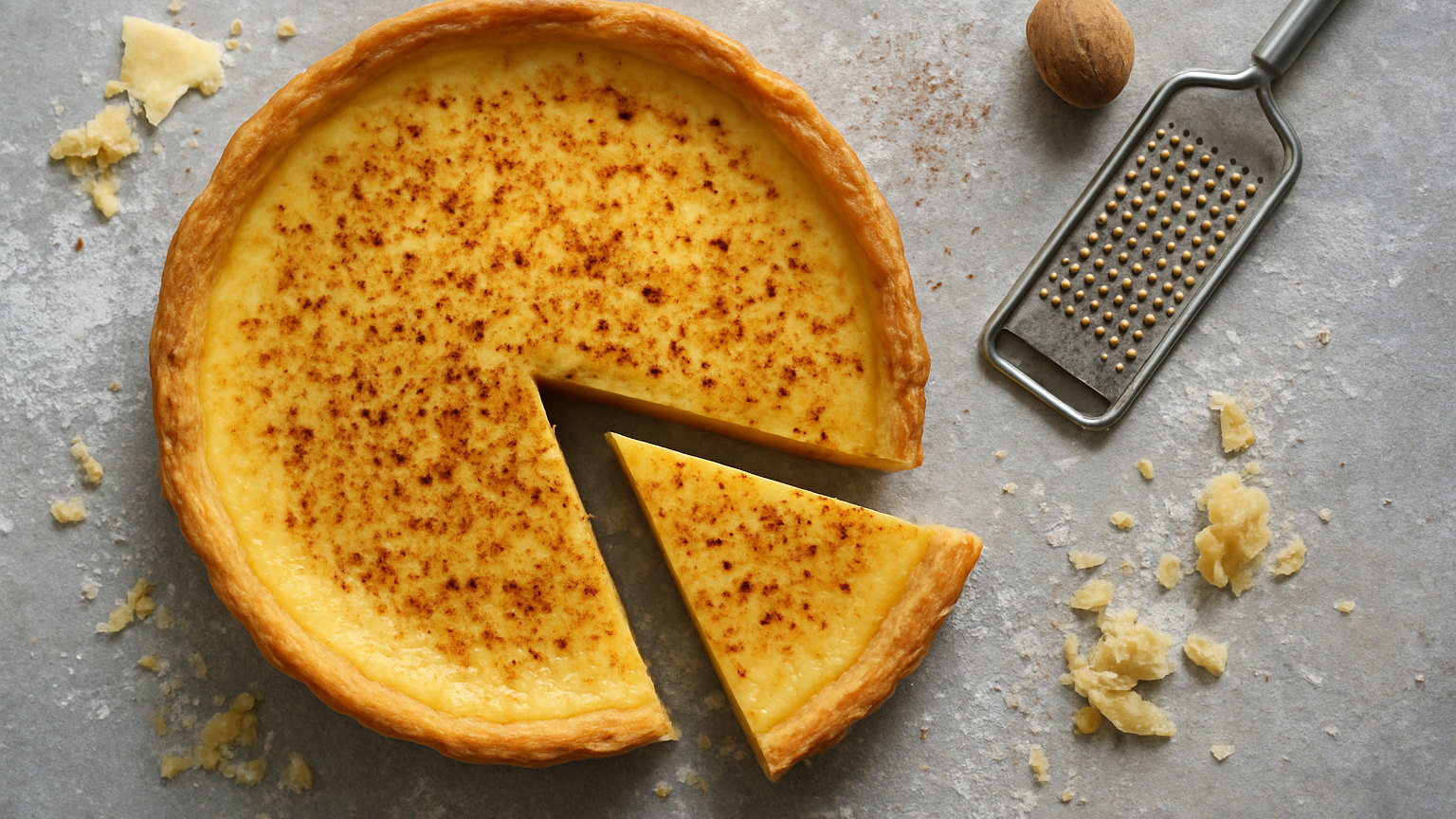
A classic egg custard tart is one of the great British bakes: a crisp pastry case filled with a silky, delicately set custard of eggs, cream and sugar, finished with a generous grating of nutmeg over the surface. It is simple in every sense, with no flavourings beyond vanilla and spice, so everything depends on good ingredients and careful, gentle baking. Served cold in thin wedges, it is quietly perfect.
What makes a good custard tart?
A good custard tart has three things: pastry that stays crisp underneath, a custard that is just set and wobbles gently, and a fine grating of fresh nutmeg on top. The custard should be smooth and creamy, never rubbery or full of bubbles. Getting there means blind baking the pastry properly, straining the custard and baking it slowly at a low temperature.
What ingredients do you need?
For the sweet pastry
- 200g plain flour
- 50g icing sugar
- 115g cold unsalted butter, cubed
- 1 large egg yolk
- 1 to 2 tbsp cold water
For the custard filling
- 4 large eggs plus 2 yolks
- 75g caster sugar
- 400ml double cream
- 100ml whole milk
- 1 tsp vanilla extract
- Whole nutmeg, for grating
How do you make an egg custard tart?
- Make the pastry, line a deep 23cm loose-bottomed tart tin and chill for 30 minutes.
- Blind bake at 190°C (170°C fan), gas 5, for 15 minutes with paper and beans, then 10 minutes without, until golden.
- Brush the inside of the hot case with a little beaten egg white and return it to the oven for two minutes to seal it.
- Lower the oven to 140°C (120°C fan), gas 1.
- Heat the cream and milk in a pan until steaming, then take off the heat.
- Whisk the eggs, yolks and sugar together gently, without beating in air.
- Pour the warm cream slowly over the eggs, whisking, then stir in the vanilla.
- Strain the custard through a fine sieve into a jug and skim off any foam.
- Put the pastry case on the oven shelf, then pour in the custard.
- Grate nutmeg generously over the surface.
- Bake for 35 to 45 minutes, until set at the edges with a distinct wobble in the centre.
- Cool completely, then chill for at least two hours before slicing.
Fill at the oven: this custard is very liquid. Slide the pastry case onto the oven shelf first, then pour the custard in from a jug, so there is no risk of spilling it on the way.
Why bake it so slowly?
Egg custard is delicate. Above about 85°C the proteins tighten and squeeze out liquid, which is what makes a curdled, watery or rubbery filling. A low oven of around 140°C heats it gently and evenly, so it sets smoothly. Taking the tart out while the middle still wobbles is essential, as the residual heat finishes the job as it cools.
Why strain the custard?
Straining catches the stringy chalazae from the eggs and any small lumps of cooked egg, which is what gives the filling its glass-smooth texture. Skimming off the foam matters too, as bubbles on the surface bake into a pitted, freckled top rather than the pale, even finish you want.
Why grate nutmeg on top?
Nutmeg and egg custard have been paired in English cookery for centuries, and the warm, slightly sweet spice is the traditional finish. Grate it fresh from a whole nutmeg with a fine grater, as ready-ground nutmeg loses its fragrance quickly. Add it before baking so it toasts lightly into the surface.
Can you use milk instead of cream?
Yes, though the texture will be lighter and less rich. Replacing the cream entirely with whole milk gives a softer, more old-fashioned tart, closer to the custard tarts sold in traditional bakeries. Keep the same number of eggs so it still sets, and bake it for a few minutes less.
How long does it keep?
Keep the tart in the fridge for up to three days, loosely covered. It is best eaten within two, as the pastry gradually softens. It does not freeze, as the custard separates and turns watery when thawed.