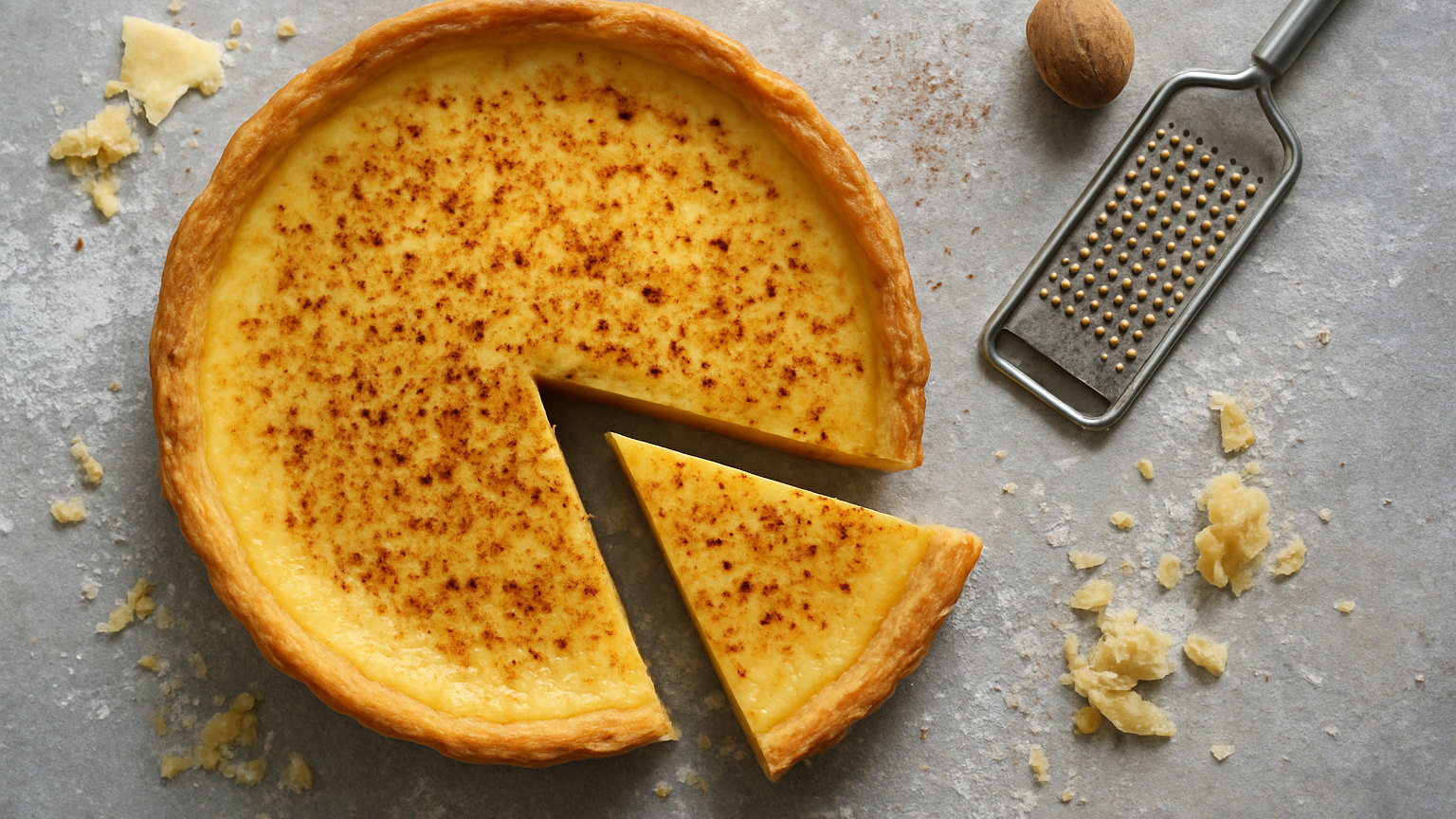
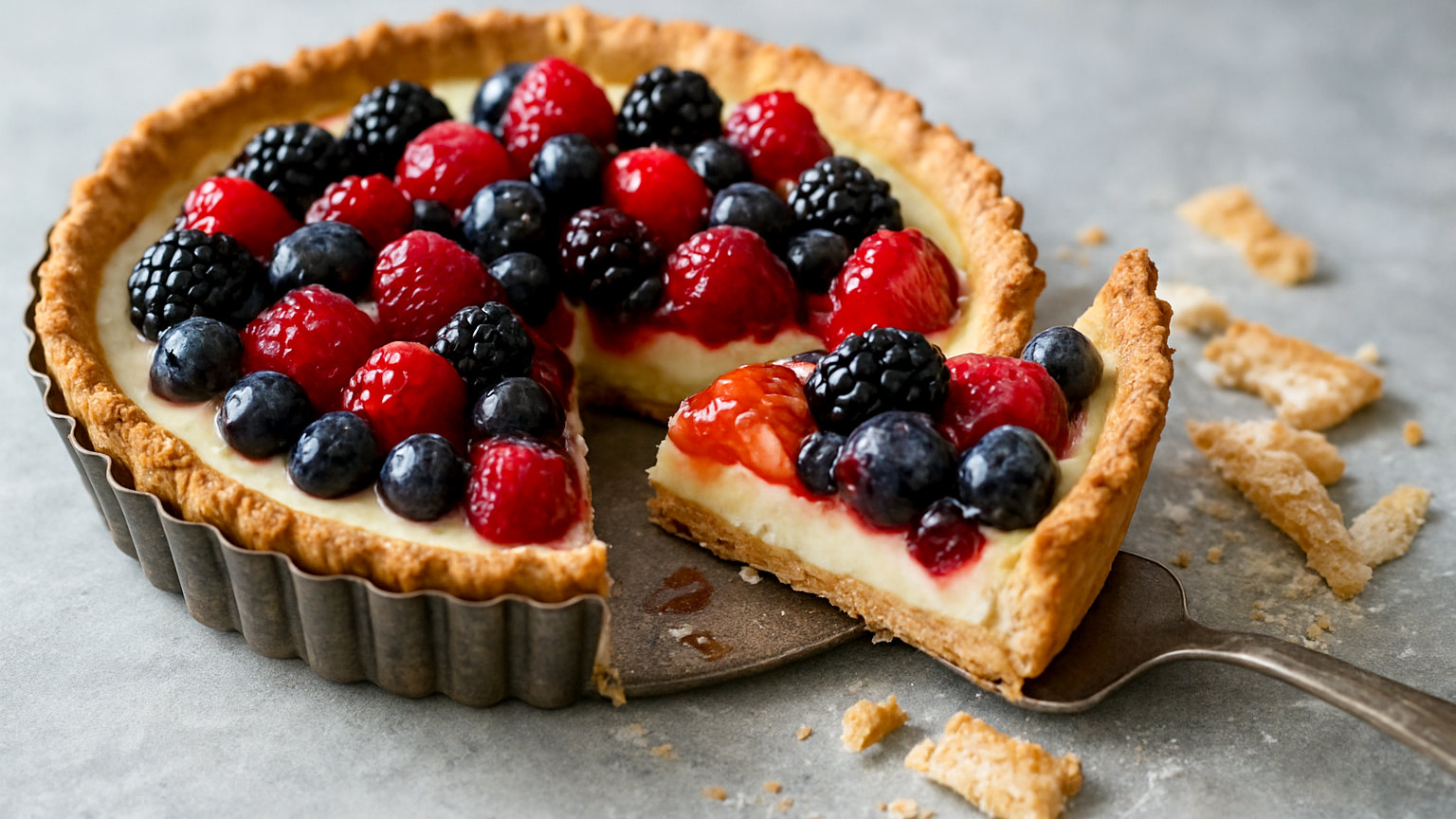
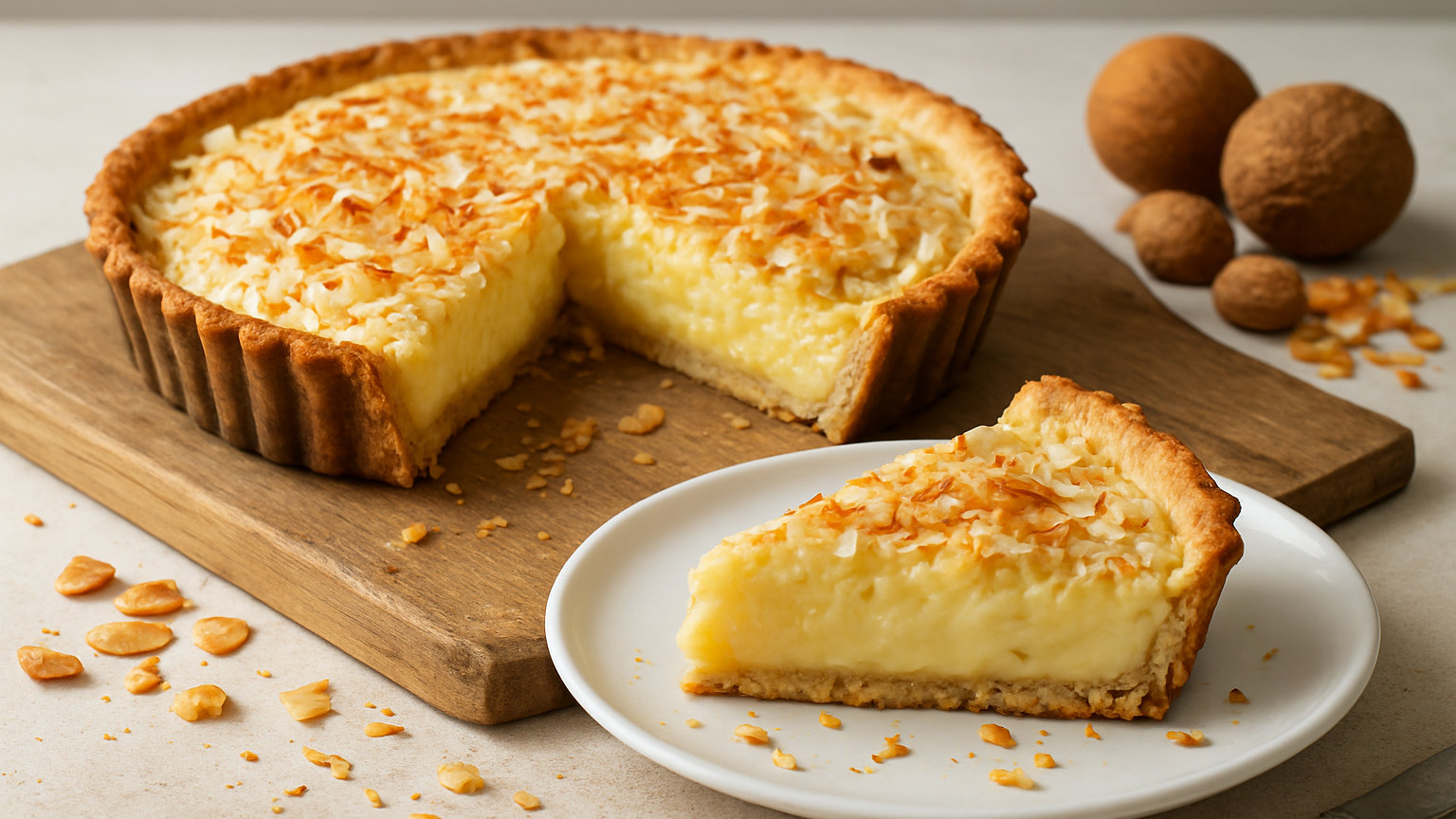
A Manchester tart is a much-loved British retro pudding: a crisp shortcrust pastry case spread with raspberry jam, filled with thick vanilla custard, and topped with desiccated coconut and a glacé cherry. It was a fixture of school dinners across the north of England, and it remains a nostalgic favourite. Made properly with a homemade custard rather than a packet, it is far better than most people remember.
Where does Manchester tart come from?
The tart is associated with Manchester and the north-west of England, where it became a staple of school canteens and cafés through the twentieth century. It is thought to have developed from the older Manchester pudding, a Victorian recipe with breadcrumbs, jam and a custard filling, sometimes topped with meringue. The simplified coconut-topped version is the one most people know.
What ingredients do you need?
For the pastry
- 200g plain flour
- 1 tbsp icing sugar
- 100g cold unsalted butter, cubed
- 1 egg yolk and 2 tbsp cold water
For the custard filling
- 500ml whole milk
- 4 large egg yolks
- 75g caster sugar
- 40g cornflour
- 25g unsalted butter
- 2 tsp vanilla extract
To assemble
- 4 tbsp raspberry jam
- 3 tbsp desiccated coconut
- 1 glacé cherry, or several halved
How do you make a Manchester tart?
- Make the pastry, line a 23cm loose-bottomed tart tin and chill for 30 minutes.
- Blind bake at 190°C (170°C fan), gas 5, for 15 minutes with paper and beans, then 10 minutes without, until golden. Cool completely.
- Spread the raspberry jam evenly over the base of the cooled case.
- Heat the milk until steaming. Whisk the yolks, sugar and cornflour together in a bowl.
- Pour the hot milk over the yolks, whisking, then return everything to the pan.
- Cook over a medium heat, whisking constantly, until very thick and bubbling. Cook for one more minute.
- Beat in the butter and vanilla, then pour the custard over the jam.
- Level the surface and leave to cool, then chill for at least three hours until firmly set.
- Scatter generously with desiccated coconut and top with the cherry.
Spread the jam on cold pastry: warm pastry melts the jam and lets it soak in. A cold case keeps the jam as a distinct layer, which is how a Manchester tart should look when sliced.
How do you get a firm, sliceable filling?
The custard must be thickened with cornflour and brought properly to the boil, which is what sets it firmly enough to cut into neat wedges. Keep whisking until large bubbles break the surface, then cook for another minute so the starch cooks out fully. Chilling for at least three hours firms it further.
Is it made with custard powder?
Traditional school and café versions were usually made with custard powder, which is cheap and reliable. You can use it: make up 500ml of very thick custard following the packet instructions but with about half the usual milk, then pour it over the jam. Homemade egg custard has a richer flavour and a silkier texture, but either is authentic.
Does it contain banana?
Some versions include a layer of sliced banana under the custard, and this is a point of friendly disagreement among people who grew up with it. Purists say a Manchester tart has only jam, custard and coconut. If you would like to add banana, slice it thinly over the jam just before pouring on the custard.
How long does it keep?
Keep the tart in the fridge for up to three days. The pastry softens gradually, so it is best on the first or second day. Add the coconut shortly before serving so it stays dry and fluffy rather than absorbing moisture from the custard.
Can you make individual tarts?
Yes. Line a 12-hole bun tin with pastry rounds, blind bake for about 12 minutes, then fill each with a little jam and custard. Individual Manchester tarts set faster, in about two hours, and are easier to hand round at a party. Add a small spoonful of coconut and half a cherry to each one just before serving.