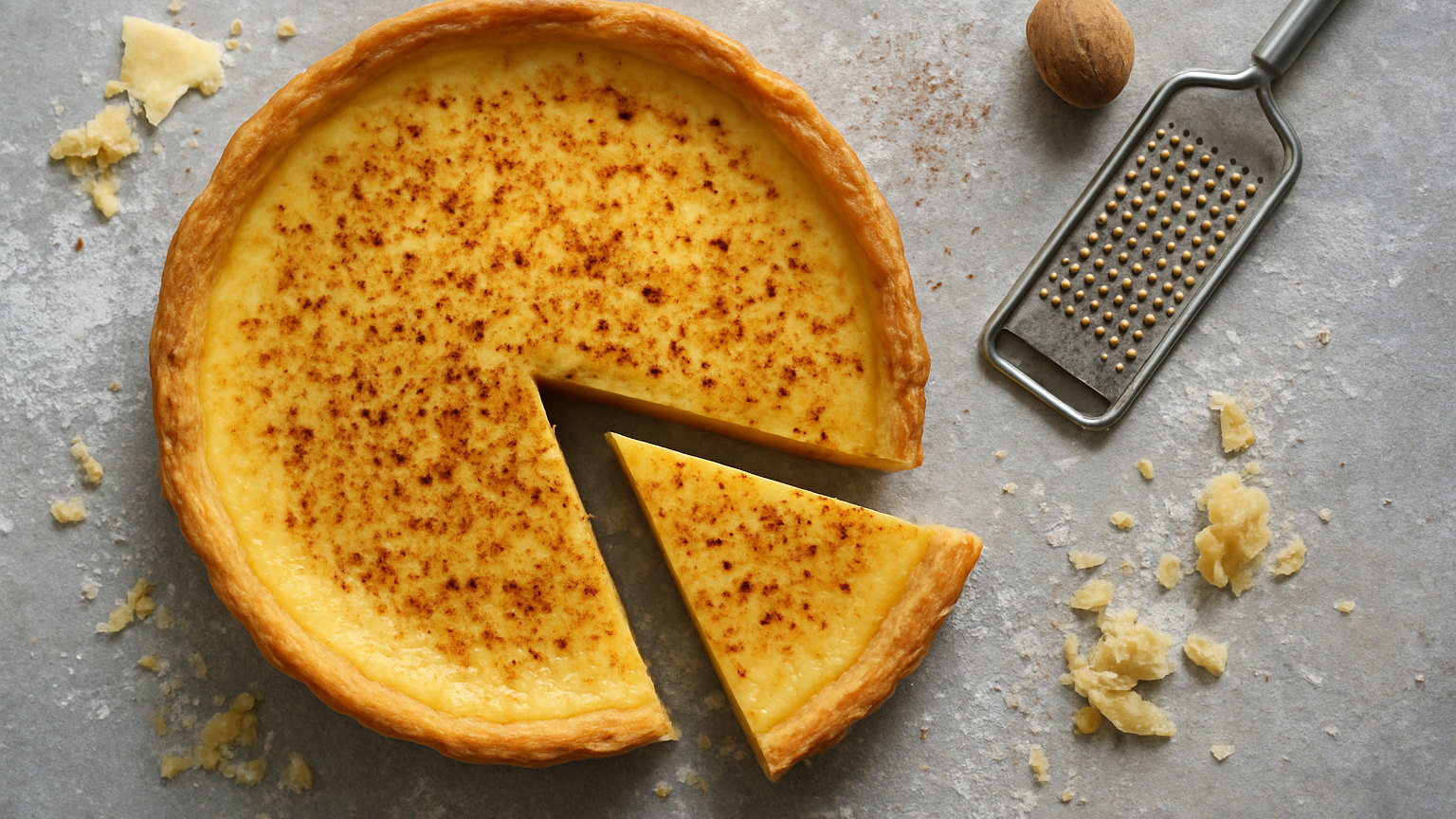
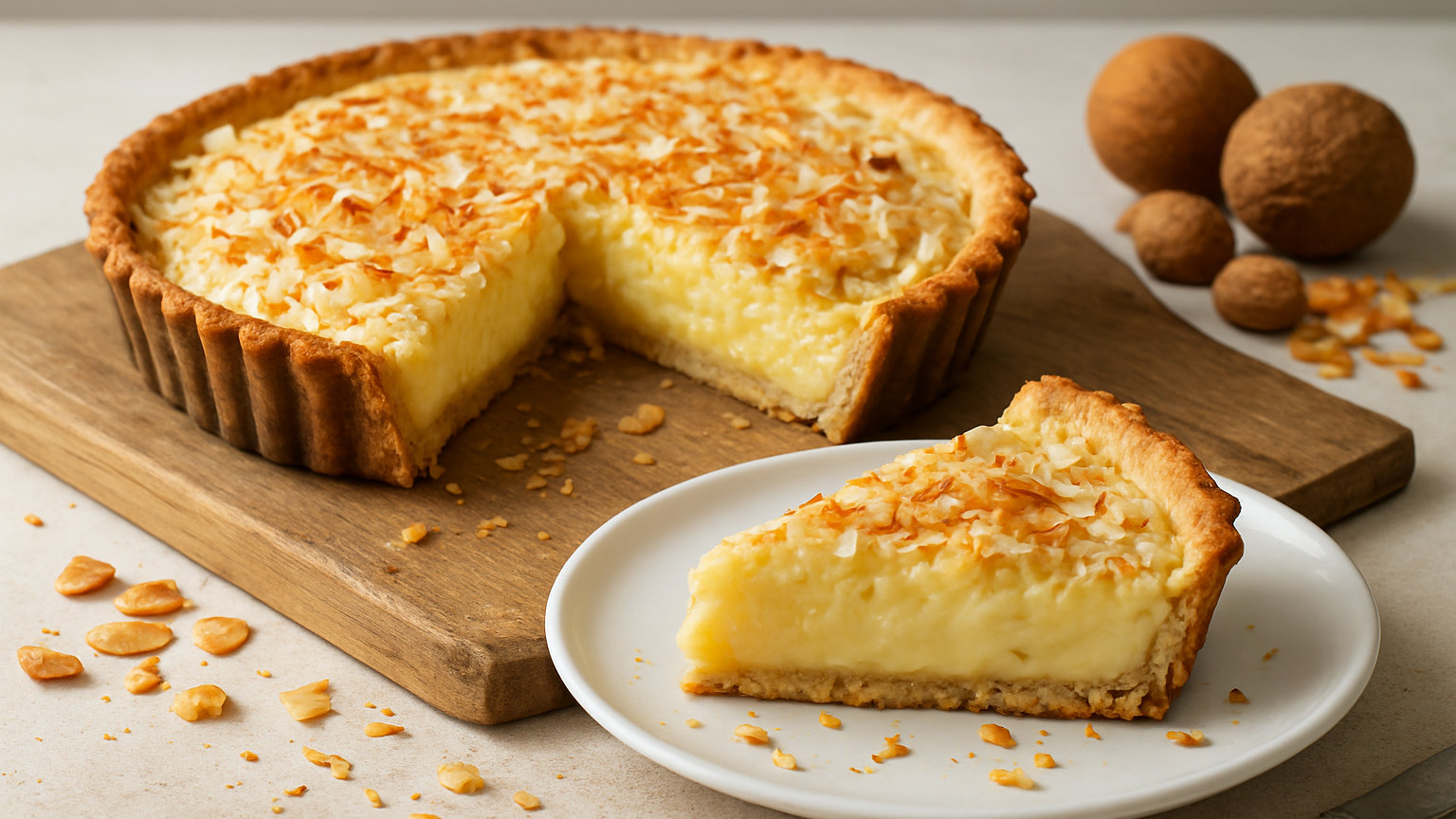
A fresh orange tart is a silky baked citrus tart, made in the same way as a classic lemon tart but with orange juice and zest, sharpened with a little lemon so it does not taste flat. The filling sets to a smooth, delicate custard, and a topping of caramelised orange slices makes it look striking. Oranges are at their best from December to March, so this is a sunny dessert for the darkest months.
Why add lemon to an orange tart?
Oranges are much sweeter and less acidic than lemons, and a tart made with orange alone tastes sweet and one-dimensional. Adding the juice of one lemon brings back the sharpness that makes a citrus tart refreshing, without making it taste of lemon. The acid also helps the filling set properly, as it firms up the egg proteins.
Which oranges should you use?
Ordinary sweet oranges work well. Blood oranges, in season from January to March, give a beautiful pink-tinged filling and a slightly berry-like flavour. Seville oranges, available briefly in January, are very bitter and are best used in small quantities alongside sweet oranges for a marmalade-like depth. Choose unwaxed fruit where possible, since the zest is used.
What ingredients do you need?
For the sweet pastry
- 175g plain flour
- 50g icing sugar
- 100g cold unsalted butter, cubed
- 1 egg yolk and 1 to 2 tbsp cold water
For the filling
- 5 large eggs
- 175g caster sugar
- Finely grated zest of 2 unwaxed oranges
- 150ml orange juice, from about 3 oranges
- 50ml lemon juice, from about 1 lemon
- 200ml double cream
For the topping
- 2 oranges, thinly sliced
- 100g caster sugar and 100ml water
How do you make an orange tart?
- Make the pastry, line a 23cm loose-bottomed tart tin and chill for 30 minutes.
- Blind bake at 190°C (170°C fan), gas 5, for 15 minutes with paper and beans, then 10 minutes without.
- Brush the hot case with beaten egg white and return it for two minutes. Lower the oven to 140°C (120°C fan), gas 1.
- Whisk the eggs and sugar gently, then whisk in the zest, orange juice, lemon juice and cream.
- Strain into a jug and skim off any foam.
- Put the case on the oven shelf and pour in the filling.
- Bake for 30 to 40 minutes, until just set with a slight wobble in the centre. Cool, then chill.
- For the topping, simmer the sugar and water, add the orange slices and poach gently for 20 minutes until translucent. Cool, then arrange over the tart.
Strain the filling: straining removes any stringy bits of egg and pulp, which is what gives a baked citrus tart its glass-smooth surface.
How do you prepare the orange slices?
Slice unpeeled oranges as thinly as you can, ideally 2 to 3mm, using a sharp knife or a mandoline. Poaching them gently in sugar syrup softens the peel and turns the slices translucent and glossy. Let them cool in the syrup, then lift them out and drain on a rack before arranging them, so they do not flood the tart.
Can you make it with other citrus?
Yes. The same method works for lime, grapefruit and clementine. Pink grapefruit makes a lovely bittersweet tart, though it needs a little extra sugar. A mixture of orange, lemon and lime gives a bright, complex citrus tart. Whichever you use, keep the total liquid at about 200ml.
Why is my filling not set?
An underbaked filling needs longer at the low temperature; check that the edges are firm and only the middle wobbles. Using too much juice, or oranges that are very sweet and low in acid, can also stop it setting. Measuring the juice rather than guessing keeps the balance right.
How long does it keep?
Keep the tart in the fridge for up to three days. Add the caramelised orange slices on the day of serving, so they stay glossy and the pastry stays crisp.