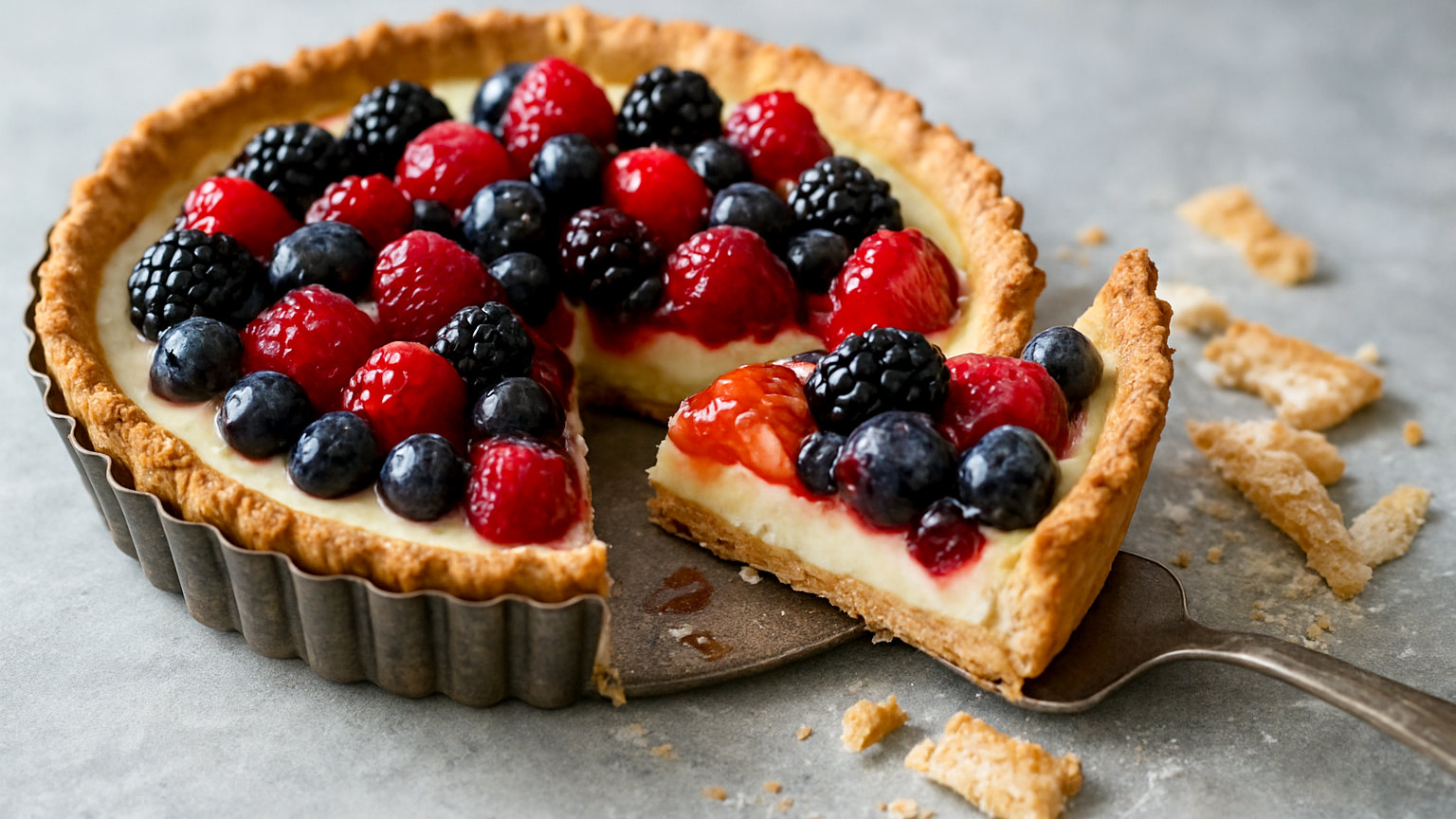
A fruit tart is glazed by brushing warmed, sieved jam over the arranged fruit. The glaze gives the tart its glossy patisserie shine, stops cut fruit drying out or browning, and helps hold everything in place. Apricot jam is the traditional choice for pale and mixed fruit, while redcurrant jelly suits red berries. It takes two minutes and makes an enormous difference to how a tart looks.
Why glaze a fruit tart at all?
Fresh fruit starts to dry out and dull within an hour of being cut and arranged. A thin layer of glaze seals the surface, keeping the fruit shiny, plump and fresh-looking for several hours. It also stops apples, pears and bananas browning, and it holds loose berries securely so slices cut neatly. Without it, even a beautifully arranged tart looks tired quickly.
Which glaze should you use for each fruit?
| Fruit | Best glaze | Why |
|---|---|---|
| Strawberries, raspberries, cherries | Redcurrant jelly | Red tint enhances the colour |
| Peaches, apricots, apples, pears | Apricot jam | Pale and neutral in flavour |
| Mixed berries and tartlets | Apricot jam | Works with everything |
| Blueberries and blackberries | Either | Colour matters little on dark fruit |
Apricot jam is the workhorse of a patisserie kitchen because it is pale, mild and sets softly. Redcurrant jelly is already smooth, so it needs no sieving.
How do you make an apricot glaze?
- Put 3 to 4 tbsp apricot jam in a small pan with 1 tbsp water.
- Warm gently, stirring, until it is melted and runny.
- Push it through a fine sieve into a bowl, pressing with a spoon, to remove the fruit pieces.
- Let it cool for a minute or two, until it is warm rather than hot.
- Brush it thinly over the arranged fruit.
Sieve it every time: unsieved jam leaves lumps of fruit on the surface, which looks messy. Sieving takes seconds and is what gives the smooth, glassy finish.
How do you apply it without damaging the fruit?
Use a soft pastry brush, ideally a silicone one, and dab rather than sweep. Touch the brush lightly to the top of each piece of fruit and let the glaze run down the sides. Raspberries and blackberries are especially fragile and collapse if you drag a brush across them. Work from the outside in, and do not go over the same spot twice.
How thick should the glaze be?
It should be thin enough to flow off the brush easily, like single cream. Too thick and it sits in sticky puddles that look heavy and taste overly sweet. Too thin and it soaks in without leaving any shine. If the glaze cools and thickens while you work, warm it briefly again and add a few drops of water.
Are there alternatives to jam?
Yes. Ready-made tart glaze, sometimes sold as nappage, is available from baking suppliers and gives a very clear, professional finish. You can also make a clear glaze by boiling 100ml fruit juice with 1 tsp arrowroot powder mixed to a paste with cold water, stirring until it thickens and turns clear. Arrowroot gives a brighter shine than cornflour, which can look cloudy.
When should you glaze the tart?
Glaze the fruit as soon as it is arranged, so it is sealed before it starts to dry. If you are making the tart well ahead, it is better to assemble and glaze it close to serving. A glazed tart looks its best within about four hours, and is still good the next day if kept in the fridge.
Can you glaze other bakes?
Yes. The same apricot glaze is brushed over Danish pastries, fruit flans, croissants and buns, and it is used under marzipan on a Christmas cake to help it stick. A little warmed sieved jam is one of the most useful finishing touches in baking, and a jar lasts for months in the fridge. Keep a small pot of apricot jam purely for glazing, so it is always to hand.