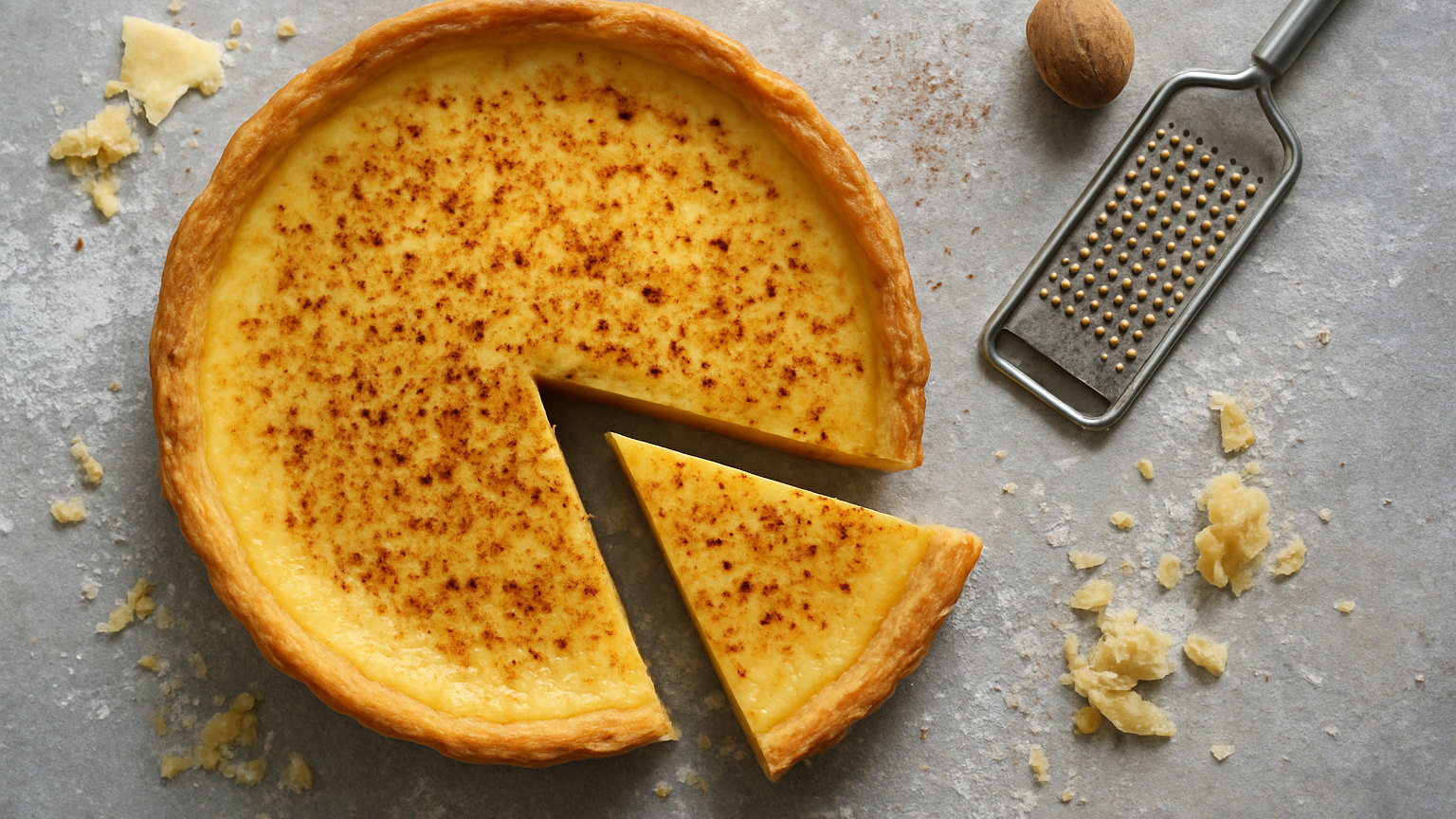
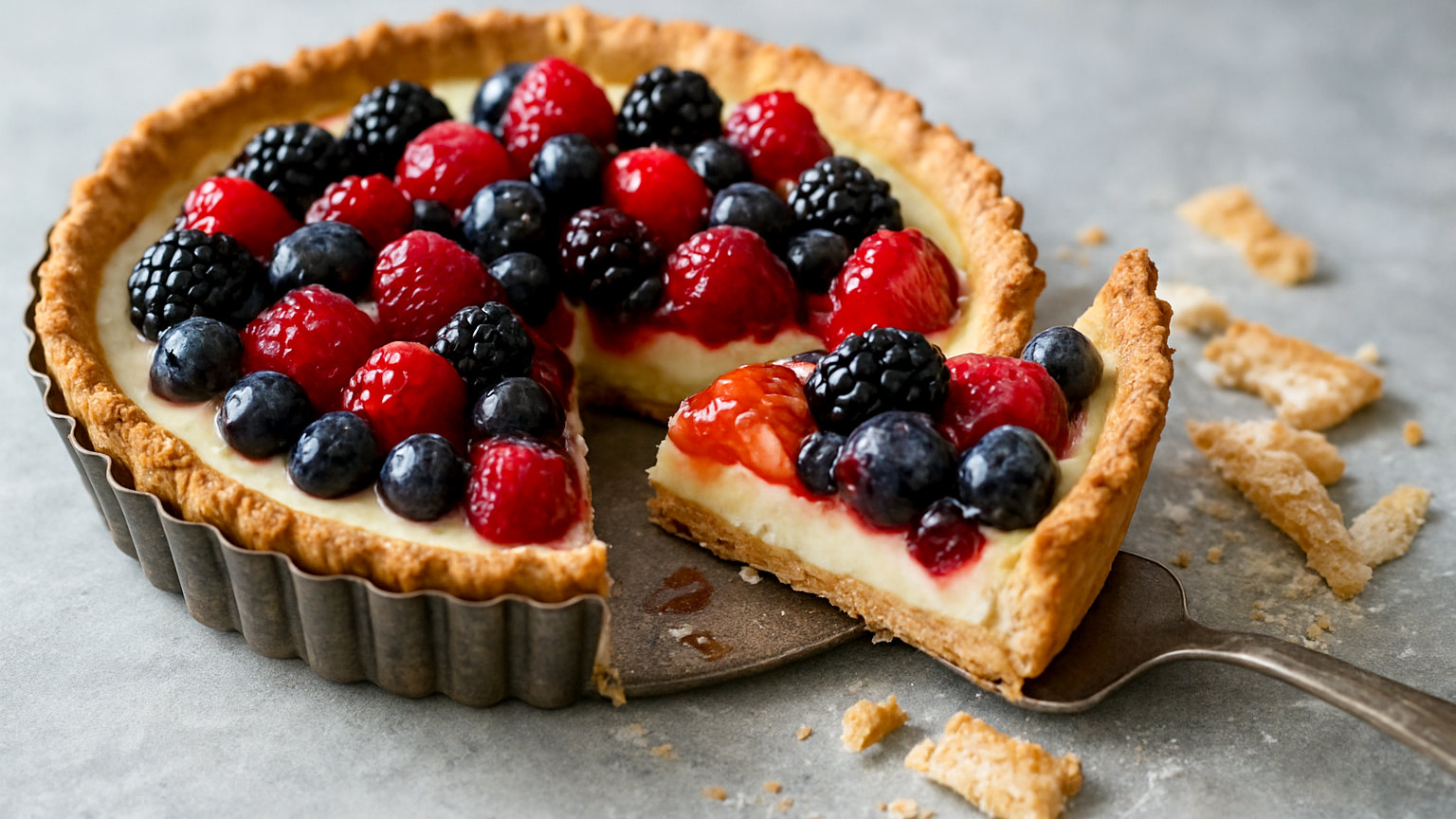
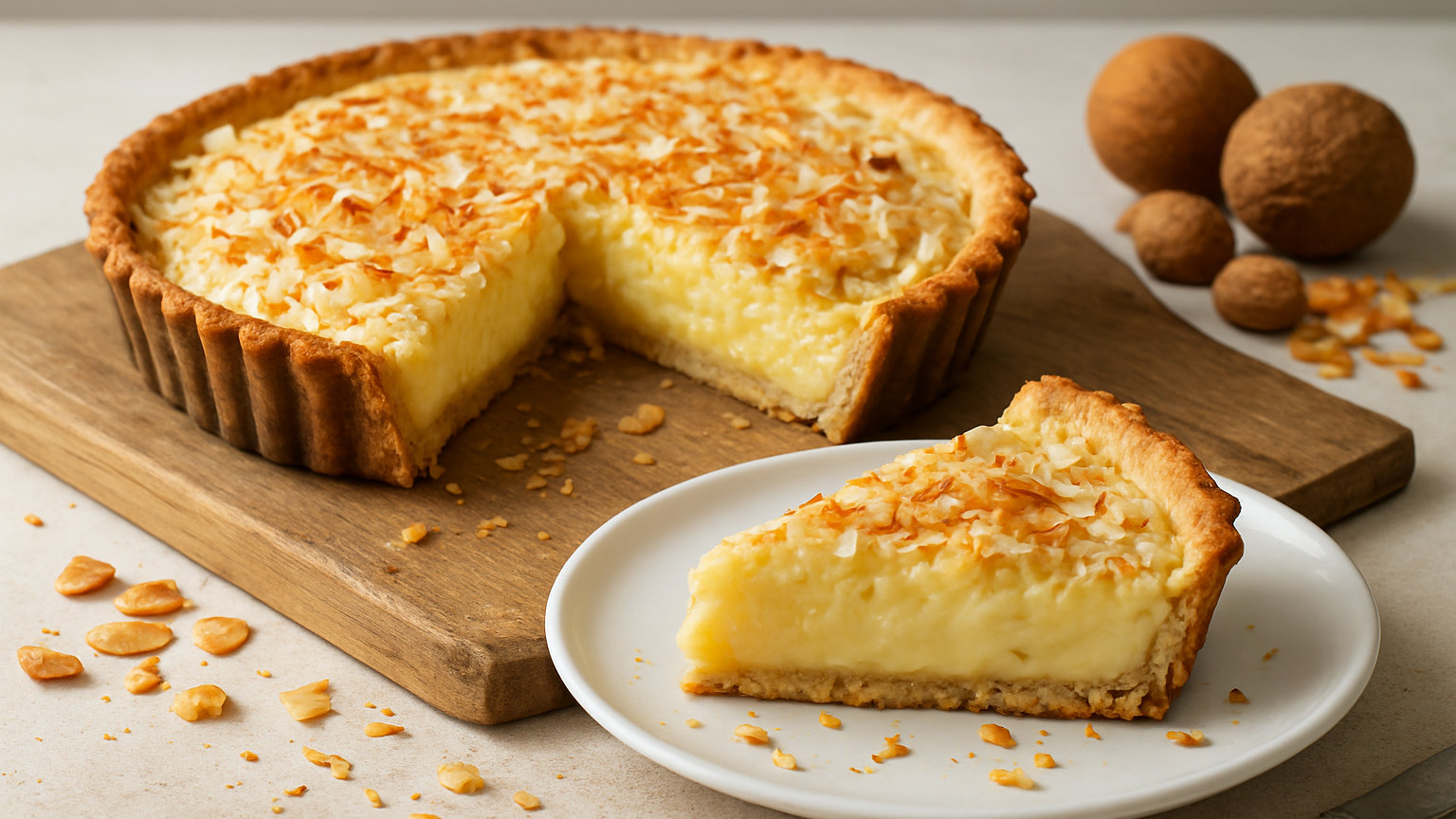
Crème pâtissière, also called pastry cream, is a thick vanilla custard made from milk, egg yolks, sugar and cornflour, cooked on the hob until it is stiff enough to hold its shape. It is the filling in classic fruit tarts, éclairs, doughnuts and mille-feuille. Unlike pouring custard, it must be cooked until it boils, which is what makes it thick and stable enough to slice cleanly.
How is it different from ordinary custard?
Pouring custard, or crème anglaise, is thickened with egg yolks alone and must never boil, or it will curdle. Crème pâtissière contains cornflour as well as yolks, and the starch protects the eggs, so it can and must be brought to the boil. That gives a much thicker result that sets firmly when chilled and pipes neatly.
What ingredients do you need?
This makes enough to fill a 23cm tart.
- 500ml whole milk
- 1 vanilla pod, split, or 2 tsp vanilla extract
- 4 large egg yolks
- 100g caster sugar
- 40g cornflour
- 25g unsalted butter
How do you make crème pâtissière?
- Heat the milk with the split vanilla pod in a saucepan until steaming but not boiling. Leave to infuse for 10 minutes, then remove the pod, scraping the seeds back in.
- Whisk the egg yolks, sugar and cornflour together in a bowl until smooth and pale.
- Pour about a third of the hot milk over the yolk mixture, whisking constantly, to warm it gently.
- Pour everything back into the pan.
- Cook over a medium heat, whisking constantly and reaching into the corners of the pan, until the mixture thickens and starts to bubble.
- Keep cooking and whisking for one more minute, so the cornflour cooks out fully.
- Take off the heat and beat in the butter until glossy.
- Pour into a shallow dish, press baking paper directly onto the surface and chill until cold.
- Beat the cold pastry cream until smooth before using.
Press paper onto the surface: covering the hot custard directly with baking paper or cling film stops a skin forming, which would leave lumps in the finished cream.
Why temper the eggs?
Pouring hot milk straight onto cold egg yolks cooks them instantly into strands of scrambled egg. Adding a little hot milk first, while whisking, raises the temperature of the yolks gently. This step, called tempering, is the difference between a silky custard and a lumpy one.
Why is my crème pâtissière lumpy?
Lumps come from eggs cooking too quickly, cornflour not being whisked in smoothly, or the custard catching on the base of the pan. Whisk constantly and keep the heat moderate. If lumps do appear, push the finished custard through a fine sieve while it is still warm, which usually rescues it completely.
Why is it runny?
Crème pâtissière must reach a full boil for the cornflour to thicken properly. If it is loose, it was probably taken off the heat too soon. Return it to the pan and keep whisking over a medium heat until large bubbles break the surface, then cook for another minute. It also thickens considerably as it chills.
How can you flavour it?
Infuse the milk with a strip of lemon or orange zest, a cinnamon stick, coffee beans or cardamom pods. Beat melted chocolate into the finished custard for a chocolate version, or add a spoonful of liqueur. For a lighter filling, fold in whipped double cream once the custard is cold, which makes crème diplomate.
How long does it keep?
Keep it in the fridge, with paper pressed onto the surface, for up to three days. It does not freeze, as the starch separates and the texture turns grainy when thawed.
What can you use it for?
Besides fruit tarts, crème pâtissière fills éclairs, profiteroles, doughnuts, mille-feuille and Danish pastries. It can be layered with sponge and fruit in a trifle, or spread under sliced fruit in a flan case. Any left over is delicious simply spooned into small pots and topped with berries.