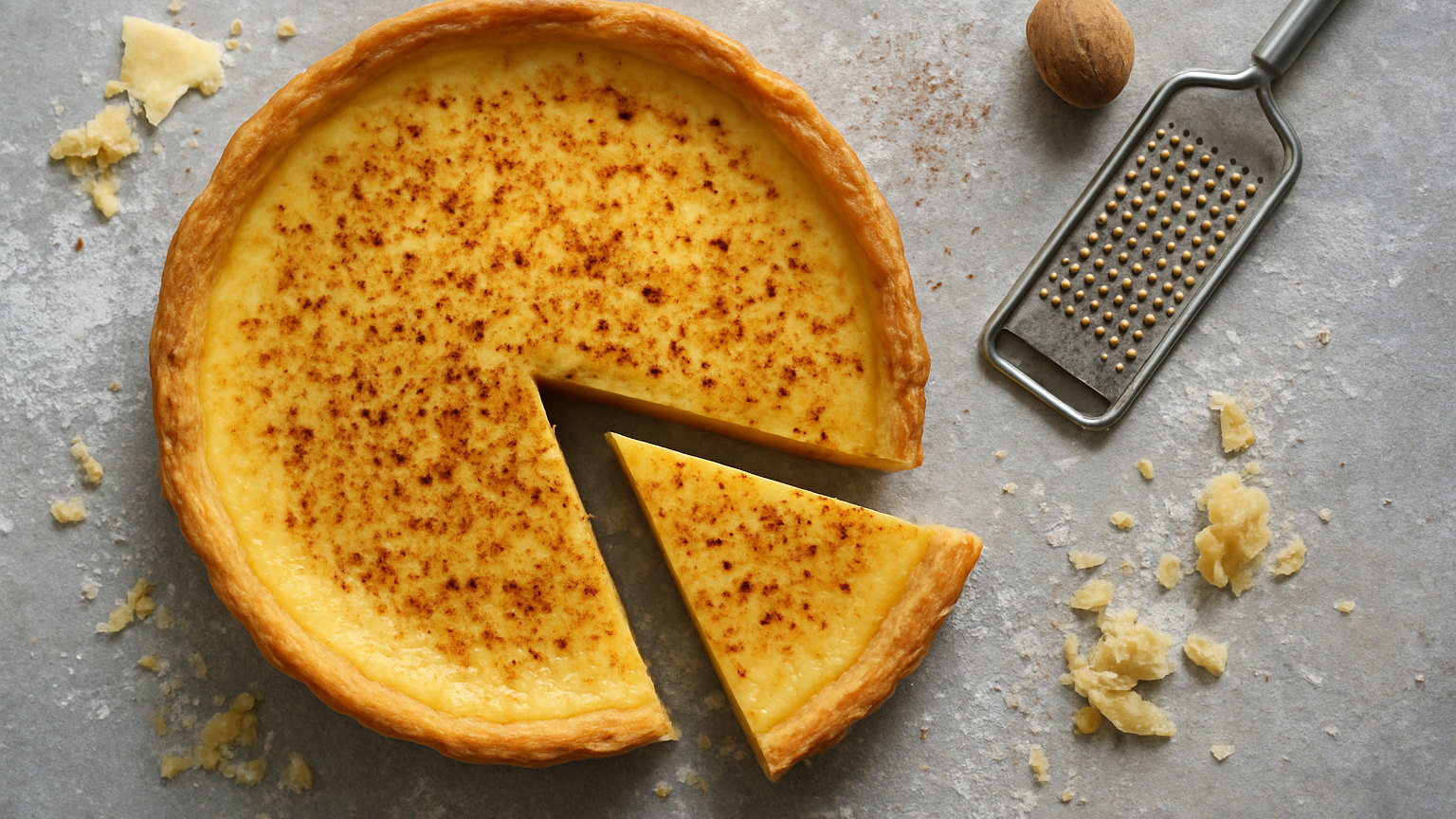
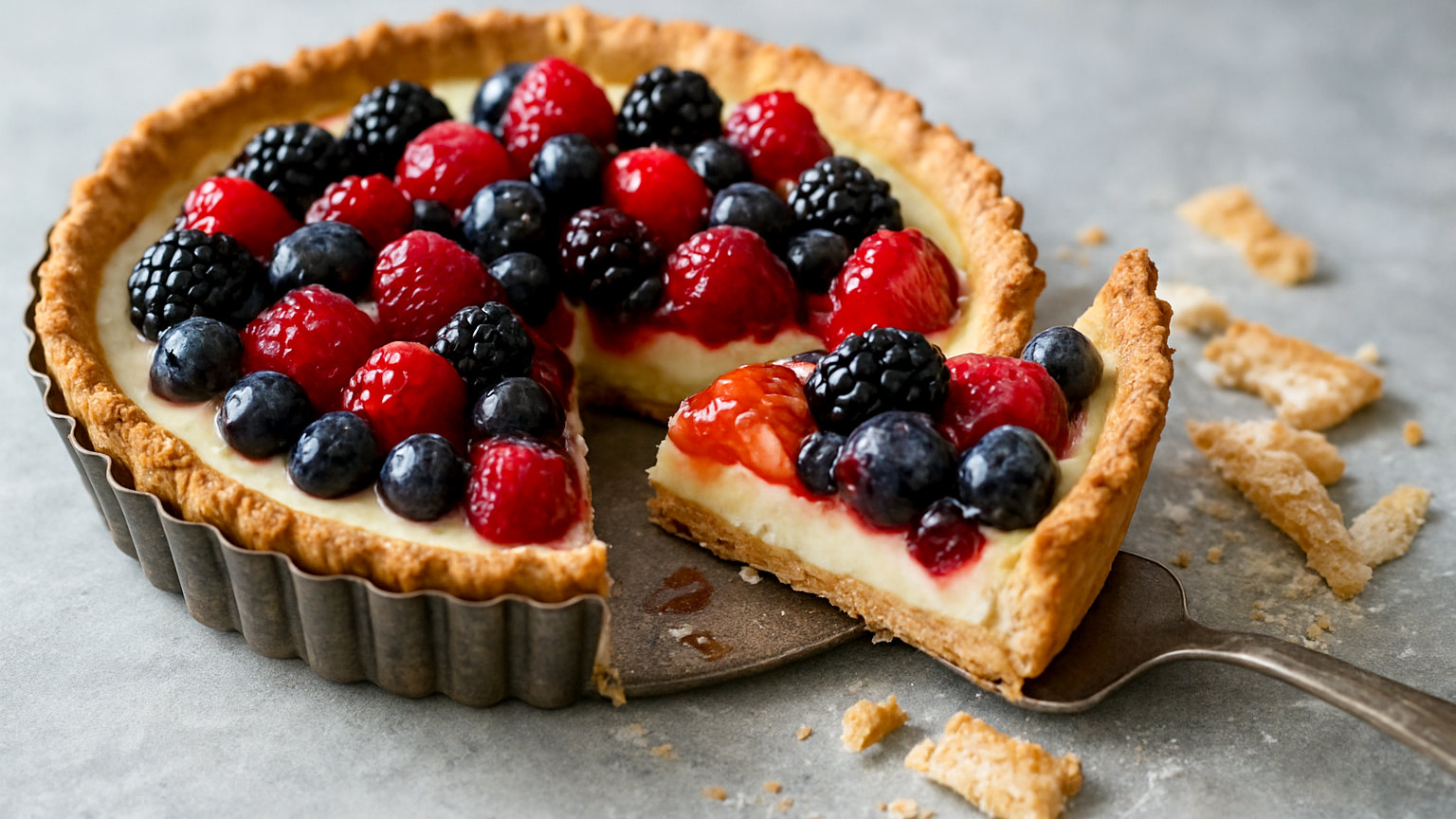
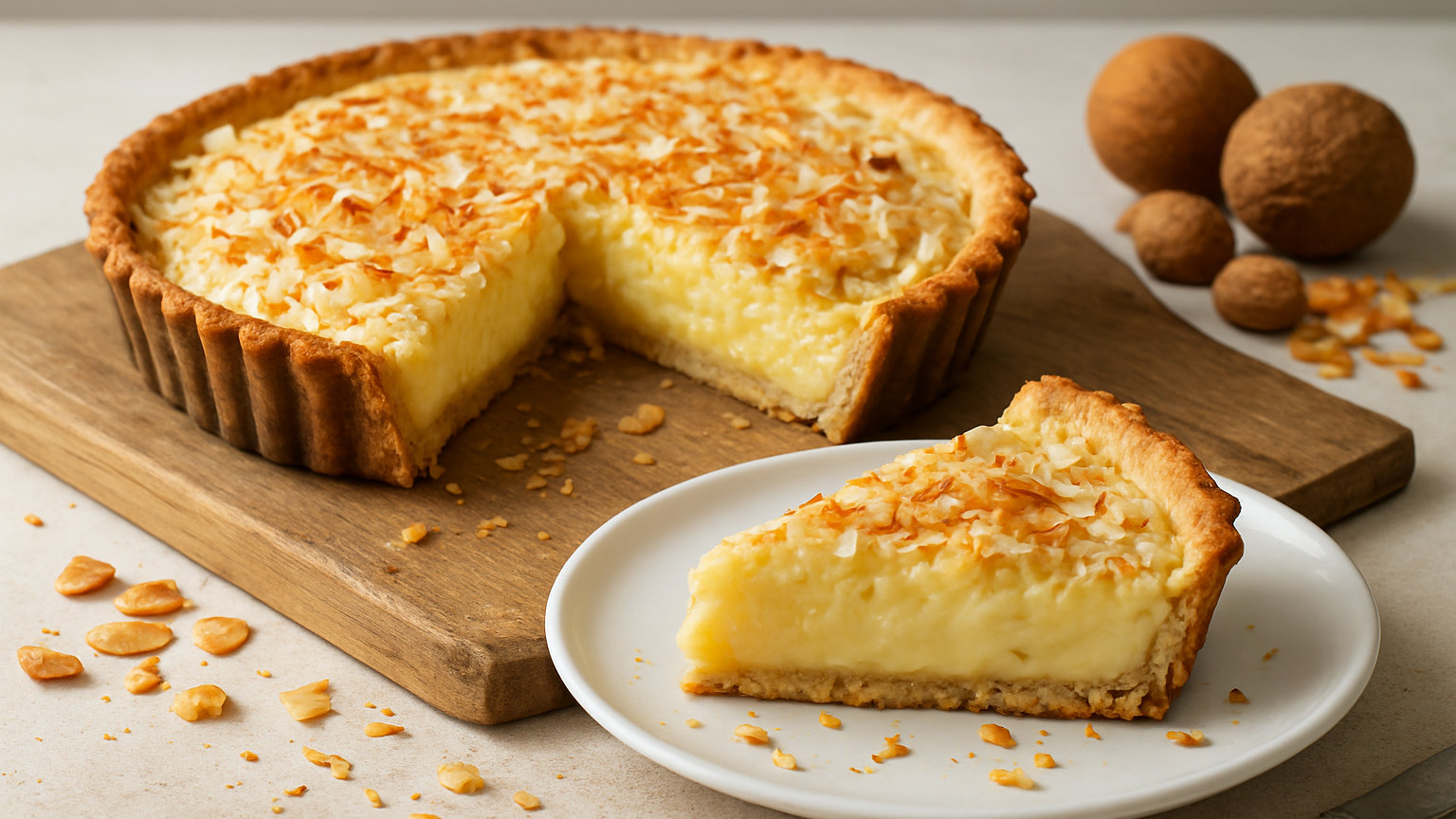
Pâte sucrée is the rich, sweet French pastry used for fruit tarts and tartlets. It contains more sugar and egg than ordinary shortcrust pastry, which makes this sweet pastry crisp and biscuit-like rather than flaky, strong enough to hold a wet filling without going soggy. It is usually made by creaming softened butter with icing sugar, rather than rubbing in cold butter, which gives a finer, more even texture.
How is it different from shortcrust pastry?
Ordinary sweet shortcrust is made by rubbing cold butter into flour, with a little sugar and water. Pâte sucrée uses softened butter creamed with icing sugar and egg yolk, and often a little ground almond. The result is sweeter, richer and more tender, with a snap like a biscuit. It is the right choice for tarts where the pastry is on show and must stay crisp.
What ingredients do you need?
This lines a 23cm tart tin.
- 125g unsalted butter, softened
- 75g icing sugar
- 1 large egg yolk
- 1 tbsp cold water
- 200g plain flour
- A pinch of fine salt
How do you make pâte sucrée?
- Beat the softened butter and icing sugar together until smooth and creamy, but not fluffy. You do not want to beat in much air.
- Beat in the egg yolk and water.
- Sift in the flour and salt and mix on a low speed, or with a knife, just until it comes together into a soft dough.
- Bring it into a ball with your hands, flatten into a disc, wrap and chill for at least an hour.
- Roll out between two sheets of baking paper to about 3mm thick, which stops it sticking and avoids adding extra flour.
- Chill the rolled sheet for 10 minutes if it has softened.
- Lift it into the tart tin and ease it into the corners without stretching. Press a small ball of spare dough into the edges.
- Trim, leaving a little proud of the rim, and prick the base lightly.
- Chill for at least 30 minutes before baking.
Roll between paper: this soft, rich dough sticks easily. Rolling it between two sheets of baking paper keeps it manageable and stops you working extra flour into it.
How do you go about blind baking it?
Line the chilled case with baking paper and fill with baking beans or uncooked rice. Bake at 190°C (170°C fan), gas 5, for 15 minutes, then lift out the paper and beans and bake for another 8 to 10 minutes, until the base is dry and evenly golden. For a wet filling, brush the hot case with beaten egg white and return it for two minutes to seal it.
Why does pastry shrink in the tin?
Shrinking happens when the dough has been stretched to fit or has not rested long enough, so the gluten pulls back in the heat. Ease the pastry into the tin rather than pulling it, chill it thoroughly before baking, and leave the trimmed edge slightly above the rim so any shrinkage does not matter. Trim it level after baking with a small serrated knife.
What if the pastry cracks?
Cracks are easy to mend. Press a little spare raw dough into the crack before baking, or patch a baked case with raw pastry and return it to the oven for a few minutes. Because this dough is so rich, it also tends to crack if it is too cold when rolled, so let it sit for five minutes out of the fridge first.
Can you make it in a food processor?
Yes. Blitz the butter and icing sugar, add the yolk and water, then add the flour and pulse just until the mixture starts to clump. Tip it out and bring it together by hand. Stop as soon as it comes together, as overworking makes the pastry tough.
Can you make it ahead?
Yes. The dough keeps in the fridge for three days and freezes for three months. Baked cases keep for two days in an airtight tin, or freeze for a month, ready to fill.