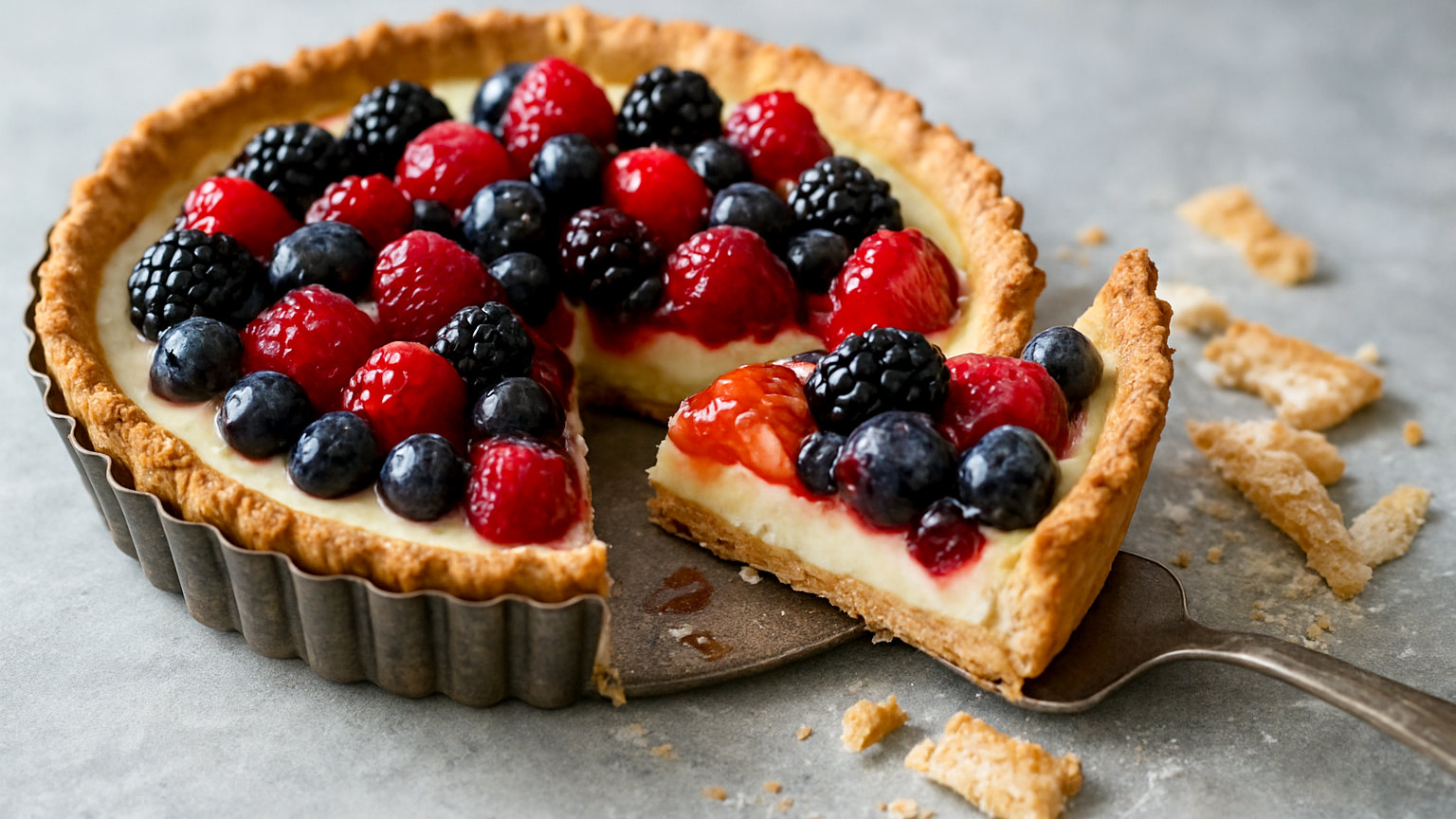
A retro fruit flan is a shallow sponge case filled with whipped cream or custard and topped with neatly arranged fruit under a glossy glaze. It was a staple of British dinner parties and Sunday teas in the 1960s and 1970s, often made with a shop-bought sponge flan case and a tin of peaches or mandarins. Made from scratch with a homemade sponge and fresh fruit, it is genuinely delicious and wonderfully easy.
What is a sponge flan case?
A sponge flan case is a thin, shallow round of whisked sponge with a raised rim and a dipped centre, baked in a special flan tin with a raised base. The dip holds the filling and fruit. It is much lighter than a pastry case and needs no blind baking. Ready-made cases are still sold in supermarkets, but a homemade one tastes far better.
What ingredients do you need?
For the sponge flan case
- 3 large eggs
- 85g caster sugar
- 85g plain flour
- 1 tsp vanilla extract
For the filling and topping
- 300ml double cream
- 1 tbsp icing sugar
- 400g fruit, such as strawberries, kiwi, mandarin segments and grapes
- 100ml fruit juice, from the tin or fresh orange juice
- 1 tsp arrowroot powder or cornflour
How do you make a retro fruit flan?
- Heat the oven to 180°C (160°C fan), gas 4. Grease a 25cm sponge flan tin well and dust with flour.
- Whisk the eggs and sugar with an electric mixer for eight to ten minutes, until pale, thick and tripled in volume.
- Sift over the flour, add the vanilla and fold in very gently with a large metal spoon.
- Pour into the tin and tilt it so the mixture reaches the edges.
- Bake for 15 to 18 minutes, until golden and springy.
- Cool in the tin for five minutes, then turn out onto a wire rack and cool completely.
- Whip the cream with the icing sugar and spread it into the dip of the flan case.
- Arrange the fruit in neat circles over the cream.
- For the glaze, blend the arrowroot with a little of the juice, then heat with the rest, stirring, until it thickens and turns clear. Cool slightly and brush over the fruit.
Grease the tin thoroughly: a sponge flan tin has fiddly ridges. Brush every groove with melted butter and dust with flour, or the sponge will stick and tear.
Should you use tinned or fresh fruit?
Both are authentic. Tinned mandarin segments, peach slices and pineapple were the classic choice and are still excellent, as they are evenly sized and need no preparation; drain them very well. Fresh strawberries, kiwi, grapes and blueberries look brighter and taste fresher. A mixture of the two gives the best of both.
Why use arrowroot for the glaze?
Arrowroot powder sets to a clear, shiny glaze, which shows off the colour of the fruit. Cornflour works but can look slightly cloudy. You can also use warmed, sieved apricot jam, which is the patisserie method. Whichever you use, let the glaze cool slightly before brushing so it does not melt the cream.
Why was it so popular?
The fruit flan suited its time perfectly. Sponge flan cases were cheap and widely available, tinned fruit was a store cupboard staple, and the finished dessert looked impressive with very little skill or expense. It could also be assembled in minutes, which made it ideal for entertaining.
How long does it keep?
Assemble the flan no more than three or four hours before serving, as the cream softens the sponge over time. Keep it in the fridge and eat within a day. The empty sponge case keeps for two days in an airtight tin, or freezes for a month.
Can you make individual flans?
Yes. Bake the sponge mixture in a 12-hole bun tin for 10 to 12 minutes, then press a small dip into each one with the back of a teaspoon while they are still warm. Fill with cream and a single strawberry or a few mandarin segments. Individual flans are ideal for parties and lunchboxes.