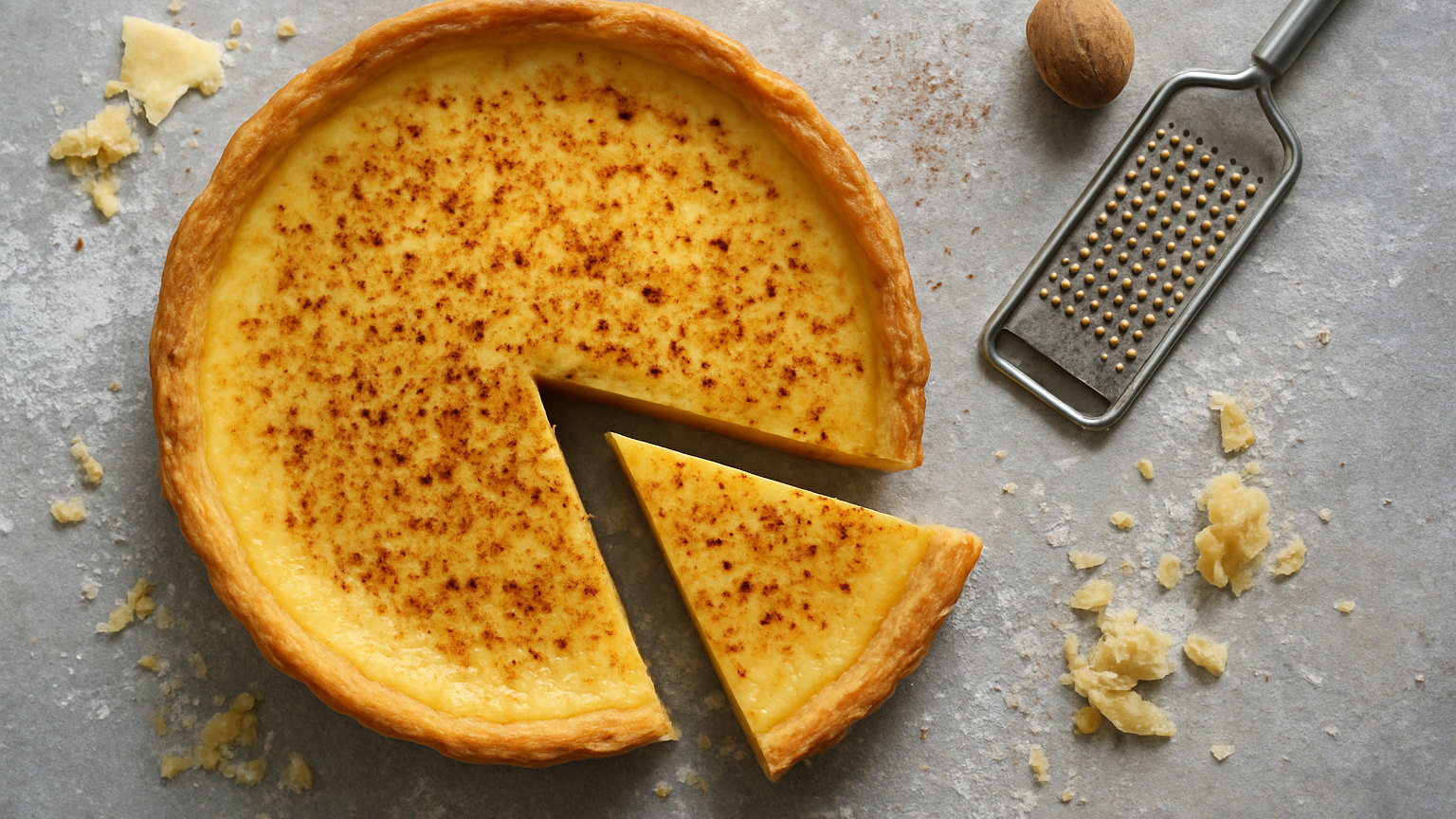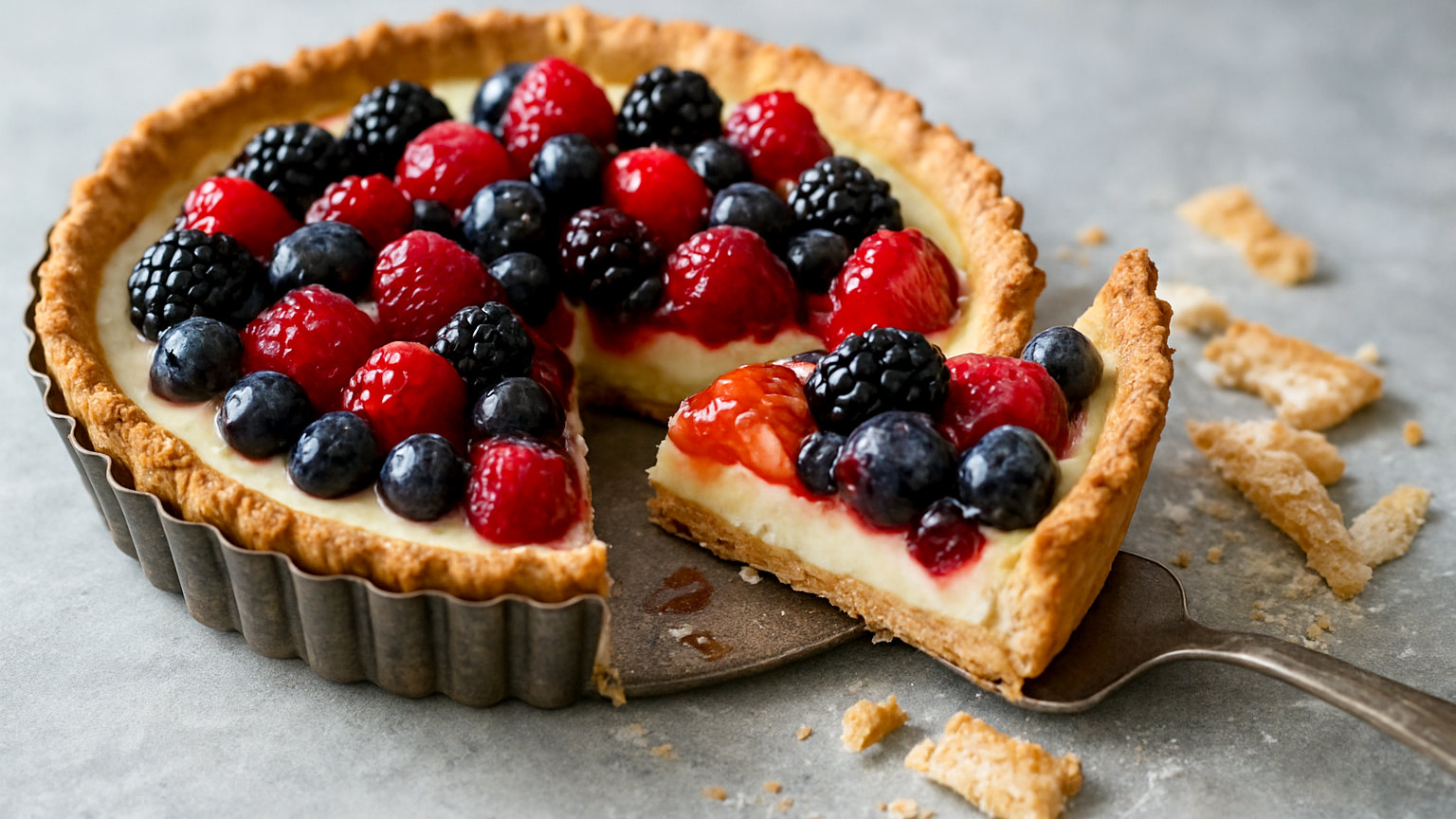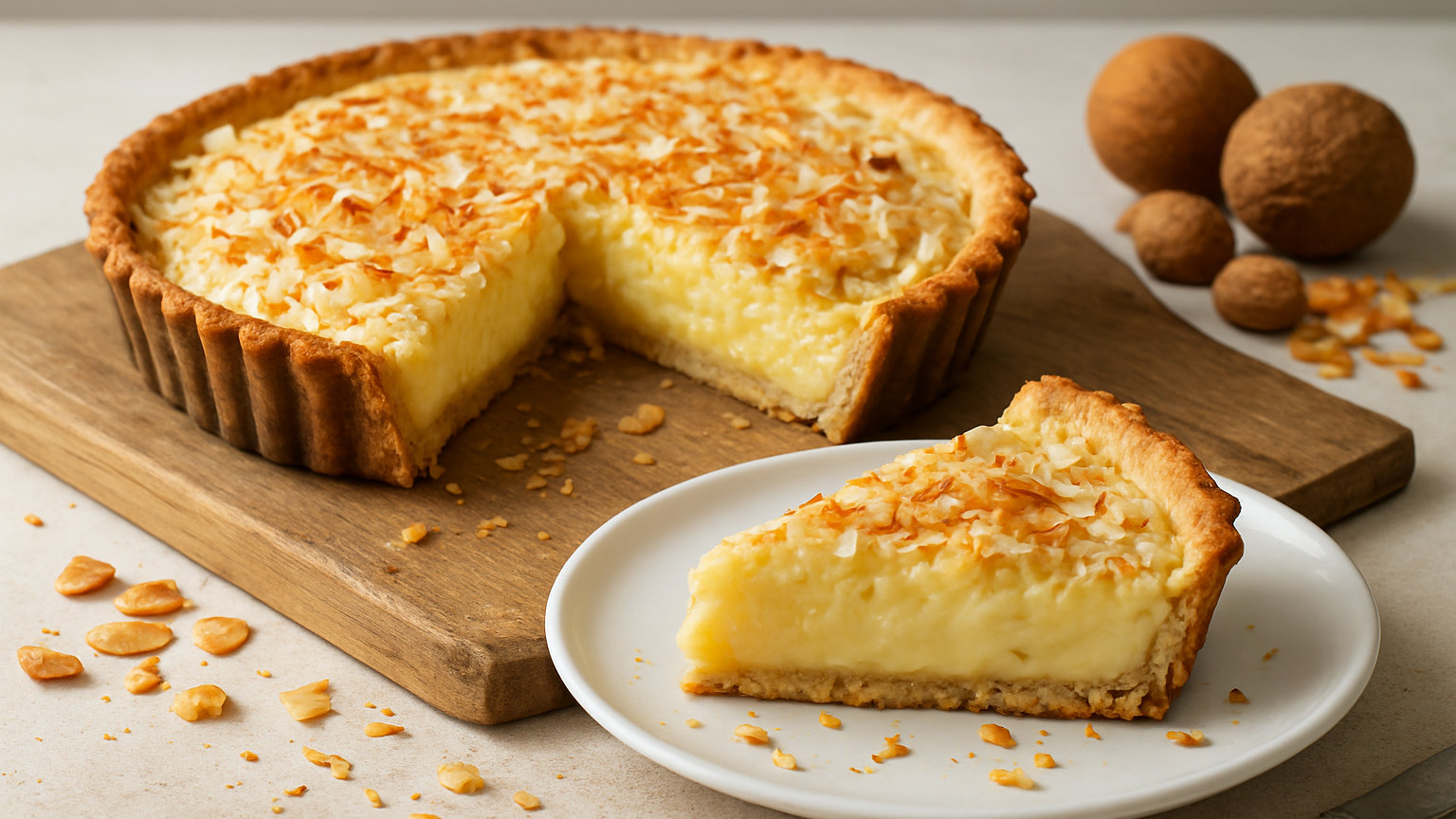
Where a tart should be stored depends entirely on its filling. Tarts filled with jam, syrup, dried fruit or frangipane keep perfectly well at room temperature for several days. Anything containing eggs, cream, custard or fresh fruit belongs in the fridge and should be eaten within two or three days. Unbaked pastry and empty baked cases freeze extremely well, which is the most useful thing to know.
Which tarts keep at room temperature?
| Type of tart | Where to store | How long |
|---|---|---|
| Treacle, marmalade, Bakewell | Airtight tin, cool room | 4 days |
| Ecclefechan, Border, rum nicky | Airtight tin, cool room | 5 days |
| Jam tarts | Airtight tin | 3 days |
| Custard, cream or curd tarts | Fridge | 2 to 3 days |
| Fresh fruit tarts | Fridge | 1 day |
| Chocolate ganache tarts | Fridge | 4 to 5 days |
Why does the fridge soften pastry?
A fridge is a humid place, and pastry absorbs moisture from the air and from the filling it sits against. That is why a tart that was crisp on the first day can be soft on the second. There is no way to avoid it entirely with wet fillings, but blind baking thoroughly and sealing the case with egg white before filling slows it considerably.
How do you crisp up a soft pastry case?
Warm the tart in a low oven, around 150°C (130°C fan), gas 2, for 10 to 15 minutes, standing it on a preheated baking tray so the heat reaches the base. This works well for treacle, Bakewell and fruit tarts. It does not suit custard, cream or ganache fillings, which will melt or curdle, so those are better accepted as they are.
What freezes well?
Raw pastry and empty baked cases freeze best of all, and it is worth keeping some in the freezer. Baked tarts with frangipane, dried fruit or syrup fillings also freeze well for two months. Chocolate ganache tarts freeze for a month. Baked custard tarts, cream fillings and meringue toppings do not freeze, as they separate and weep when thawed.
How do you freeze pastry and tart cases?
- For raw dough, flatten it into a disc, wrap tightly in cling film and freeze for up to three months.
- For a lined tin, freeze the whole tin until solid, then wrap it well. Blind bake from frozen, adding about five minutes.
- For baked empty cases, cool completely, then freeze in the tin or in a rigid box to stop them breaking.
- Label everything with the date and the tin size, as frozen cases all look alike.
Freeze cases in a rigid box: baked pastry is extremely fragile and a bag offers no protection. A plastic box or tin keeps the edges intact.
How do you freeze a whole baked tart?
Cool it completely first, as freezing a warm tart creates ice crystals and a soggy base. Open freeze it on a tray until firm, then wrap in two layers of cling film and a layer of foil. Defrost overnight in the fridge, or at room temperature for a few hours, still wrapped so condensation forms on the wrapping rather than the pastry.
How can you tell if a tart has gone off?
Throw away any tart showing spots of mould, a sour smell or a slimy surface. Custard and cream fillings spoil fastest, particularly if they have been left out of the fridge for more than a couple of hours on a warm day. Jam, syrup and dried fruit fillings are high in sugar, which preserves them, so they last considerably longer.
Should you store tarts covered or uncovered?
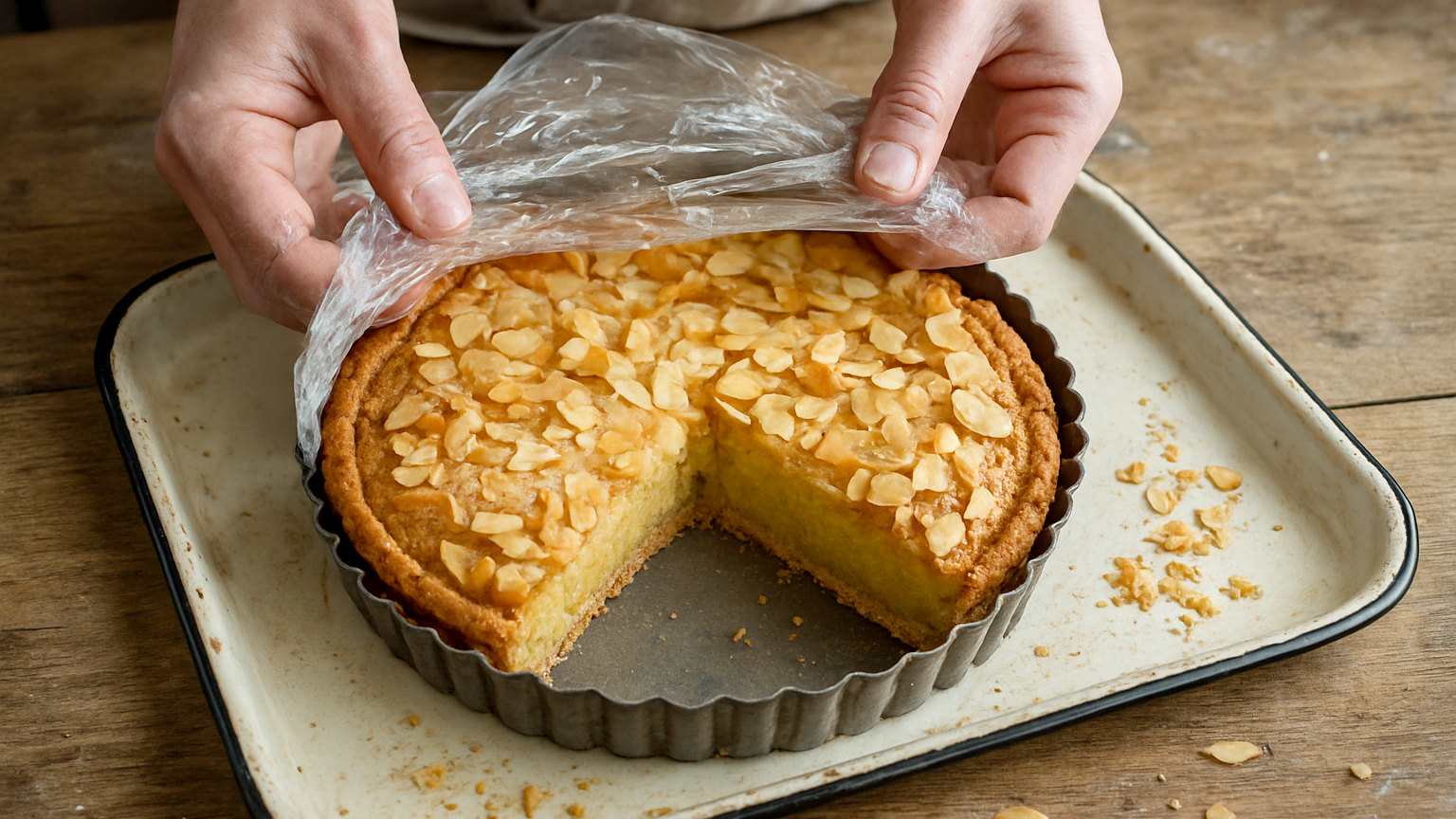
Cover them, but not too tightly. An airtight tin is ideal for room temperature tarts. In the fridge, cover loosely with foil or an upturned bowl rather than pressing cling film onto the surface, which traps moisture against the pastry and speeds up sogginess.
Can you store a tart in its tin?
Yes, and it is often the safest option, as the tin supports the fragile pastry edge. Cover the whole tin loosely and store it as the filling requires. Only remove the tart from a loose-bottomed tin once it is fully set and you are ready to serve it.