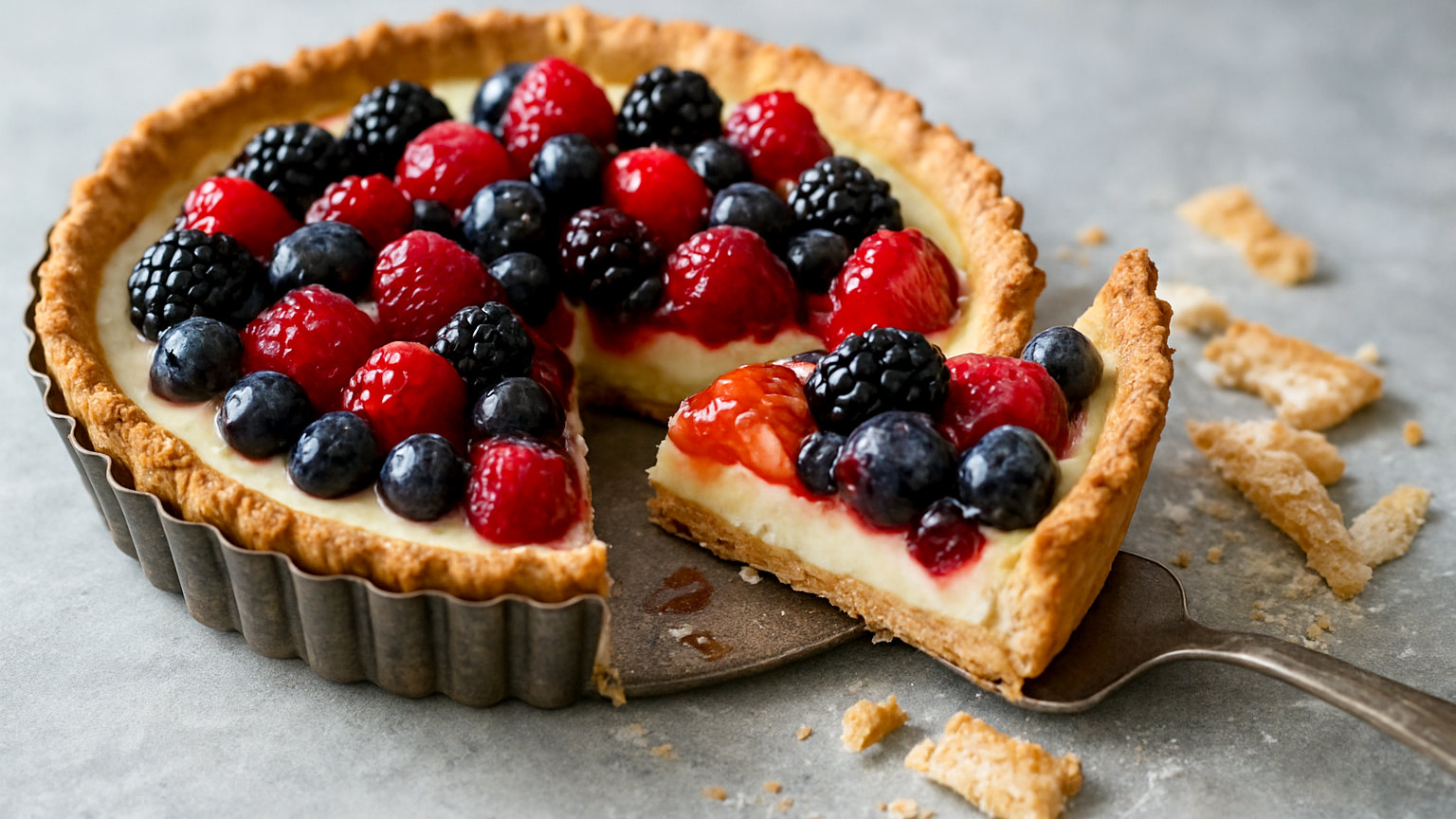
For most tarts, a loose-bottomed metal tart tin with a fluted edge is the best choice, because metal conducts heat quickly for a crisp base and the removable base lets you lift the tart out cleanly. Ceramic and glass dishes look attractive but heat slowly and cannot be unmoulded. A 23cm tin is the most useful size to own, as the great majority of British tart recipes are written for it.
Why do loose-bottomed tins matter?
A tart with a filling set in it cannot be turned upside down to be released. A loose base solves this: stand the cooled tin on a can and the ring slides down, leaving the tart on its metal disc. Without one, you have to serve the tart from the dish and risk damaging the first slice. For any tart you want to present whole, a loose base is worth having.
Which material bakes best?
| Material | Heat conduction | Best for |
|---|---|---|
| Thin aluminium or tinned steel | Fast and even | Crisp pastry bases |
| Non-stick metal, dark finish | Fast, browns quickly | Check five minutes early |
| Ceramic or stoneware | Slow | Rustic tarts served in the dish |
| Ovenproof glass | Slow but visible | Checking whether the base is cooked |
| Enamel | Fast, very durable | Everyday pies and tarts |
Metal is the clear winner for pastry. If you use ceramic or glass, preheat a baking tray in the oven and set the dish on it, and expect to bake for a little longer.
What size should you buy first?
A 23cm loose-bottomed tin with a fluted edge, about 3cm deep, covers most recipes. Add a 20cm tin next for smaller tarts, and a set of individual 10cm tartlet tins for dinner parties. A deep 23cm tin, around 4cm, is useful for custard tarts and quiches that need more filling.
How do you adapt a recipe to a different tin?
Compare the areas. For a round tin, multiply the radius by itself and then by 3.14. A 20cm tin has an area of about 314 square centimetres and a 23cm tin about 415, so moving up from 20cm to 23cm needs roughly a third more pastry and filling. Depth matters too: a deeper tin needs more filling and a longer, gentler bake.
Weigh your tin: if you are unsure of a tin size, fill it with water and measure how much it holds, then compare with a tin you know. This is far more reliable than measuring an unusual shape.
Why do tart tins have fluted edges?
The fluting is partly decorative, giving the finished tart its familiar scalloped edge, but it also strengthens the pastry wall. The ridges give the sides more structure, so a thin pastry case is less likely to slump as the butter melts. Straight-sided tins give a cleaner, more modern look but need slightly thicker pastry.
Do you need to grease a tart tin?
Usually not, if the pastry is rich in butter, as it releases naturally from metal. A very lean pastry, or a filling that is likely to bubble over, benefits from a light greasing. Non-stick tins rarely need it. For ceramic dishes, greasing is sensible, as pastry sticks more readily to them.
How should you care for tart tins?
Wash them by hand and dry them immediately, as loose bases and fluted edges rust easily if left damp. Avoid scouring pads on non-stick finishes. Store them stacked with the bases in place, so they do not get separated, and keep a note of the sizes if they are not marked.
What about foil and disposable tins?
Foil cases are fine for transporting a tart or freezing an unbaked one, and they conduct heat well. They are flimsy, though, so always set them on a baking tray before filling. They cannot be unmoulded, so use them where the tart will be served from the case.
Do you need baking beans as well?
Yes, for any tart that needs blind baking. Ceramic beans are sold for the purpose, but dried rice, lentils or beans work just as well and cost nothing. Keep a labelled jar of them purely for baking, as they dry out too much to cook afterwards, and they can be reused many times.