
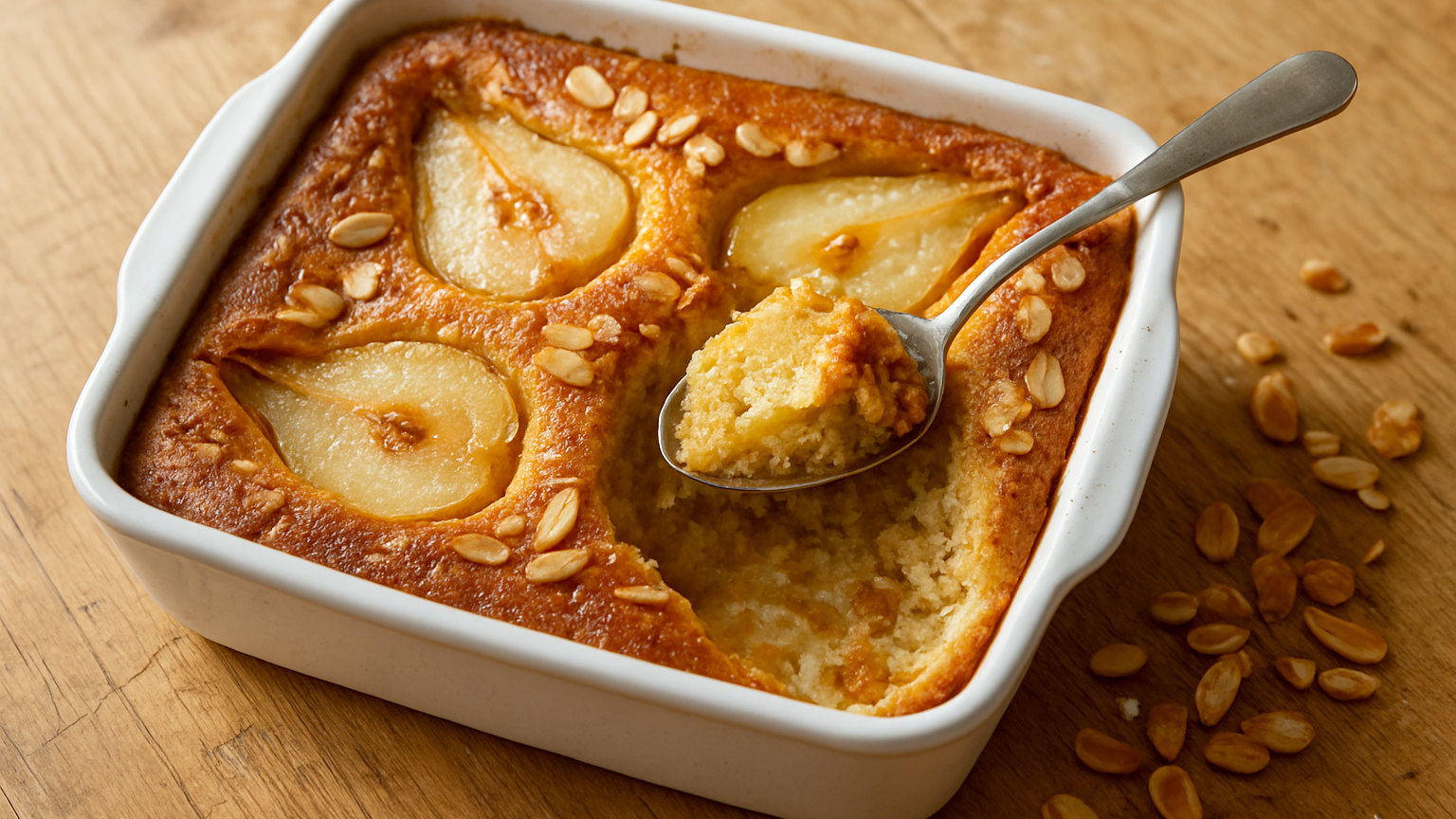
A baked pear and almond pudding is halved pears set into a soft, moist almond sponge, baked until the fruit has sunk slightly and the sponge has risen golden around it. Pears and almonds are one of the great pairings, and this is the simplest way to put them together. It is a hot pudding rather than a cake, best served warm with cream.
What ingredients do you need?
Serves 6.
- 4 firm pears, peeled, halved and cored
- 175g unsalted butter, softened
- 175g caster sugar
- 3 large eggs
- 125g ground almonds
- 75g self-raising flour
- ½ tsp almond extract
- 2 tbsp milk
- 3 tbsp flaked almonds
- 1 tbsp demerara sugar
How do you make it?
- Heat the oven to 180°C (160°C fan), gas 4. Butter a 1.5 litre baking dish.
- Beat the butter and caster sugar together until pale and fluffy.
- Beat in the eggs one at a time, adding a spoonful of the flour with the last.
- Fold in the ground almonds, remaining flour, almond extract and milk.
- Spread into the dish and level the surface.
- Arrange the pear halves cut side down over the sponge, pressing them in only lightly.
- Scatter with flaked almonds and demerara sugar.
- Bake for 45 to 50 minutes, until golden and a skewer inserted between the pears comes out clean.
- Rest for 10 minutes before serving.
Press the pears in lightly: pushing them down into the batter means they sink out of sight. Resting them on the surface lets the sponge rise around them so they stay visible.
Which pears should you use?
Firm pears that hold their shape are best. Conference pears are widely available in Britain and work well, and Comice are sweeter but softer. Slightly underripe pears are actually preferable, as they soften during the long bake without collapsing. Very ripe pears turn to mush and release too much juice.
Should you poach them first?
Not for this pudding. The 45 to 50 minutes in the oven is long enough to soften raw pear halves completely. Poaching would make them too soft and add liquid to the sponge. If your pears are very hard and unripe, give them ten minutes in simmering water first.
Can you use tinned pears?
Yes, and they are a good shortcut. Drain tinned pear halves thoroughly and pat them dry on kitchen paper, as the syrup will make the sponge wet. They are already soft, so check the pudding ten minutes earlier. Choose pears in juice rather than heavy syrup.
Why use ground almonds in the sponge?
Ground almonds keep the sponge moist and give it a dense, tender crumb that suits a baked fruit pudding better than a light Victoria sponge. They also carry the almond flavour that pairs so well with pear. The small amount of self-raising flour alongside gives just enough lift.
Is it suitable for nut allergies?
No. Ground almonds and flaked almonds are both central to the recipe. For a nut-free version, replace the ground almonds with the same weight of self-raising flour, leave off the flaked almonds and add the zest of an orange and a teaspoon of ground ginger for flavour.
How long does it keep?
It keeps for three days in an airtight container in a cool place, or four in the fridge, and the ground almonds stop it drying out. Reheat portions covered with foil at 160°C for 15 minutes. It freezes for two months. Serve with cream, custard or crème fraîche.
Can you add chocolate?
Yes, and chocolate and pear is another excellent pairing. Fold 100g of dark chocolate chunks into the sponge before the pears go on, or scatter them over the top with the flaked almonds. A tablespoon of cocoa in place of a tablespoon of flour gives a chocolate sponge throughout, though it does hide the pears somewhat. Scattering a few chunks on top instead keeps the fruit visible while still giving pockets of melted chocolate.


