
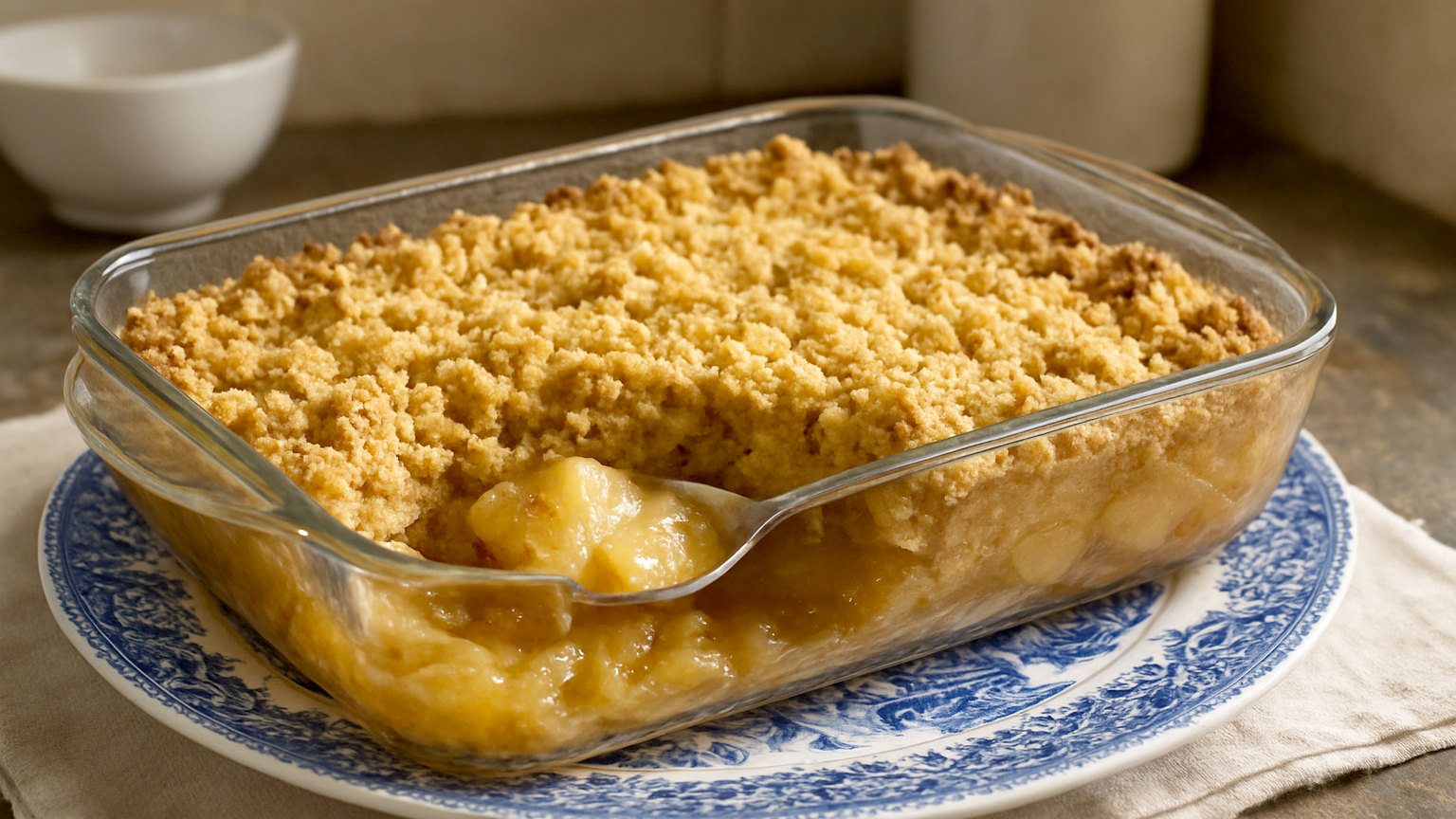
Apple crumble is probably the most-made pudding in Britain: sharp cooking apples under a thick, sandy topping of flour, butter and sugar, baked until the fruit bubbles at the edges and the top turns golden. It takes fifteen minutes to assemble, it is forgiving, and it is genuinely difficult to make badly. The details below are what raise it from good to very good.
What is the right ratio for a crumble topping?
The classic ratio is two parts flour to one part butter to one part sugar by weight, so 200g flour, 100g butter and 100g sugar. That gives a topping that holds together in clumps without being greasy. More butter makes it richer and more shortbread-like; less makes it dry and powdery. It is worth learning the ratio rather than the recipe.
What ingredients do you need?
Serves 6.
For the filling
- 1kg Bramley apples, peeled, cored and sliced
- 75g caster sugar
- 1 tsp ground cinnamon
- 1 tbsp lemon juice
For the crumble topping
- 200g plain flour
- 100g cold unsalted butter, cubed
- 75g demerara sugar
- 25g caster sugar
- 50g porridge oats, optional
- A pinch of fine salt
How do you make apple crumble?
- Heat the oven to 190°C (170°C fan), gas 5.
- Toss the sliced apples with the caster sugar, cinnamon and lemon juice, and tip into a 1.5 litre baking dish.
- Rub the cold butter into the flour and salt with your fingertips until it looks like coarse breadcrumbs.
- Stir in both sugars and the oats, if using.
- Squeeze a little of the mixture in your hand to form clumps, then break it up roughly.
- Scatter over the apples without pressing it down.
- Bake for 40 to 45 minutes, until the top is deep golden and the fruit bubbles at the edges.
- Rest for 10 minutes before serving with custard.
Do not press the topping down: a compacted crumble bakes into a solid biscuit lid. Scatter it loosely so steam can escape and the whole layer stays sandy and crisp.
Which apples should you use?
Bramley apples are ideal. They are sharp enough to balance the sweet topping and they collapse into a soft, fluffy layer. Other cooking apples work well. A mixture of Bramleys with a couple of firm eating apples gives both soft purée and pieces that hold their shape, which many people prefer.
Should you cook the apples first?
Not for apple crumble. Bramleys soften completely in the 40 minutes the topping needs, so they can go into the dish raw. Firmer fruit such as pears, or dense fruit like quince, does benefit from ten minutes in a pan first. Rhubarb needs no pre-cooking but does need extra thickening.
Why add oats or demerara?
Both add texture. Porridge oats give a slightly chewy, rustic crumble, and demerara sugar has large crystals that stay crunchy rather than dissolving. Neither is traditional in the strictest sense, but both improve the top layer noticeably. Ground almonds are another good addition, in place of 50g of the flour.
Why is my crumble soggy underneath?
Too much liquid from the fruit. Very juicy fruit needs a tablespoon of cornflour tossed through it, and apples that have been sitting in sugar for an hour will have released a great deal of juice, so assemble and bake straight away. A deep layer of fruit with a thin topping is also more likely to go wet.
How long does it keep?
It keeps for three days in the fridge and reheats well in a hot oven for 15 minutes, which crisps the topping again. It freezes for three months, either baked or assembled raw, and can be baked from frozen with an extra 20 minutes.
Can you use other fruit?
Almost anything. Rhubarb, plums, gooseberries and blackberries all work, and apple with blackberries is the classic autumn version. Sharp fruit suits the sweet topping best. For juicy fruit, add a tablespoon of cornflour, and for firm fruit such as pears, cook it for ten minutes first.


