
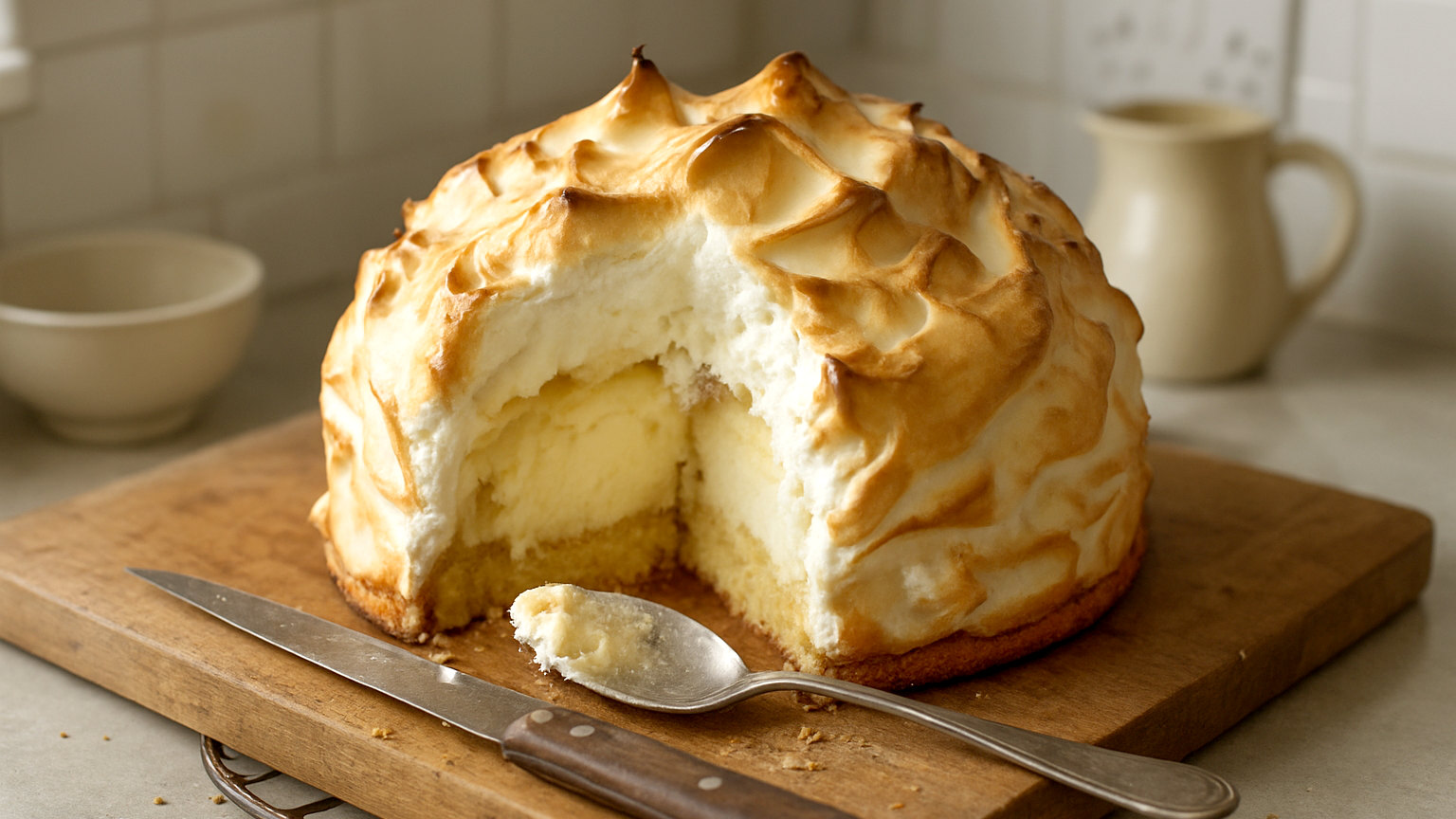
A baked Alaska is a dome of ice cream on a sponge base, covered completely in meringue and baked in a very hot oven for a few minutes, so the meringue browns while the ice cream inside stays frozen. It is a genuinely impressive dessert and the physics behind it is simple: meringue is full of air, and air is an excellent insulator.
How does the ice cream not melt?
Whisked egg whites are about 90% air by volume, and air conducts heat very poorly. A thick layer of meringue acts as insulation, so in the four or five minutes the dessert spends in the oven, the heat browns the surface without reaching the ice cream. The sponge base does the same job from below.
What ingredients do you need?
Serves 8.
- 1 shop-bought or homemade sponge round, about 20cm
- 1 litre firm vanilla ice cream
- 3 tbsp raspberry jam, optional
- 5 large egg whites
- 275g caster sugar
- ½ tsp cream of tartar
How do you make baked Alaska?
- Line a 1.5 litre pudding basin with cling film, pack in the softened ice cream, level the top and freeze until solid, at least six hours.
- Put the sponge round on an ovenproof plate or board and spread with jam if using.
- Turn the ice cream dome out onto the sponge, peel off the cling film and return the whole thing to the freezer.
- Whisk the egg whites and cream of tartar to soft peaks, then add the sugar a spoonful at a time, whisking to stiff, glossy peaks.
- Take the assembled base from the freezer and cover it completely with meringue, right down to the plate, leaving no gaps.
- Swirl into peaks and return to the freezer for at least an hour, or up to a day.
- Heat the oven to 230°C (210°C fan), gas 8.
- Bake for four to five minutes, until the peaks are golden, and serve immediately.
Seal the meringue to the plate: any gap where the ice cream is exposed lets heat straight in, and that patch will melt while the rest stays frozen.
Why must the oven be so hot?
The dessert needs to brown as quickly as possible, so the heat has no time to penetrate the meringue. At 230°C, four minutes is enough to colour the peaks. At a moderate temperature, the meringue would take fifteen minutes to brown, by which point the ice cream would be soup.
Can you use a blowtorch instead?
Yes, and it is the safer option if you are nervous. Torch the meringue all over, keeping the flame moving, until the peaks are golden. It takes a few minutes and there is no risk of overheating the ice cream. The finish is slightly different, with more contrast between browned and pale areas.
Are the egg whites safe?
Baking for four minutes at a high temperature browns the surface but may not cook the meringue right through. For a version that is fully safe for anyone pregnant, elderly or very young, make a Swiss meringue instead: whisk the whites and sugar over simmering water until they reach 70°C, then whisk until stiff. Otherwise use British Lion eggs.
Can you make it ahead?
Yes, and you should. The assembled and meringued dessert keeps in the freezer for up to a day before baking, which removes all the pressure. Bake it straight from the freezer at the last minute. What you cannot do is bake it in advance.
What ice cream works best?
A firm, dense ice cream holds its shape best. Vanilla is classic, but coffee, chocolate, raspberry ripple and salted caramel all work. Avoid very soft or airy ice creams, which melt faster. Layering two or three flavours in the basin looks striking when the dessert is cut.
Why does the sponge base matter?
The sponge insulates the ice cream from below and gives the dessert something solid to sit on, so it can be moved from freezer to oven to table without collapsing. A shop-bought sponge flan case or a plain round of Victoria sponge both work. It should be slightly wider than the ice cream dome.


