
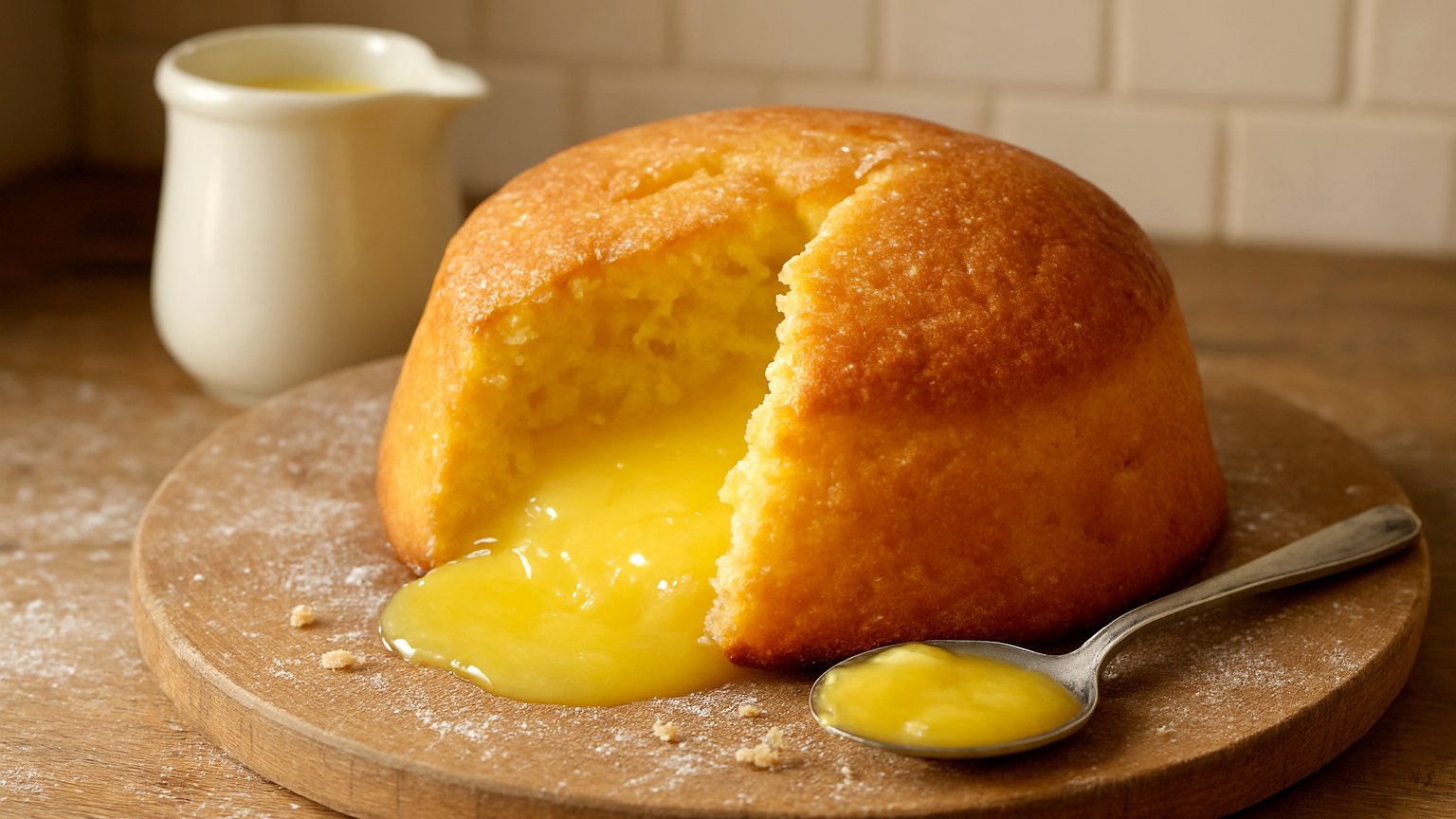
A lemon surprise pudding is made from a single mixture that separates in the oven into two distinct layers: a light, souffle-like lemon sponge on top and a sharp lemon sauce underneath. It is sometimes called lemon delicious or self-saucing lemon pudding. The surprise is that it works, and it works reliably, provided you fold the egg whites in gently and use a water bath.
How does it separate?
The mixture is essentially a thin lemon custard lightened with whisked egg whites. In the oven, the aerated part rises to the top and sets into a sponge, while the heavier liquid sinks and thickens into a sauce. The water bath keeps the heat gentle enough that the bottom layer stays saucy rather than setting as well.
What ingredients do you need?
Serves 4.
- 50g unsalted butter, softened
- 175g caster sugar
- Finely grated zest and juice of 2 unwaxed lemons
- 3 large eggs, separated
- 50g self-raising flour
- 250ml whole milk
- A pinch of fine salt
- Icing sugar, for dusting
How do you make lemon surprise pudding?
- Heat the oven to 180°C (160°C fan), gas 4. Butter a 1.2 litre baking dish and put the kettle on.
- Beat the butter, caster sugar and lemon zest together until pale.
- Beat in the egg yolks one at a time, then the flour.
- Gradually whisk in the milk and lemon juice. The mixture will look thin and slightly curdled, which is correct.
- In a clean bowl, whisk the egg whites with the salt to soft peaks.
- Fold the whites into the lemon mixture in three additions, gently, keeping as much air as possible.
- Pour into the dish and stand it in a roasting tin.
- Pour boiling water into the tin to come halfway up the sides of the dish.
- Bake for 40 to 45 minutes, until the top is risen and golden and the middle is just firm.
- Dust with icing sugar and serve straight away.
Do not worry when the mixture curdles: lemon juice and milk always split. The egg whites and the oven put it right, and a smooth mixture at this stage would not separate properly.
Why does it need a water bath?
The water surrounding the dish cannot exceed 100°C, so it keeps the heat gentle and even. That protects the sauce layer at the bottom, which would set into sponge if it got too hot, and it stops the edges of the pudding overcooking before the middle has risen. Without it, you usually get sponge all the way through.
How gently should you fold the egg whites?
Very. Use a large metal spoon and cut down through the middle, along the bottom and up the side, turning the bowl as you go. Add the whites in three batches, using the first to loosen the mixture. Stop as soon as no large streaks of white remain. Overfolding knocks out the air that creates the sponge layer.
Can you use other citrus?
Yes. Orange makes a sweeter, gentler pudding, so reduce the sugar to 150g. Lime gives a sharper version, and a mixture of lemon and lime is very good. Grapefruit works but is bitter, so it suits people who like a genuinely tart pudding. Keep the total juice at about 100ml.
Why is my sauce layer thin?
Either the pudding was overbaked, so more of the liquid set into sponge, or the egg whites were overfolded and there was not enough air to create a distinct top layer. Take it out as soon as the top is golden and just firm, and expect the sauce to be a thin but definite layer rather than a deep pool.
How long does it keep?
It must be eaten straight away, while the two layers are distinct. On standing, the sponge absorbs the sauce and the effect is lost. Leftovers keep for a day in the fridge and are still pleasant, but they are simply a lemon sponge by then.


