
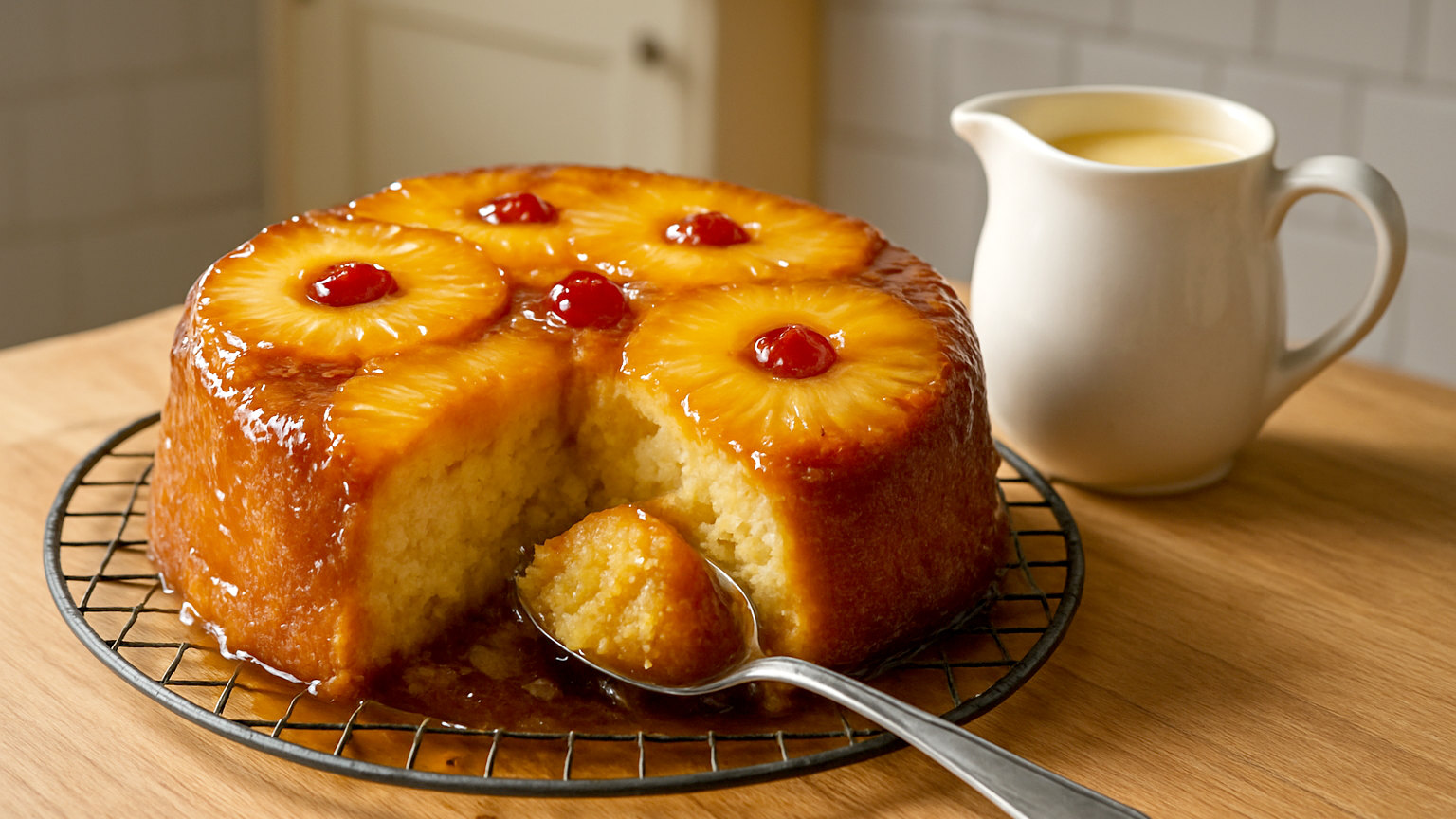
Pineapple upside-down pudding is tinned pineapple rings and glacé cherries arranged in a caramel base, covered with sponge, baked and then turned out so the fruit sits glistening on top. It was the height of fashion in the 1960s and 1970s and never entirely went away, because it looks striking, costs very little and tastes extremely good warm with custard.
What ingredients do you need?
Serves 8.
For the base
- 50g unsalted butter
- 100g light brown soft sugar
- 1 tin pineapple rings in juice, about 7 rings, drained
- 7 glacé cherries
For the sponge
- 175g unsalted butter, softened
- 175g caster sugar
- 3 large eggs
- 175g self-raising flour
- 1 tsp baking powder
- 2 tbsp pineapple juice from the tin
How do you make it?
- Heat the oven to 180°C (160°C fan), gas 4. Line the base of a 23cm round cake tin with baking paper and grease the sides.
- Melt the 50g butter and brown sugar together and pour into the tin, spreading evenly.
- Arrange the pineapple rings on the caramel, one in the centre and the rest around it.
- Put a glacé cherry in the hole of each ring.
- Beat the softened butter and caster sugar until pale, then beat in the eggs one at a time.
- Fold in the flour, baking powder and pineapple juice.
- Spoon carefully over the fruit and level the surface without disturbing the arrangement.
- Bake for 40 to 45 minutes, until risen, golden and a skewer comes out clean.
- Rest for five minutes, then invert onto a plate.
Turn it out after exactly five minutes: any longer and the caramel sets and glues the fruit to the tin. Any sooner and the sponge is too fragile to hold together.
Should you use tinned or fresh pineapple?
Tinned is genuinely better here. The rings are evenly sized, already cored, and have the right softness. Fresh pineapple contains an enzyme called bromelain that can give a slightly odd texture in baking, and it needs coring and slicing to an even thickness. Choose pineapple in juice rather than syrup.
Why line only the base of the tin?
The baking paper disc guarantees the caramel and fruit release cleanly, which is the one part that matters. The sides need only greasing, as the sponge shrinks away from them slightly as it cools. Use a solid-based tin, not a loose-bottomed one, or the melted caramel will leak out.
How do you turn it out neatly?
Run a knife around the edge, put a plate over the tin, hold both firmly with oven gloves and invert in one confident movement. Lift the tin off slowly. If a cherry or a piece of pineapple stays behind, lift it off with a palette knife and put it back in place; nobody will know.
Can you use other fruit?
Yes. Halved apricots, plums, pear halves, peach slices or whole cherries all work in the caramel base. Apple rings are good with a little cinnamon in the sponge. Whatever you use, arrange it cut side down so the attractive surface is uppermost when the pudding is turned out.
Is it a cake or a pudding?
Both, depending on how you serve it. Warm from the oven with custard or cream, it is a pudding. Cooled and cut into wedges, it is a cake for tea. The recipe is identical either way, which is part of its usefulness.
How long does it keep?
It keeps for three days in an airtight container and reheats well, covered, at 160°C for 15 minutes. It freezes for three months. The caramel stays sticky rather than setting hard, so it slices cleanly even when cold.
Why did the caramel stick to the tin?
The pudding was left too long before turning out, so the caramel cooled and set. Five minutes is the window. If it has already set, stand the tin briefly in an inch of hot water to soften the caramel, then run a knife round and invert.


