
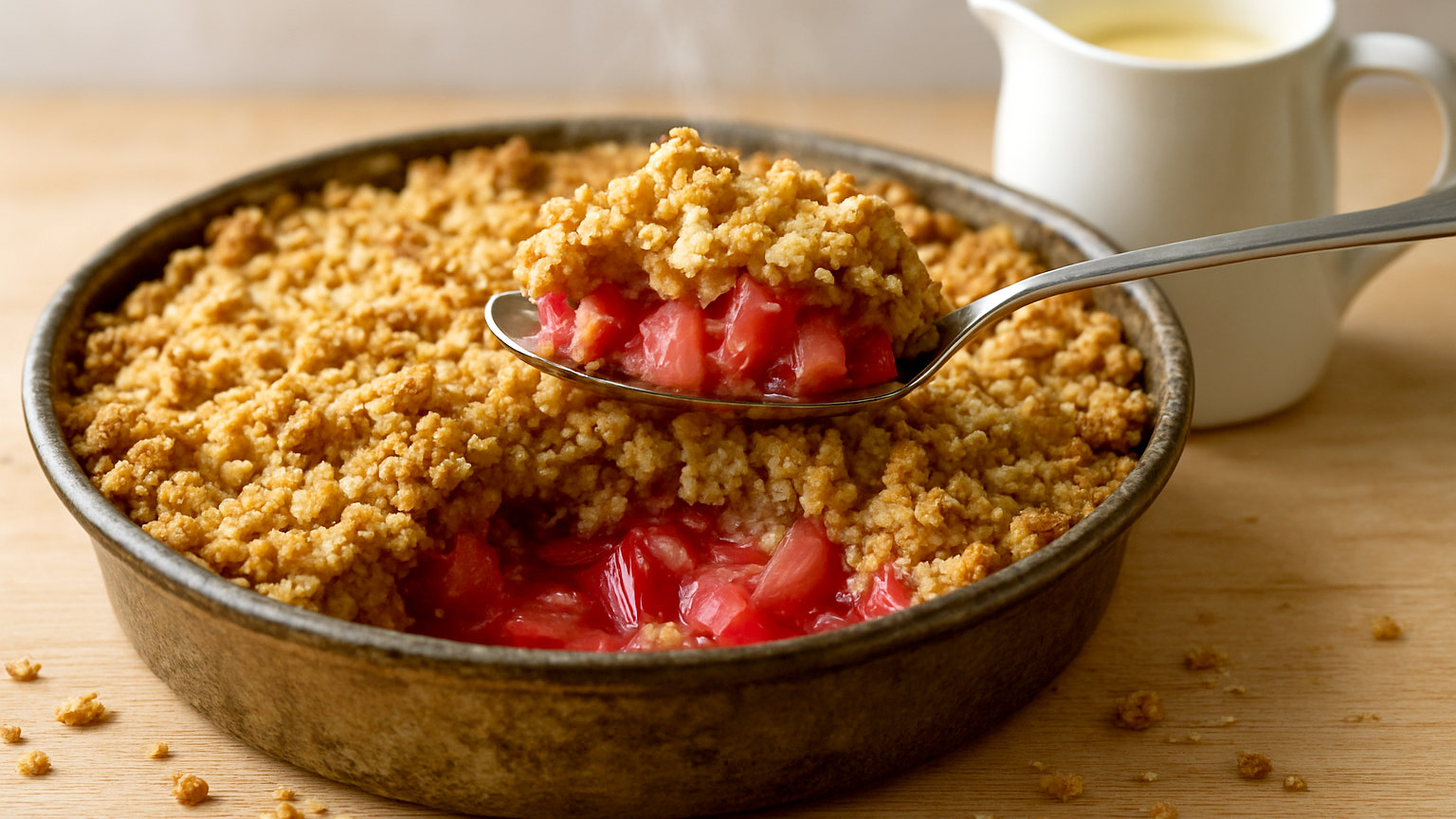
Rhubarb and ginger crumble is sharp, pink and warming, with stem ginger cutting through the sourness of the fruit and a buttery oat topping baked until golden. Rhubarb is the trickiest fruit to crumble because it releases so much liquid, so this recipe deals with that directly rather than hoping for the best.
What ingredients do you need?
Serves 6.
For the filling
- 1kg rhubarb, trimmed and cut into 3cm lengths
- 125g caster sugar
- 3 balls stem ginger, finely chopped, plus 2 tbsp syrup
- 1 tsp ground ginger
- 2 tbsp cornflour
- Finely grated zest of 1 orange
For the topping
- 200g plain flour
- 100g cold unsalted butter, cubed
- 75g demerara sugar
- 50g porridge oats
- A pinch of fine salt
How do you make rhubarb and ginger crumble?
- Heat the oven to 190°C (170°C fan), gas 5.
- Toss the rhubarb with the caster sugar and leave in a colander over a bowl for 30 minutes.
- Discard most of the liquid that collects, keeping about two tablespoons.
- Mix the rhubarb with the stem ginger, syrup, ground ginger, cornflour and orange zest, and tip into a 1.5 litre baking dish.
- Rub the butter into the flour and salt until it looks like coarse breadcrumbs, then stir in the demerara sugar and oats.
- Squeeze a little into clumps, break it up and scatter loosely over the fruit.
- Bake for 40 to 45 minutes, until golden on top and bubbling at the edges.
- Rest for 10 minutes before serving with custard.
Drain the rhubarb first: it is about 95% water, and half an hour in a colander with sugar draws out enough liquid to keep the crumble from turning into soup.
Which rhubarb should you use?
Forced rhubarb, in season from January to March, is the prettiest, with slender bright pink stalks and a delicate flavour. Outdoor rhubarb from April onwards is thicker, greener and more sour, with tougher strings worth peeling from the largest stalks. Both work; forced gives the better colour.
Why does rhubarb make crumbles watery?
Rhubarb holds an enormous amount of water and releases nearly all of it when heated. Unlike apple, which holds its shape, rhubarb collapses into liquid. Draining it with sugar first, adding cornflour to thicken what remains, and not adding any extra liquid are the three things that keep the crumble from flooding.
Are rhubarb leaves safe?
No. Rhubarb leaves contain high levels of oxalic acid and should never be eaten. Cut them off and discard them or add them to the compost. Only the stalks are used. Trim the very base of each stalk too, as it can be tough and stringy.
Why does ginger suit rhubarb?
Rhubarb is intensely sour and can taste one-dimensional even with plenty of sugar. Ginger adds warmth and a fragrant heat that gives the fruit something to play against. Orange zest does a similar job. The combination of rhubarb, ginger and orange is one of the most reliable in British baking.
Can you use frozen rhubarb?
Yes. Use it straight from frozen without thawing, as thawed rhubarb collapses completely and releases even more liquid. Skip the draining step, since you cannot drain frozen fruit, but increase the cornflour to three tablespoons and add ten minutes to the baking time.
How long does it keep?
It keeps for three days in the fridge and reheats in a hot oven for 15 minutes, which crisps the topping again. It freezes for three months, baked or assembled raw, and bakes from frozen with an extra 20 minutes.
Can you add other fruit?
Yes. Strawberries are the classic partner for rhubarb and add sweetness, so reduce the sugar slightly. Apple makes the filling go further and holds its shape. A handful of raspberries works well too. Keep the total fruit at about 1kg so the proportions of topping to filling stay right.
Why use oats in the topping?
Oats give a chewy, rustic texture and a nutty flavour that suits the sharpness of rhubarb particularly well. They also help the topping stay crisp against a wet filling, since they absorb a little moisture without going pasty. Fifty grams per 200g of flour is about right.


