
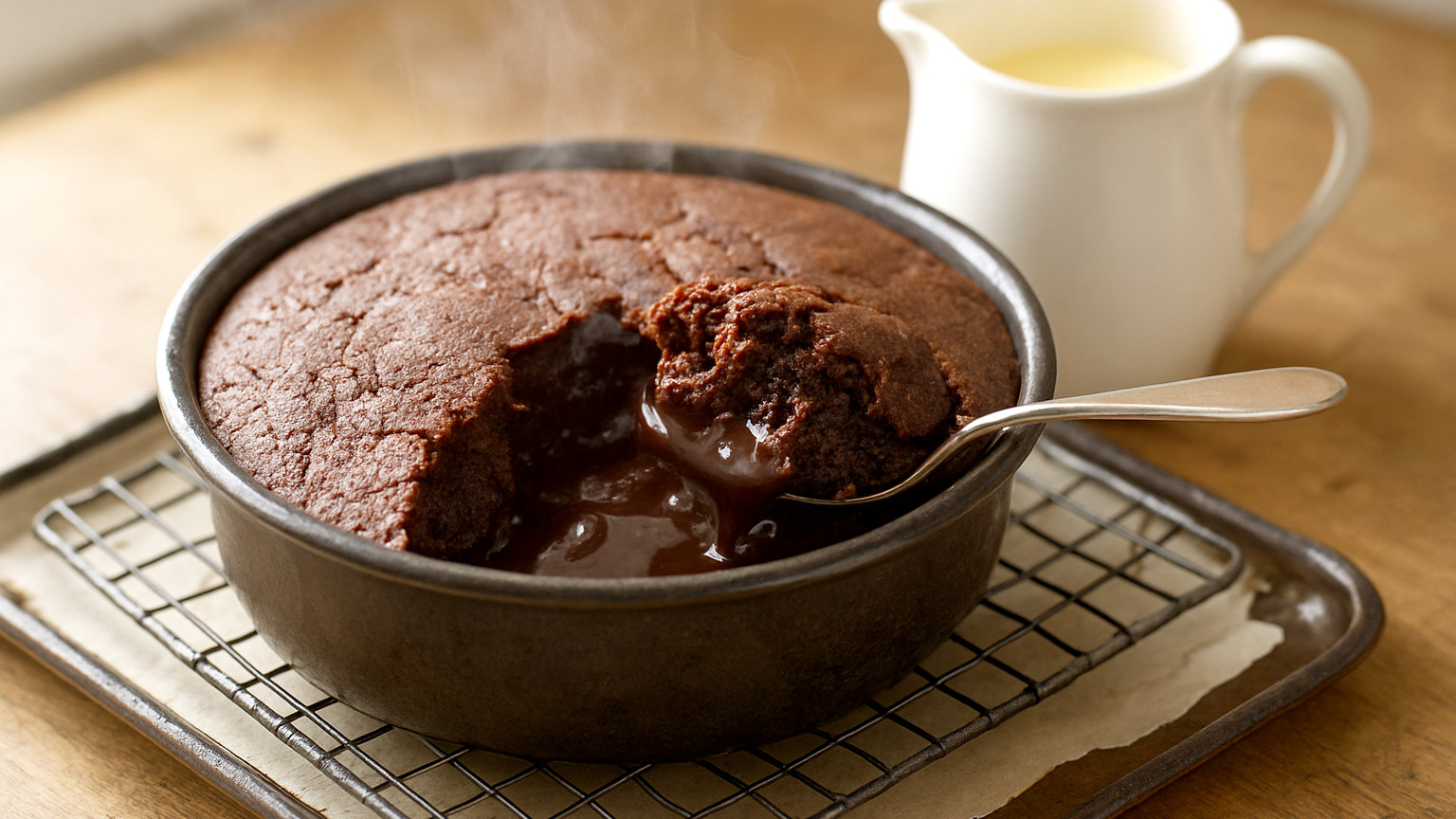
A self-saucing chocolate pudding is a small piece of kitchen magic. You make a plain sponge batter, scatter cocoa and sugar over it, pour boiling water on top, and put the whole unpromising mess in the oven. Forty minutes later there is a light chocolate sponge on top and a pool of hot fudge sauce underneath. It works every time and it never stops being satisfying.
How does the sauce form?
The boiling water and the cocoa and sugar scattered on top are denser than the batter, so as the pudding heats, the sponge rises through them while the liquid sinks. The cocoa and sugar dissolve into the water on the way down and thicken slightly in the oven heat, leaving a sauce at the bottom of the dish and baked sponge above it.
What ingredients do you need?
Serves 6.
For the sponge
- 150g self-raising flour
- 25g cocoa powder
- 125g caster sugar
- 1 tsp baking powder
- 125ml whole milk
- 60g unsalted butter, melted
- 1 large egg
- 1 tsp vanilla extract
For the sauce
- 100g light brown soft sugar
- 40g cocoa powder
- 300ml boiling water
How do you make it?
- Heat the oven to 180°C (160°C fan), gas 4. Butter a 1.5 litre baking dish.
- Sift the flour and cocoa into a bowl, then stir in the caster sugar and baking powder.
- Whisk the milk, melted butter, egg and vanilla together and stir into the dry ingredients until just smooth.
- Spread into the dish and level the surface.
- Mix the brown sugar and the remaining cocoa and scatter evenly over the batter.
- Pour the boiling water gently over the back of a spoon so it covers the surface without disturbing it.
- Do not stir. Bake for 35 to 40 minutes, until the sponge is risen and firm on top.
- Rest for five minutes, then spoon straight from the dish, digging down to the sauce.
Do not stir after the water goes on: the layers have to stay separate for the trick to work. Pour the water over the back of a spoon and leave it alone.
Why does it look wrong before baking?
Because it is a shallow layer of thick batter with three centimetres of dark water sitting on top of it, which looks like a mistake. This is exactly right. Trust it, put it in the oven and do not be tempted to mix it. The separation happens during the first fifteen minutes.
How do you know when it is done?
The top should be risen, dry to the touch and firm in the middle, with the sauce visibly bubbling around the edges of the dish. A skewer will come out sticky, which is unhelpful, so judge by the surface. Overbaked, the sauce is absorbed into the sponge and disappears, so check from 35 minutes.
Why has my sauce disappeared?
It has been absorbed, which means the pudding was baked too long or the oven was too hot. The sauce layer is thin, and a few extra minutes is enough for the sponge to soak it up. Take it out as soon as the top is firm. The pudding will still taste good, but it will be a plain sponge.
Can you make other flavours?
Yes. A lemon version uses lemon juice and zest in the batter with sugar and boiling water on top. A butterscotch version uses brown sugar and golden syrup in place of the cocoa. Coffee, salted caramel and orange all work on the same principle of a dense topping and hot liquid.
How long does it keep?
It is best eaten straight away, while the sauce is hot and liquid. Leftovers keep for two days in the fridge, though the sauce is absorbed by then. Reheat portions in the microwave with a splash of milk or cream to loosen them.
What should you serve with it?
Vanilla ice cream is the classic choice, as the cold against the hot sauce is much of the appeal. Pouring cream, custard or crème fraîche all work. Serve it in bowls rather than on plates, so the sauce stays with the sponge rather than running away.


