
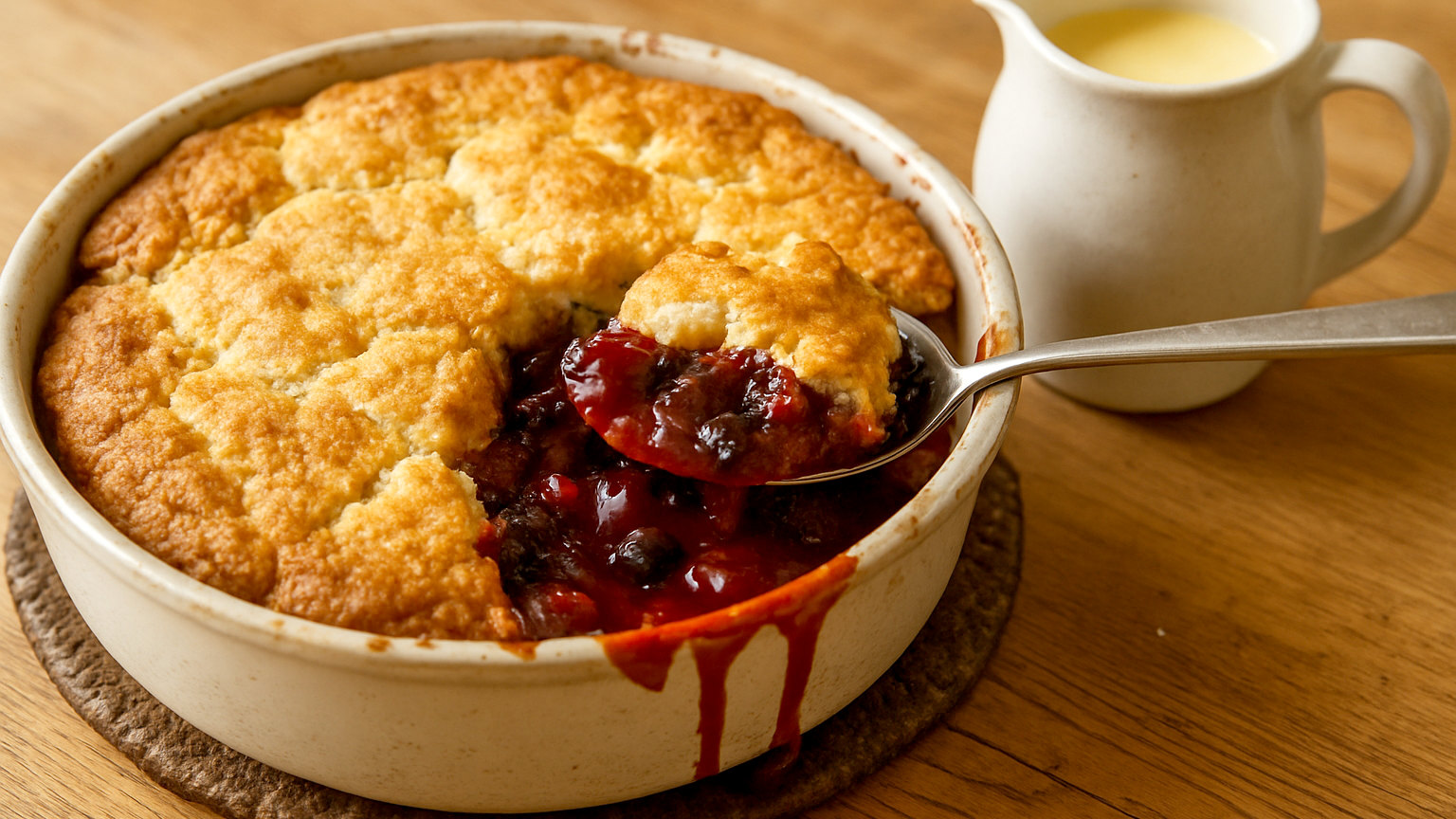
A cobbler is fruit baked under rounds of sweet scone dough, which rise and brown into a cobbled surface, hence the name. It sits between a crumble and a pie: quicker than pastry, more substantial than a crumble topping. It suits soft summer fruit particularly well, since the topping soaks up the juices from below while staying light on top.
How is a cobbler different from a crumble?
A crumble topping is rubbed-in flour, butter and sugar scattered loose over the fruit, baking into a sandy layer. A cobbler topping is a soft scone dough, dropped or cut into rounds and arranged over the fruit, which rises into distinct golden mounds. A cobbler is more filling and has a soft, cake-like underside where it meets the fruit.
What ingredients do you need?
Serves 6.
For the fruit
- 800g mixed summer fruit, such as plums, raspberries, blackberries and blueberries
- 75g caster sugar
- 1 tbsp cornflour
- 1 tbsp lemon juice
For the topping
- 250g self-raising flour
- 75g cold unsalted butter, cubed
- 50g caster sugar
- 1 tsp baking powder
- 150ml whole milk, plus extra for brushing
- 2 tbsp demerara sugar
How do you make a fruit cobbler?
- Heat the oven to 190°C (170°C fan), gas 5.
- Toss the fruit with the caster sugar, cornflour and lemon juice and tip into a 1.5 litre baking dish.
- Bake the fruit alone for 15 minutes, until it starts to bubble.
- Meanwhile, rub the butter into the flour, sugar and baking powder until it resembles breadcrumbs.
- Stir in enough milk to make a soft, sticky dough. Do not knead it.
- Drop rough spoonfuls of dough over the hot fruit, leaving gaps between them.
- Brush with milk and sprinkle with demerara sugar.
- Bake for another 25 to 30 minutes, until the topping is risen, golden and cooked through.
Bake the fruit first: dropping raw dough onto cold fruit means the topping is cooked long before the fruit has softened. Fifteen minutes of pre-baking sorts the timing out.
Why leave gaps between the rounds?
The gaps let steam escape from the fruit below, which stops the topping going soggy underneath, and they give the cobbled appearance the pudding is named for. A solid layer of dough traps moisture and bakes into something closer to a soft crust. Aim for eight or nine rounds with clear space between them.
Why does the dough need to be sticky?
A soft, wet dough gives a light, tender topping, in the same way that a barely mixed scone rises better than a kneaded one. It will look too loose to handle, and it should be dropped in spoonfuls rather than shaped. A firm dough bakes into heavy scones sitting on the fruit.
Which fruit works best?
Anything sharp and juicy. Plums, blackberries, raspberries, blueberries, gooseberries and rhubarb all work, alone or mixed. Peaches and apricots are excellent in late summer. Very firm fruit such as apple should be pre-cooked for ten minutes, as the cobbler bake is not long enough to soften it.
How do you know the topping is cooked?
It should be well risen and golden, and a skewer pushed into the thickest round should come out clean. The underside will always be soft where it meets the fruit, which is correct. If the tops are browning too fast, lay a sheet of foil loosely over the dish.
How long does it keep?
It keeps for two days in the fridge and reheats in a hot oven for 15 minutes, which crisps the topping again. It does not freeze well once baked, as the scone topping goes soft. Serve warm with custard, cream or vanilla ice cream.
Why must the butter be cold?
Cold butter rubbed into the flour stays in small pieces, which melt in the oven and create steam pockets that make the topping light. Warm or softened butter blends into the flour and gives a heavy, greasy scone. Use butter straight from the fridge and work quickly with cool hands.


