
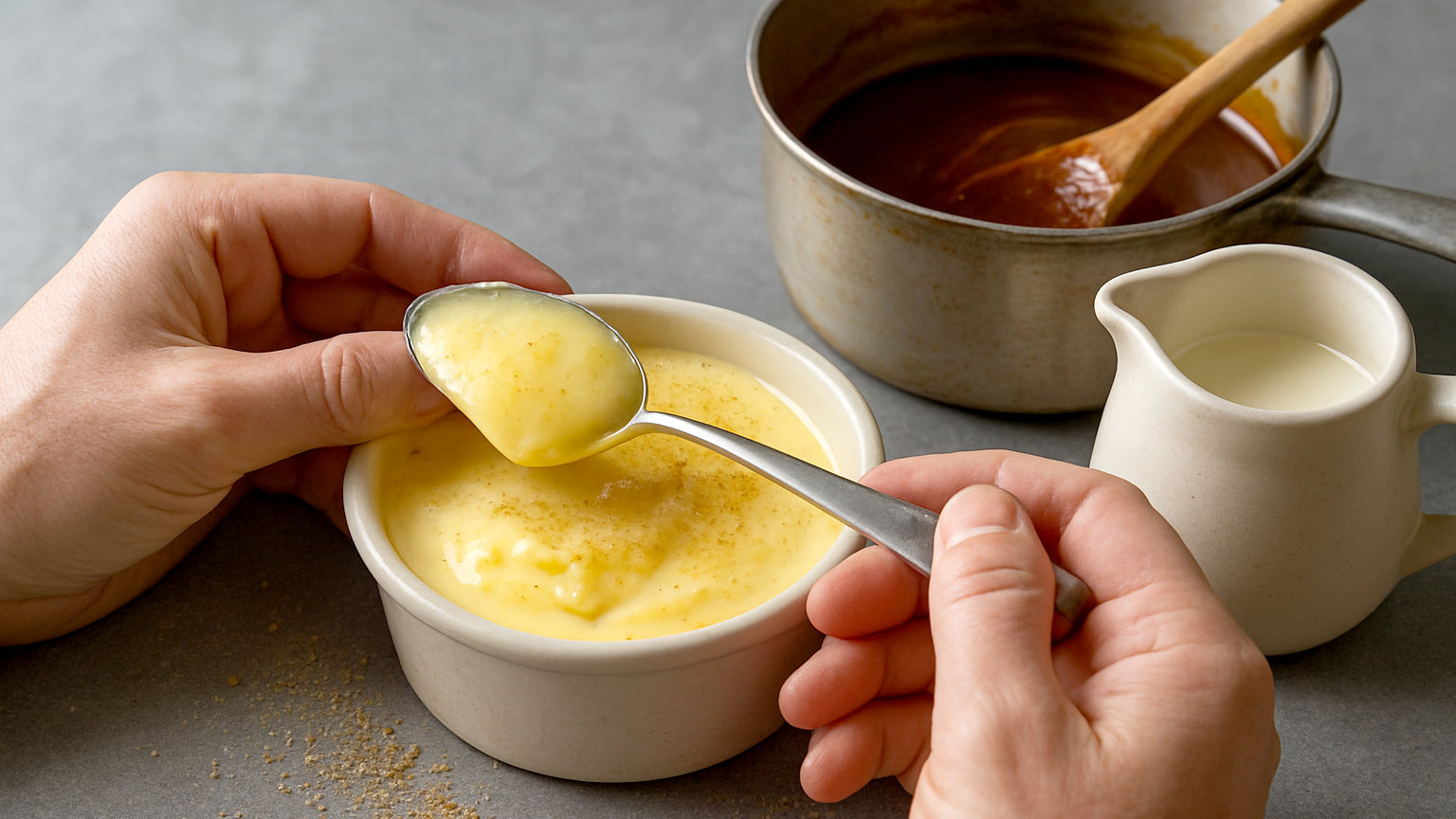
Butterscotch custard pots are silky baked custards flavoured with dark brown sugar cooked with butter, which gives a deep toffee flavour quite unlike vanilla. A pinch of salt keeps them from being cloying. They are made in the same way as any baked custard, with the butterscotch prepared first and stirred into the cream before the eggs go in.
What is the difference between butterscotch and caramel?
Caramel is made by cooking white sugar alone until it melts and turns amber. Butterscotch is made by cooking brown sugar with butter, which never reaches the same high temperature. Because brown sugar already contains molasses, butterscotch has depth without needing to be cooked dark, so it is easier and far less likely to burn.
What ingredients do you need?
Serves 6.
- 100g dark brown soft sugar
- 50g unsalted butter
- 400ml double cream
- 150ml whole milk
- 5 large egg yolks
- 1 tsp vanilla extract
- ½ tsp fine salt
- Flaked sea salt, to finish
How do you make butterscotch pots?
- Heat the oven to 150°C (130°C fan), gas 2.
- Melt the dark brown sugar and butter together in a heavy pan over a medium heat, stirring, until bubbling and smooth. Cook for one minute.
- Carefully pour in the cream and milk, standing back as it will spit and the sugar may seize.
- Stir over the heat until the sugar dissolves completely and the mixture is smooth.
- Whisk the egg yolks, vanilla and fine salt together gently.
- Pour the warm butterscotch cream over the yolks, whisking constantly.
- Strain through a fine sieve into a jug and skim off any bubbles.
- Divide between six ramekins and stand them in a roasting tin.
- Pour boiling water into the tin to come halfway up the sides and bake for 25 to 30 minutes.
- Cool, chill for four hours, then scatter with flaked sea salt before serving.
Stand back when adding the cream: hot sugar and cold liquid react violently, and the mixture spits. Pour slowly, keep your hand well clear and use a deep pan.
Why does the sugar seize?
Adding cool liquid to hot melted sugar causes some of it to solidify instantly into lumps. This is normal and nothing to worry about. Keep stirring over a gentle heat and the lumps dissolve back into the cream within a minute or two. Warming the cream first reduces the effect considerably.
Why add salt?
Brown sugar, butter and cream together are extremely sweet, and salt is the simplest correction. Half a teaspoon of fine salt in the custard sharpens the flavour so the butterscotch comes forward rather than the sugar. Flakes scattered on top before serving give small bursts of contrast and look smart.
Can you use light brown sugar?
Yes, and it gives a gentler, less treacly flavour. Dark brown sugar contains more molasses, which is where the depth comes from. Muscovado is stronger still. Avoid caster sugar entirely, as it will not give the butterscotch character, only sweetness.
How do you know when they are set?
The edges should look firm while the centre still moves as one piece when nudged. They firm up considerably as they chill, so take them out while there is a definite wobble. An instant-read thermometer should show about 78 to 80°C in the middle.
How long do they keep?
They keep in the fridge for three days, covered. Add the flaked salt just before serving, as it dissolves within an hour or two. They do not freeze, as baked custard becomes watery when thawed.
Why do they need a water bath?
The water surrounding the ramekins cannot go above 100°C, so it keeps the heat gentle and even. Egg custards curdle above about 85°C, and a dry oven would set the outsides hard before the middles had cooked. Top the tin up with boiling water if it evaporates during baking, and stand the ramekins on a folded tea towel if your tin has a very thin base.


