
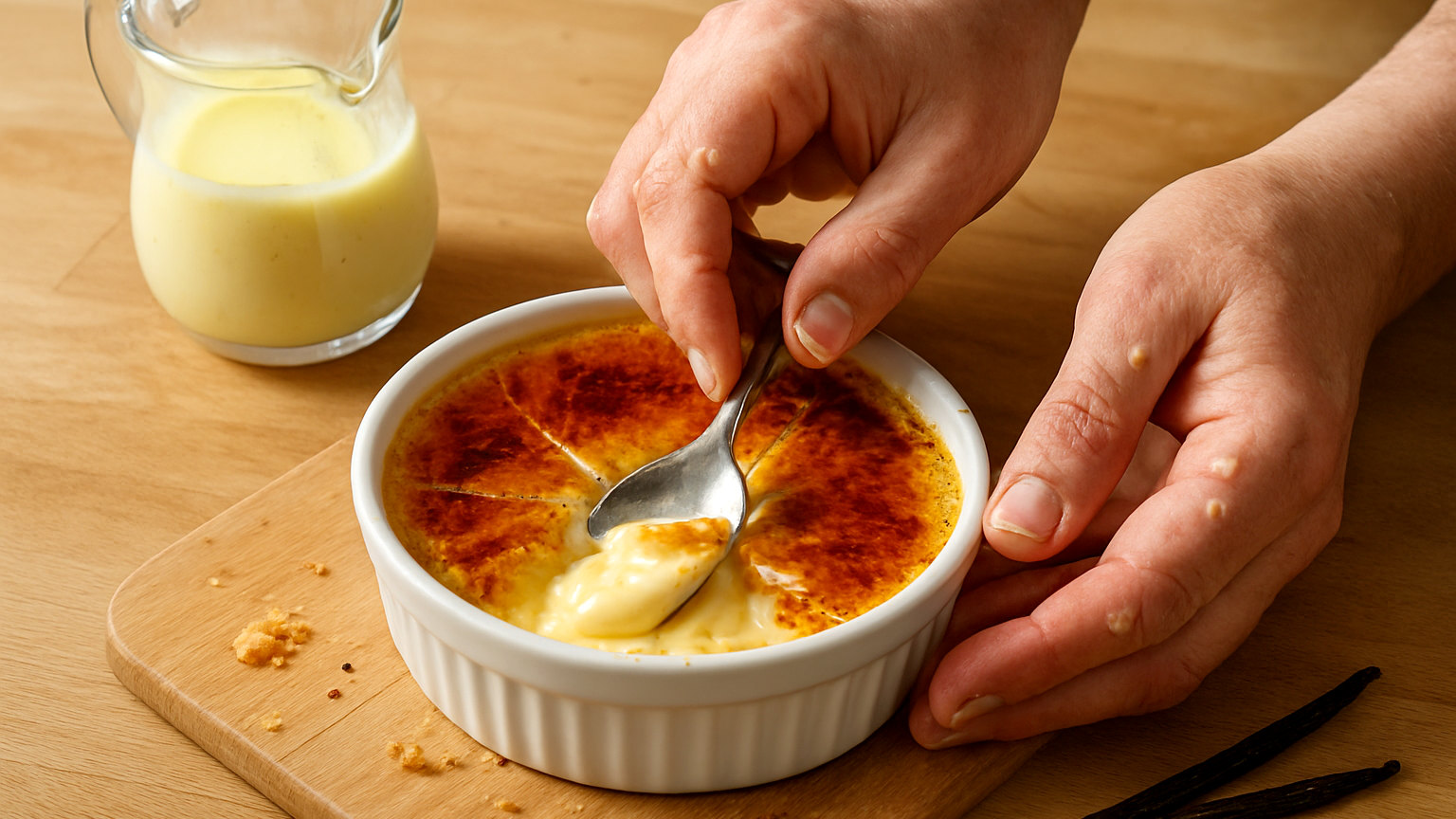
Crème brûlée is a baked vanilla custard, chilled until set, then covered with a thin layer of sugar and caramelised until it forms a glassy sheet that cracks under a spoon. The name means burnt cream. It uses four ingredients and the technique is simple, but two details matter: the custard must be baked in a water bath, and the sugar must be caramelised at the last minute.
What ingredients do you need?
Serves 6.
- 600ml double cream
- 1 vanilla pod, split, or 2 tsp vanilla bean paste
- 6 large egg yolks
- 75g caster sugar
- 6 tbsp caster sugar, for the tops
How do you make crème brûlée?
- Heat the oven to 150°C (130°C fan), gas 2.
- Heat the cream with the split vanilla pod until steaming, then leave to infuse for 20 minutes and remove the pod, scraping in the seeds.
- Whisk the egg yolks and 75g sugar together gently, without creating foam.
- Pour the warm cream over the yolks, whisking, then strain through a fine sieve into a jug.
- Skim off any bubbles from the surface.
- Divide between six shallow ramekins and stand them in a roasting tin.
- Pour boiling water into the tin to come halfway up the sides of the ramekins.
- Bake for 30 to 40 minutes, until set at the edges with a slight wobble in the centre.
- Cool, then chill for at least four hours.
- Just before serving, blot the surfaces dry, sprinkle each with a tablespoon of sugar and caramelise with a blowtorch.
Blot the custards before sugaring: any condensation on the surface stops the sugar melting evenly and leaves wet, pale patches in the caramel.
Why does it need a water bath?
The water surrounding the ramekins cannot exceed 100°C, so it keeps the heat gentle and even. Egg custards curdle above about 85°C, and a dry oven would overheat the outside of each custard long before the middle had set. The water bath is not optional if you want a silky texture.
Why use only egg yolks?
Yolks set gently and contain lecithin, a natural emulsifier that gives custard its silky texture. Egg whites set firmly and would make the custard rubbery and springy rather than smooth. This is why crème brûlée uses six yolks and no whites at all.
How do you caramelise the top?
A cook blowtorch is much the best tool. Sprinkle an even, thin layer of caster sugar over the whole surface, hold the flame about 10cm away and move it constantly in small circles until the sugar melts, bubbles and turns deep amber. Work in sections and do not linger, as sugar burns in seconds.
Can you do it without a blowtorch?
Yes, under a very hot grill, though it takes more care. Heat the grill for 10 minutes, stand the chilled ramekins in a tray of iced water to protect the custard, and grill as close to the element as possible for two to three minutes. Watch constantly. The custard will soften more than with a torch.
When should you caramelise it?
No more than 30 minutes before serving, and ideally just as you sit down. The caramel begins absorbing moisture from the custard immediately and softens within an hour or two, dissolving into a sticky syrup. The crack of a freshly made top is the whole point of the dessert.
How long does it keep?
The baked, un-caramelised custards keep in the fridge for three days, covered. Once sugared and torched, eat them the same day. They do not freeze, as baked custard separates when thawed.
Which sugar is best for the top?
Caster sugar, as its fine crystals melt quickly and evenly. Granulated takes longer and can scorch in patches before it has all melted. Demerara gives a darker, more toffee-like caramel with a slightly grainy texture, which some people prefer. Use about a tablespoon per ramekin.
Can you flavour the custard?
Yes. Infuse the cream with a strip of orange zest, a cinnamon stick, cardamom pods, coffee beans or a sprig of lavender instead of, or alongside, the vanilla. Strain them out before adding the yolks. A tablespoon of liqueur can be whisked into the finished custard before baking.


