
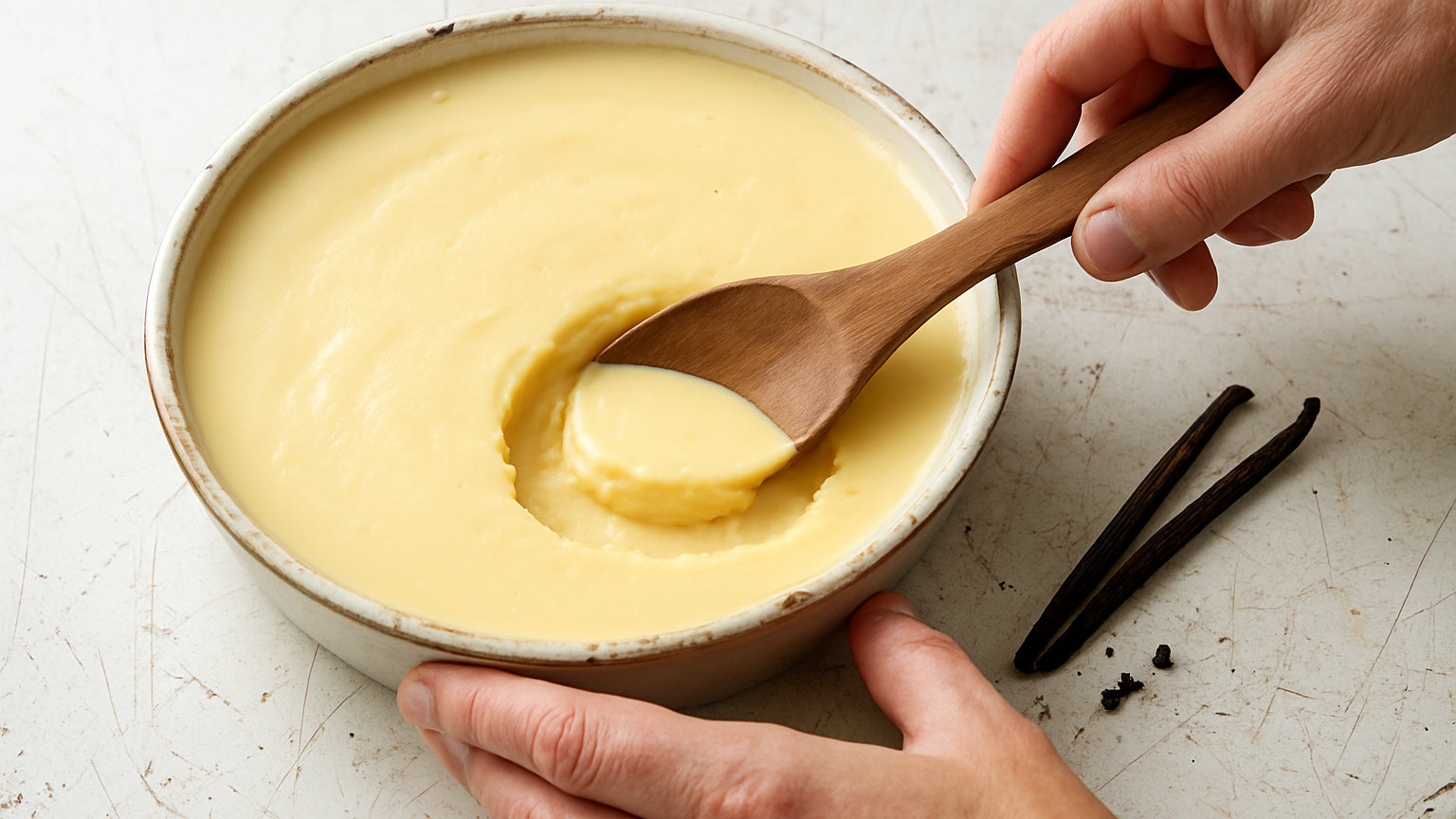
Dairy-free custard made with plant milk can be every bit as good as the dairy version, provided you choose the right milk and add a little extra fat. The main difficulties are that some plant milks split when heated with acid or sugar, and most are thinner than whole milk, so the custard needs slightly more thickening.
Which plant milk works best?
Oat milk is the closest to whole milk in body and sweetness, and it heats without splitting, which makes it the most reliable choice. Soya milk is richer in protein and thickens well but can curdle if overheated. Almond milk is thin and needs extra cornflour. Coconut milk gives a rich custard with a distinct flavour that suits tropical or chocolate desserts.
What ingredients do you need?
Serves 6, making about 600ml.
- 600ml oat milk, unsweetened
- 100ml oat cream or coconut cream
- 50g caster sugar
- 35g cornflour
- 2 tsp vanilla extract
- A pinch of ground turmeric, for colour
- A pinch of fine salt
- 25g dairy-free block butter
How do you make dairy-free custard?
- Whisk the cornflour, sugar, turmeric and salt with 100ml of the oat milk in a bowl until completely smooth.
- Heat the remaining oat milk and the cream in a heavy pan until steaming.
- Pour a little of the hot milk into the cornflour paste, whisking, then pour it all back into the pan.
- Cook over a medium heat, whisking constantly, until it thickens and comes to a gentle boil.
- Cook for one more minute, whisking, so the cornflour cooks out fully.
- Take off the heat and whisk in the vanilla and the dairy-free butter.
- Serve hot, or cover the surface and cool.
Whisk the cornflour with cold milk first: added dry to hot liquid it forms lumps instantly, and no amount of whisking afterwards will break them down.
Why add turmeric?
Only for colour. Custard made with plant milk is pale and slightly grey, which looks unappealing next to a golden pudding. A small pinch of ground turmeric gives the familiar yellow without any detectable flavour. Use a very small amount, as too much tastes earthy and colours the custard orange.
Why does it need extra fat?
Whole milk contains around 3.5% fat and dairy custard usually includes cream as well, which gives richness and a coating mouthfeel. Most plant milks are much lower in fat, so the custard tastes thin even when it is thick. A splash of oat or coconut cream and a knob of dairy-free butter restores that richness.
Which plant milks split when heated?
Soya and almond milks can curdle if brought to a hard boil or heated with anything acidic, as their proteins are less stable than dairy. Heat them gently and steadily rather than fast. Barista versions of most plant milks contain added stabilisers and are noticeably more reliable for cooking.
Can you use custard powder?
Yes, and it is the simplest route, since custard powder contains no dairy at all. Make it up with oat milk following the packet instructions, then stir in a spoonful of dairy-free cream and a little extra vanilla. Check the label, as a few brands add milk powder despite the powder itself being egg-free.
Can you make an egg-based version?
Yes. Use six egg yolks with 600ml of oat milk and 100ml of coconut cream, and cook it exactly as you would a dairy crème anglaise, stirring over a low heat until it coats the back of a spoon. It will be slightly thinner than the dairy original, so a teaspoon of cornflour is useful insurance.
How long does it keep?
It keeps for three days in the fridge with the surface covered, and it thickens considerably when cold. Reheat gently with a splash more plant milk to loosen it, whisking as it warms.
Is it also vegan?
The cornflour version above is, provided you use a plant-based cream and dairy-free block butter. The egg-based version is dairy-free but not vegan. Check the vanilla extract too, as a few brands use additives worth reading about, though most are plant-based.


