
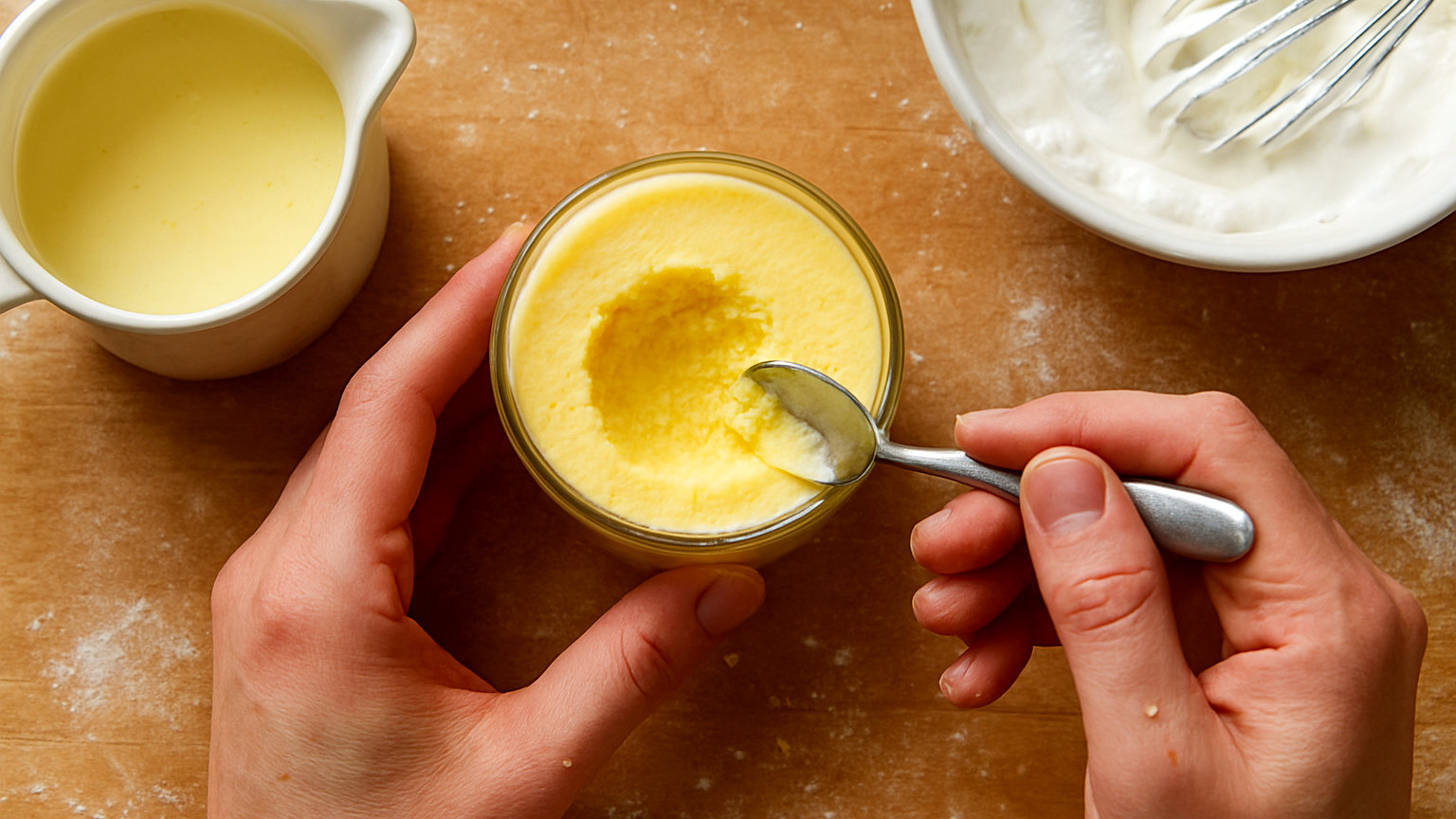
A lemon mousse is light, sharp and clean-tasting, set with gelatine and lightened with whipped cream. It is far less rich than a chocolate mousse, which makes it a good choice after a substantial meal, and because it contains no raw egg it is suitable for everyone at the table. It needs four hours in the fridge to set properly.
What ingredients do you need?
Serves 6.
- 3 sheets of leaf gelatine
- Finely grated zest and juice of 3 unwaxed lemons, about 120ml juice
- 125g caster sugar
- 250g full-fat cream cheese
- 300ml double cream
- 1 tsp vanilla extract
- Lemon zest or berries, to decorate
How do you make lemon mousse?
- Soak the gelatine leaves in a bowl of cold water for five minutes, until soft and floppy.
- Warm the lemon juice and caster sugar in a small pan until the sugar dissolves, but do not boil.
- Squeeze the water out of the gelatine and stir it into the warm lemon syrup until completely dissolved.
- Leave to cool to room temperature, about 20 minutes.
- Beat the cream cheese with the lemon zest and vanilla until smooth.
- Gradually beat in the cooled lemon syrup.
- Whip the double cream to soft peaks.
- Fold the cream into the lemon mixture in two additions, gently, until no streaks remain.
- Divide between six glasses and chill for at least four hours.
Cool the gelatine mixture before it meets the cream: added warm, it melts the whipped cream and the mousse collapses. Room temperature is the target, not fridge cold.
How do you use leaf gelatine?
Soak the sheets in plenty of cold water for five minutes until they go soft and limp, then lift them out and squeeze the excess water away. Stir them into a warm, not boiling, liquid until they dissolve completely. Boiling destroys some of the setting power, so keep the pan below a simmer.
Can you use powdered gelatine instead?
Yes. Three leaves is roughly equivalent to one sachet, about 11g, though brands vary so check the packet. Sprinkle the powder over three tablespoons of cold water, leave for five minutes to swell, then warm gently until clear before stirring it into the lemon syrup.
Why does it need cream cheese?
Cream cheese gives the mousse body and a slight tang that reinforces the lemon, and it helps it hold its shape without needing more gelatine. A mousse set with gelatine and cream alone is lighter but wobblier. Use full-fat cream cheese, as reduced-fat versions are watery and can split.
How sharp should it be?
Properly sharp. The cream and sugar are both mild and sweet, and a lemon mousse that is merely sweet is disappointing. Three lemons for six servings gives a clear, bracing flavour. Taste the mixture before it goes into the glasses and add more zest if it seems mild.
Can you make a vegetarian version?
Yes. Use a vegetarian setting agent such as agar or a vegetarian gel sachet, following the packet instructions, since the quantities and method differ from gelatine. Agar must be boiled to activate, unlike gelatine, and it sets firmer, so the mousse will be slightly less wobbly.
What can you serve with it?
Fresh raspberries or blueberries, a crisp almond biscuit, or a spoonful of berry compote. A little extra lemon zest grated over the top just before serving sharpens the aroma. It is also good layered with crushed shortbread in a glass for a quick lemon cheesecake pot.
How long does it keep?
It keeps for three days in the fridge, covered, and holds its texture well because of the gelatine. It does not freeze, as the cream separates and the set breaks down when thawed.
Can you make it without gelatine?
Yes, though it will be softer. Increase the cream cheese to 350g and leave the gelatine out, which gives something closer to a lemon cheesecake filling served in a glass. It will hold its shape in a glass but will not turn out of a mould, and it needs a full six hours to firm up.


