
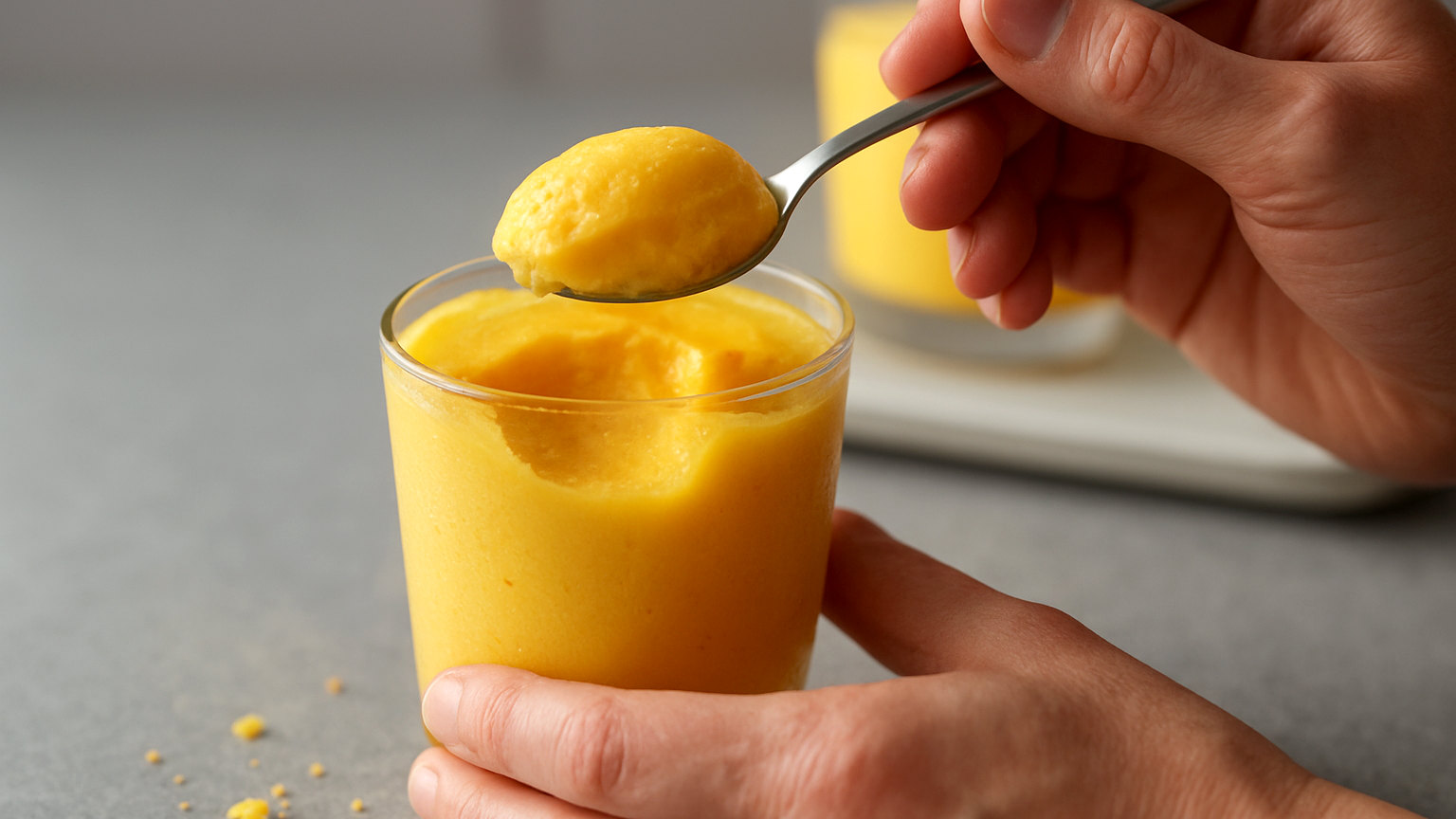
A mango mousse is golden, fragrant and lighter than it looks, made from puréed ripe mango set with a little gelatine and folded through whipped cream. Lime juice sharpens it, which matters because mango is very sweet on its own. It is a good dessert for a summer evening and it can be made a day ahead.
What ingredients do you need?
Serves 6.
- 2 large ripe mangoes, about 500g flesh
- 100g caster sugar
- Juice of 1 lime, about 2 tbsp
- 3 sheets of leaf gelatine
- 300ml double cream
- A pinch of fine salt
- Extra diced mango and lime zest, to decorate
How do you make mango mousse?
- Peel the mangoes, cut the flesh from the stones and blend with the sugar and lime juice until completely smooth.
- Push through a fine sieve if the purée seems fibrous. You should have about 450ml.
- Soak the gelatine leaves in cold water for five minutes, until soft.
- Warm 150ml of the purée in a small pan until steaming but not boiling.
- Squeeze the water from the gelatine and stir it into the warm purée until dissolved.
- Stir this back into the remaining cold purée with the salt, and cool to room temperature.
- Whip the double cream to soft peaks.
- Fold the cream into the purée in two additions, gently, until evenly coloured.
- Divide between six glasses and chill for at least four hours.
Never boil the purée with the gelatine in it: boiling weakens gelatine considerably, and the mousse will set poorly or not at all. Warm it only until steaming.
How do you choose a ripe mango?
A ripe mango gives slightly when pressed near the stalk and smells sweet and fragrant at that end. Colour is not a reliable guide, as varieties differ. Alphonso and Kesar mangoes, available in early summer, have the most flavour and the least fibre. An unripe mango will ripen in a few days at room temperature.
Can you use tinned mango?
Yes, and tinned mango purée is a genuinely good option, often made from Alphonso mangoes and available in Asian food shops. Drain tinned mango slices well before blending, and reduce the sugar, as they are packed in syrup. Frozen mango chunks also work, thawed and drained.
Why is fresh mango a problem with gelatine?
Fresh mango contains enzymes that can break down gelatine, in the same way as pineapple and kiwi, though the effect is milder. Warming the purée, as in the method above, deactivates them. This is why the recipe heats part of the purée rather than stirring dissolved gelatine into a cold mixture.
Why add lime?
Mango is sweet and low in acid, and a mousse made without lime tastes flat and cloying once cream and sugar are added. Lime juice sharpens it and makes the fruit taste more of itself. Lemon works too, though lime suits the tropical flavour better. Zest adds fragrance without extra liquid.
How firm should it set?
Lightly. It should hold its shape but wobble when moved, and be soft enough to eat with a teaspoon. Three gelatine leaves to 450ml of purée gives that. More makes it rubbery, which is the most common fault with fruit mousses and much worse than one that is slightly too soft.
What can you serve with it?
Diced fresh mango, passion fruit pulp, a scattering of toasted coconut or a crisp ginger biscuit. Lime zest grated over the top just before serving sharpens the aroma. It also layers well with passion fruit curd in a glass.
How long does it keep?
It keeps for two days in the fridge, covered. Fresh fruit mousses lose a little colour and freshness after the first day. It does not freeze, as the cream separates and the gelatine set breaks down.
Can you layer it with other fruit?
Yes. Mango with passion fruit is a particularly good combination, the sharp fruit cutting through the sweeter one. Set a layer of mango mousse first, chill it for two hours, then add a passion fruit layer on top. Raspberry also works well against mango.


