
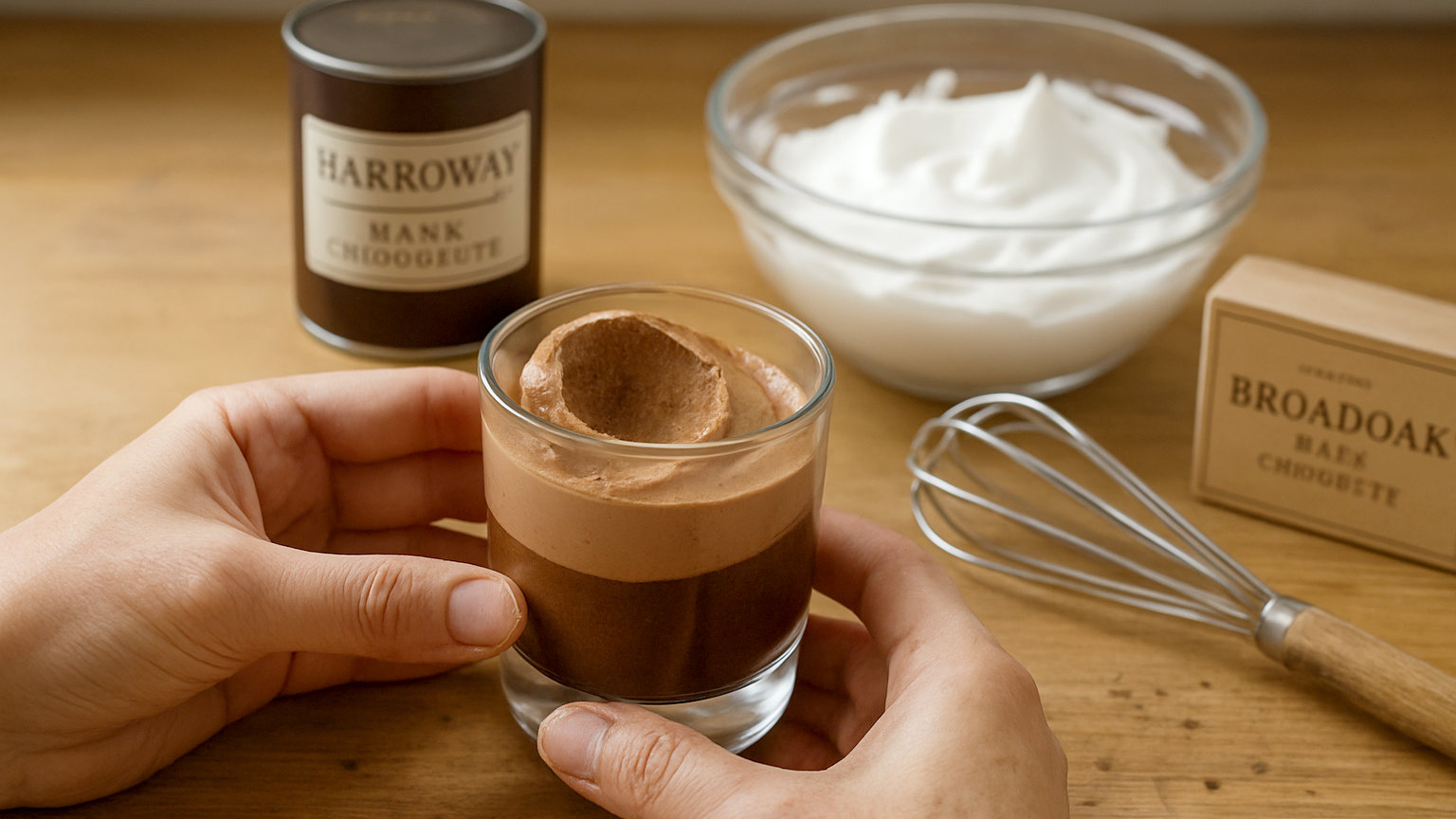
The chocolate in a mousse does two jobs: it provides the flavour and it does most of the setting. Cocoa butter is solid at fridge temperature, so as the mousse chills, the chocolate firms up and holds the air in place. That means the cocoa percentage changes not only how it tastes but how much you need.
How much of each type should you use?
| Chocolate | Cocoa solids | Quantity per 450ml cream |
|---|---|---|
| Dark | 60 to 70% | 200g |
| Dark | 70 to 85% | 175g |
| Milk | 30 to 40% | 300g |
| White | No cocoa solids | 300 to 350g |
The pattern is simple: the less cocoa a chocolate contains, the more of it you need, because there is less cocoa butter doing the setting and more sugar and milk solids diluting it.
Why does cocoa percentage matter so much?
Cocoa percentage is the combined weight of cocoa solids and cocoa butter. A 70% bar is roughly 70% cocoa material and 30% sugar; a 30% milk chocolate is the reverse, with milk solids as well. Since cocoa butter is what sets firm as it cools, a high-percentage bar sets a mousse with less of it.
Can you use chocolate above 85%?
It is difficult. Very high-percentage chocolate contains little sugar and can seize when it meets egg yolks or a small amount of liquid, and the mousse often turns grainy. It is also genuinely bitter once the sugar in the recipe is spread through a whole mousse. Stay between 60 and 75% for reliable results.
Never use chocolate chips: they contain stabilisers designed to stop them melting and holding their shape in a baked cookie, which is precisely the opposite of what a mousse needs. They melt unevenly and give a waxy texture.
What is couverture chocolate?
Couverture is chocolate with a higher proportion of cocoa butter than standard eating chocolate, usually at least 31%. It melts more smoothly and sets more reliably, which is why it is used professionally. It is sold in callets or discs and is worth buying if you make mousses often, though a good supermarket bar works perfectly well.
Does the brand matter?
More than most people expect. Cheap cooking chocolate often replaces some cocoa butter with vegetable fat, which tastes waxy and sets poorly. Read the ingredients: cocoa mass and cocoa butter should come before sugar in a dark chocolate, and cocoa butter should be high in the list for white chocolate.
How finely should you chop it?
Into pieces roughly the size of a pea. Small, even pieces melt at the same rate when hot cream is poured over them, so nothing is left unmelted in the middle. Large chunks tempt you to apply more heat, which risks scorching the chocolate that has already melted.
Can you mix different chocolates?
Yes, and it is often the best approach. Half dark and half milk gives a mousse that is sweeter than dark alone but still sets firmly and tastes properly of chocolate. Adding 50g of white chocolate to a dark mousse softens the bitterness without much affecting the set.
Does the chocolate need tempering?
No. Tempering matters when chocolate has to set with a snap and a shine, as in a coating or a decoration. In a mousse, the chocolate is combined with cream, eggs or both, which changes its structure entirely, so tempering serves no purpose. Save it for the chocolate curls on top.
What about flavoured chocolate?
Orange, mint and chilli chocolate all work in a mousse and save you infusing the cream. They are usually milk chocolate or lower-percentage dark, so increase the quantity by about a quarter. Check the ingredients, as some contain added vegetable fats that affect the set.
Does cocoa powder set a mousse?
No. Cocoa powder has had most of its cocoa butter pressed out, so it adds flavour and colour but does nothing to set the mixture. A mousse relying on cocoa alone needs gelatine or whipped cream for structure. A tablespoon of cocoa alongside melted chocolate does deepen the colour usefully.


