
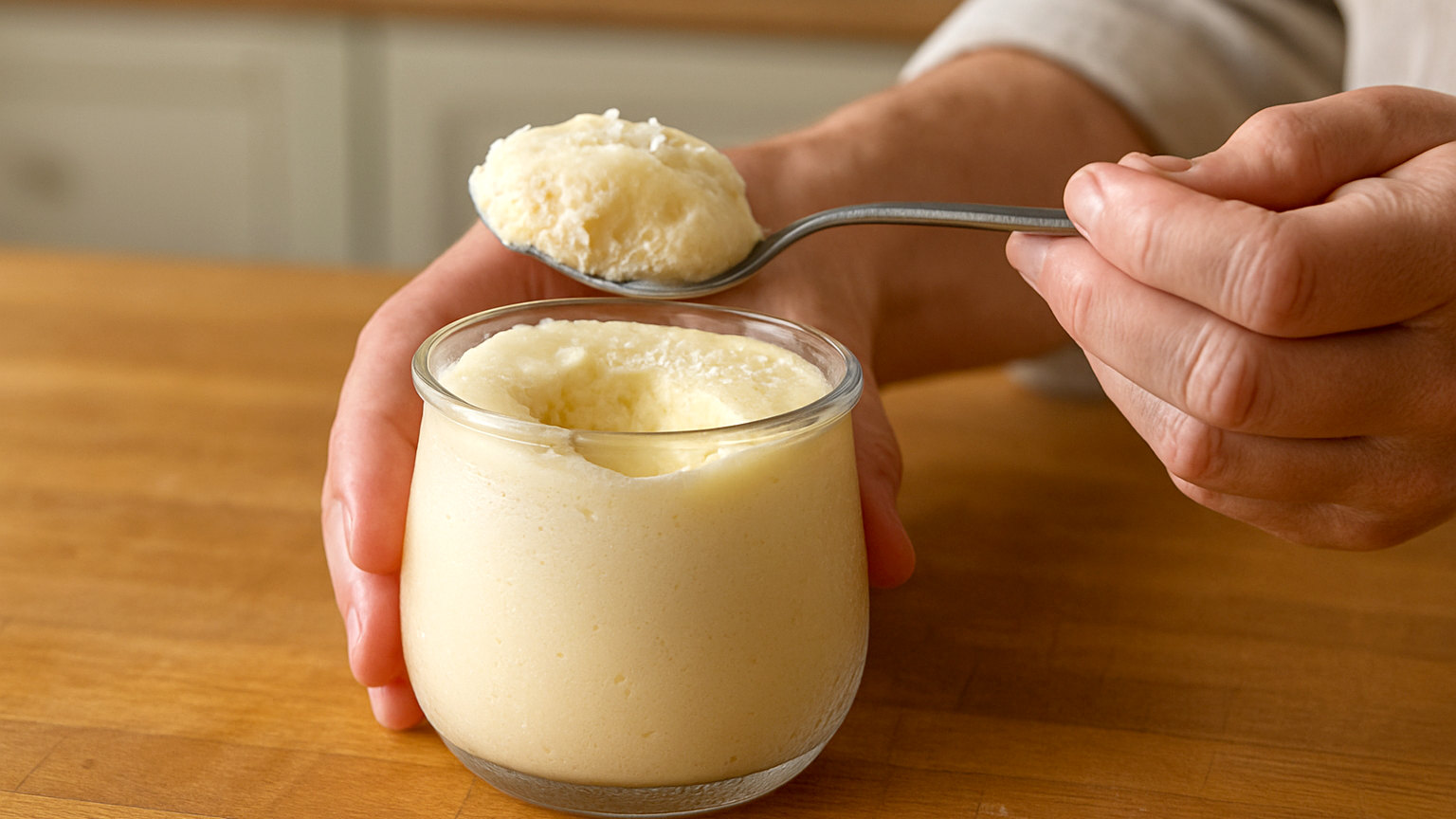
A white chocolate mousse is sweeter and denser than a dark chocolate one, and it needs handling differently. White chocolate contains no cocoa solids, only cocoa butter, sugar and milk, so it sets more softly and tastes far sweeter. Lemon zest and a pinch of salt keep it from cloying, and it contains no raw egg at all.
Why does white chocolate behave differently?
Cocoa solids are what give dark chocolate its structure and its bitterness. White chocolate has none, so it sets more softly and brings only sweetness. A white chocolate mousse therefore needs more chocolate in proportion to the cream, and it needs something sharp added, or it tastes like sweetened cream and little else.
What ingredients do you need?
Serves 6.
- 300g good white chocolate, chopped
- 450ml double cream
- Finely grated zest of 1 lemon
- 1 tsp vanilla bean paste
- A pinch of fine salt
- 200g fresh raspberries, to serve
How do you make it?
- Put the chopped white chocolate in a large heatproof bowl with the salt.
- Heat 150ml of the cream with the lemon zest until steaming but well below boiling.
- Pour over the chocolate and leave for three minutes, then stir gently from the centre until smooth.
- Stir in the vanilla and leave to cool to room temperature, about 30 minutes.
- Whip the remaining 300ml of cream to soft peaks.
- Stir a quarter of the whipped cream into the chocolate to loosen it.
- Fold in the rest in two additions, gently, until no streaks remain.
- Divide between six glasses and chill for at least four hours.
- Serve with fresh raspberries.
Cool the chocolate mixture fully before folding: warm chocolate melts whipped cream on contact, and the mousse collapses into a thick sauce that will never set.
Which white chocolate should you buy?
Look for a bar with cocoa butter high in the ingredients list, ideally at least 28%. Cheaper white chocolate replaces cocoa butter with vegetable fat, which tastes waxy and sets poorly, and both faults are very obvious in a mousse where the chocolate is the only flavour.
Why add lemon and salt?
White chocolate and cream together are extremely sweet with nothing to balance them. Lemon zest adds fragrance and acidity, and a pinch of salt sharpens the flavour. Neither makes the mousse taste of lemon or salt; they simply stop it being one-dimensional. Raspberries served alongside do the same job.
Why does it contain no egg?
It does not need any. The cocoa butter in white chocolate sets firmly enough as it chills to hold the air from the whipped cream, so there is no need for whisked whites or gelatine. It also means the mousse is safe for anyone who should avoid raw egg, which is a useful thing to have.
How do you melt white chocolate without seizing it?
White chocolate contains milk solids and scorches at a lower temperature than dark. Pour hot, not boiling, cream over it and leave it for three minutes before stirring, rather than melting it separately. If you do melt it alone, use short bursts in the microwave on medium power, stirring between each.
Why has my mousse split?
The cream was too hot when it met the chocolate, which is the usual cause with white chocolate. Whisk in a tablespoon of cold cream at a time until it comes back together, or blend briefly with a stick blender. Let it cool fully before folding in the whipped cream.
What can you serve with it?
Anything sharp. Raspberries, passion fruit, poached rhubarb, blackcurrant compote or a raspberry coulis all cut the sweetness. A crisp biscuit alongside gives contrast in texture. Keep the portions small, as it is considerably richer than a dark chocolate mousse.
How long does it keep?
It keeps for three days in the fridge, covered, which is longer than an egg-based mousse. It holds its texture well. It does not freeze, as the cream separates when thawed.


