
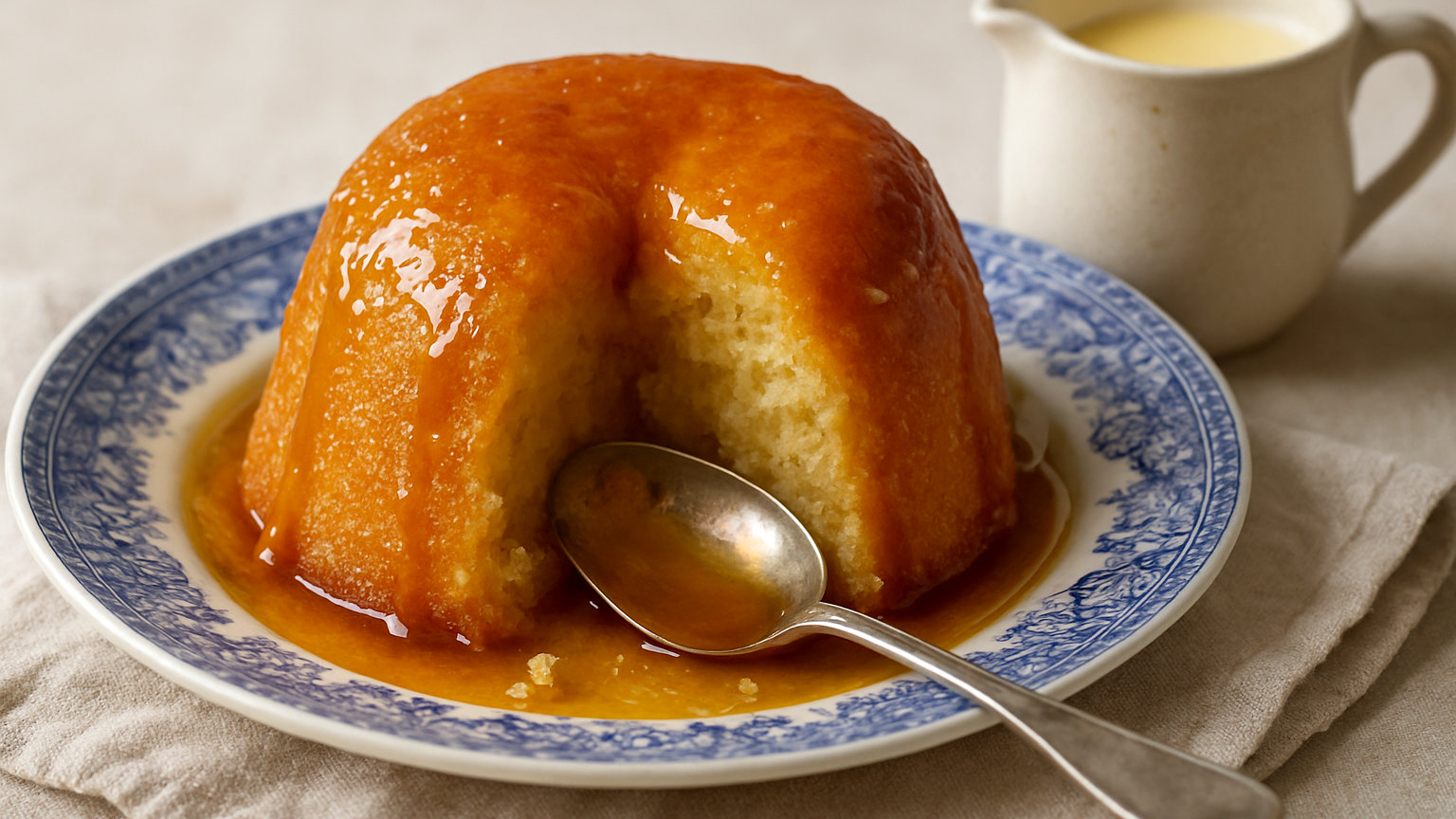
A golden syrup sponge pudding is a light steamed sponge with golden syrup in the base of the basin, so that when it is turned out the syrup runs down the sides. It is the most comforting of all British puddings and one of the simplest, needing only store cupboard ingredients and a couple of hours of gentle steaming while you do something else.
What ingredients do you need?
Serves 6.
- 6 tbsp golden syrup
- 175g unsalted butter, softened
- 175g caster sugar
- 3 large eggs
- 175g self-raising flour
- 1 tsp baking powder
- 1 tsp vanilla extract
- 2 tbsp milk
- Extra golden syrup, to serve
How do you make syrup sponge pudding?
- Grease a 1.2 litre pudding basin thoroughly with butter.
- Spoon the golden syrup into the base.
- Beat the butter and caster sugar together until pale and fluffy.
- Beat in the eggs one at a time, adding a spoonful of flour with the last one.
- Fold in the remaining flour, baking powder, vanilla and milk to a soft dropping consistency.
- Spoon into the basin over the syrup, leaving 3cm at the top for rising.
- Cover with a pleated round of baking paper and foil, and tie securely with string.
- Steam over simmering water for one hour 45 minutes to two hours, topping up with boiling water as needed.
- Rest for five minutes, then turn out onto a deep plate and pour over extra warmed syrup.
Pleat the covering: a fold across the middle of the paper and foil gives the pudding room to rise. A flat, tight cover splits open and lets water into the sponge.
Why does the sponge need to be steamed?
Steam cooks the sponge gently in a moist atmosphere, so it stays soft and pale rather than forming a crust. A baked sponge would dry out and brown. The long, slow cooking is also what gives steamed puddings their particular close, tender texture, quite different from an oven-baked cake.
What is a dropping consistency?
The mixture should fall from a spoon in about five seconds when you tap the spoon against the bowl. Too stiff and the pudding is heavy; too loose and it will not hold its structure. Add the milk a tablespoon at a time until it reaches that point, as flour and eggs vary.
Can you make it in the microwave?
Yes, and it takes six minutes rather than two hours. Use a microwaveable basin, cover loosely with cling film pierced a few times, and cook on high for five to six minutes, until risen and just firm. Let it stand for two minutes before turning out. The texture is slightly less delicate but the flavour is the same.
Why put the syrup in the bottom?
The syrup sits under the sponge during cooking and partly soaks into it, then becomes the topping when the pudding is turned out. Some of it stays as a pool on the plate. Putting syrup on top before steaming would simply mix it into the sponge and lose the effect entirely.
What variations can you make?
Replace the syrup with jam for a jam sponge, marmalade for a marmalade pudding, or lemon curd with the zest of a lemon in the sponge. A chocolate version uses 25g cocoa in place of 25g of the flour. All follow the same method and timing.
How long does it keep?
It keeps for three days in the fridge and reheats well by steaming for 30 minutes or microwaving a portion for a minute. It freezes for three months in the basin, covered. Serve hot with custard, which is the traditional accompaniment.
Why is my sponge heavy?
Usually because the mixture was too stiff, or the water stopped simmering during cooking. Check the dropping consistency before it goes into the basin, and keep the pan at a steady simmer for the whole time. Opening the pan repeatedly to check also lets heat escape and slows the cooking.


