
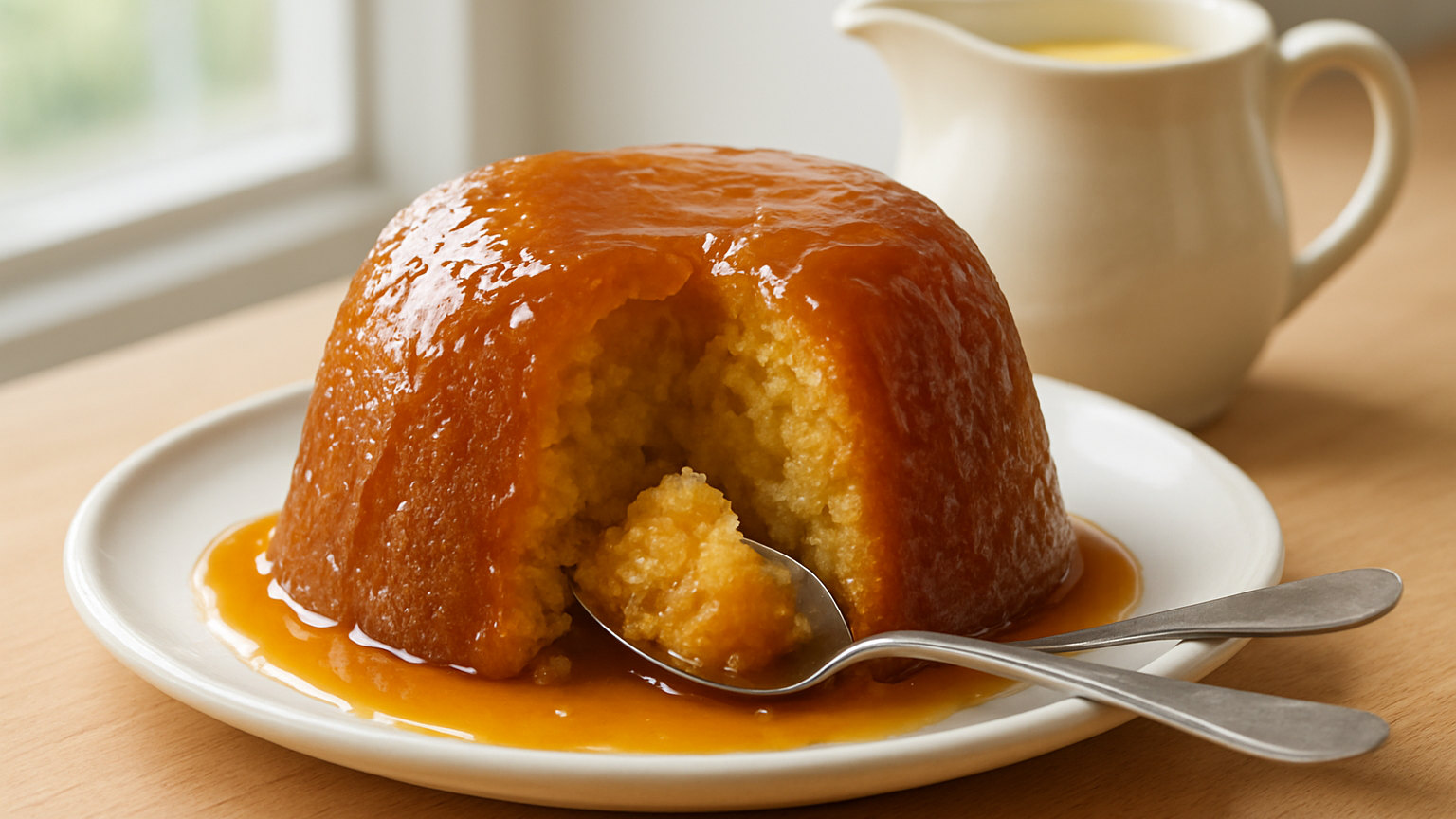
A marmalade steamed pudding is a light sponge steamed over a layer of bitter orange marmalade, which becomes the topping when the pudding is turned out. It is the sharper, more grown-up relative of the syrup sponge, and the bitterness of a good Seville marmalade cuts through the richness in a way that golden syrup cannot.
What ingredients do you need?
Serves 6.
- 6 tbsp bitter orange marmalade
- 175g unsalted butter, softened
- 175g caster sugar
- 3 large eggs
- 175g self-raising flour
- 1 tsp baking powder
- Finely grated zest of 1 orange
- 2 tbsp milk
- Extra marmalade, warmed, to serve
How do you make marmalade pudding?
- Grease a 1.2 litre pudding basin thoroughly with butter.
- Spoon the marmalade into the base and spread it evenly.
- Beat the butter and caster sugar together until pale and fluffy.
- Beat in the eggs one at a time, adding a spoonful of flour with the last one.
- Fold in the remaining flour, baking powder, orange zest and milk to a soft dropping consistency.
- Spoon carefully into the basin over the marmalade, leaving 3cm at the top.
- Cover with pleated baking paper and foil and tie securely with string.
- Steam over simmering water for one hour 45 minutes to two hours.
- Rest for five minutes, turn out onto a deep plate and spoon over extra warmed marmalade.
Spoon the sponge in gently: dolloping it onto the marmalade churns the two together. Add it in spoonfuls around the edge first, then fill the middle.
Which marmalade should you use?
A thick-cut bitter Seville orange marmalade gives the best contrast against the sweet sponge, and its bitterness is the whole point of the pudding. Fine-cut marmalade distributes more evenly if you dislike large pieces of peel. Avoid very sweet breakfast marmalades, which taste much like jam once cooked.
When are Seville oranges in season?
Seville oranges have a short season of a few weeks in January, which is why marmalade making is traditionally a January job. If you make your own, a jar that has set too firmly is perfect for this pudding, as it loosens during steaming. Good bought marmalade works perfectly well the rest of the year.
Why add orange zest to the sponge as well?
The marmalade sits underneath and becomes the topping, so without zest in the sponge itself the cake part tastes plain by comparison. A little fresh zest carries the orange flavour right through the pudding and ties the two layers together. It takes a moment and makes a noticeable difference.
Can you use a different preserve?
Yes. Lemon curd with the zest of a lemon makes an excellent version, and ginger preserve with a teaspoon of ground ginger in the sponge is very good on a cold day. Any thick preserve works in the same quantity. Runny ones seep into the sponge rather than staying as a distinct layer.
Can you make it in the microwave?
Yes, in about six minutes. Use a microwaveable basin, cover loosely with pierced cling film and cook on high for five to six minutes until risen and just firm. Stand for two minutes before turning out. The sponge is slightly less delicate but perfectly good on a weeknight.
How long does it keep?
It keeps for three days in the fridge and reheats by steaming for 30 minutes or microwaving a portion briefly. It freezes for three months in the basin, covered. Serve hot with custard or pouring cream.
How do you know when a steamed sponge is cooked?
It should be well risen, feel springy when pressed lightly through the covering, and a skewer pushed into the centre should come out clean. If it is still wet, re-cover and steam for another 15 minutes. Steamed puddings are forgiving and rarely suffer from a little extra time, since the moist heat cannot dry them out the way an oven would. Fifteen minutes either way makes very little difference.


