
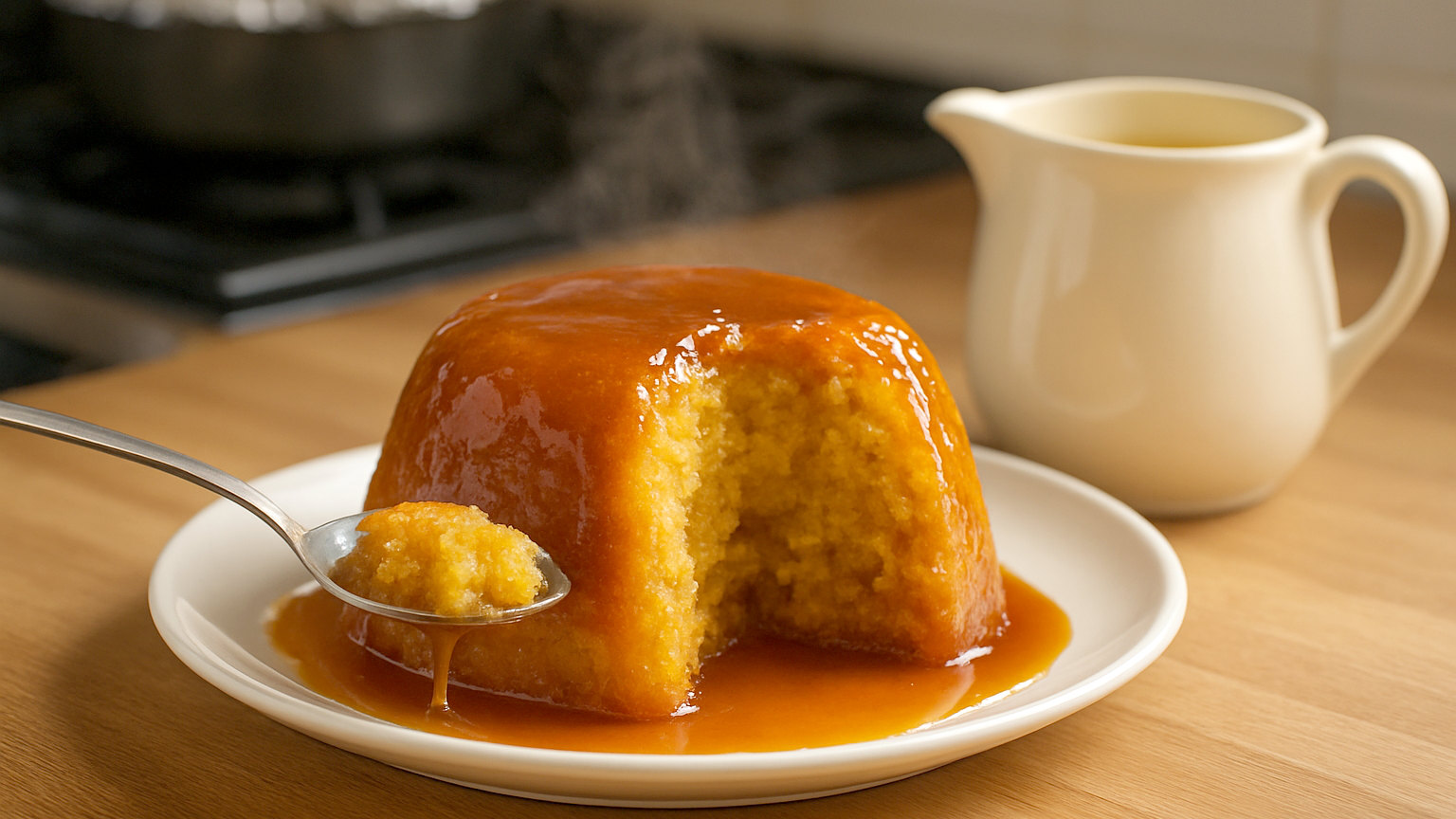
A microwave sponge pudding takes six minutes rather than two hours and is remarkably close to the steamed original. The texture is very slightly less delicate, but on a weeknight, when nobody wants to watch a pan of simmering water for the best part of an afternoon, it is an entirely reasonable trade. The method is the same up to the point of cooking.
How does it compare with steaming?
Steam cooks a pudding gently and evenly over a long period, which gives the softest, most tender crumb. A microwave cooks from within by agitating water molecules, which is faster but slightly less even. The result is a good sponge that is a little firmer and drier at the edges. Most people would not notice unless the two were served side by side.
What ingredients do you need?
Serves 4.
- 4 tbsp golden syrup, jam or lemon curd
- 125g unsalted butter, softened
- 125g caster sugar
- 2 large eggs
- 125g self-raising flour
- ½ tsp baking powder
- 1 tsp vanilla extract
- 2 tbsp milk
How do you make a microwave sponge pudding?
- Grease a 1 litre microwaveable pudding basin thoroughly with butter.
- Spoon the golden syrup into the base.
- Beat the butter and caster sugar together until pale and fluffy.
- Beat in the eggs one at a time, then fold in the flour, baking powder, vanilla and milk to a soft dropping consistency.
- Spoon into the basin, leaving at least 3cm at the top, as it rises considerably.
- Cover loosely with cling film and pierce it two or three times.
- Microwave on full power for four minutes, then check.
- Continue in 30 second bursts until risen and just firm to the touch, usually five to six minutes in total.
- Leave to stand for two minutes, then turn out.
Let it stand for two minutes: a microwaved sponge continues cooking in its own heat. Turning it out immediately gives a wet centre, and overcooking to compensate makes it rubbery.
Why does it need to stand?
Microwave cooking heats unevenly, and the standing time lets the heat distribute through the pudding and finish setting the centre. It is the same principle as resting meat. Skipping it and adding more cooking time instead is the single most common cause of a tough, rubbery microwave sponge.
Which basin should you use?
A plastic or ceramic basin labelled microwave safe. Do not use anything with a metal rim or metal decoration, and never use foil to cover it. A 1 litre basin suits this quantity, leaving room for the sponge to rise. Traditional pudding basins are usually ceramic and are often fine, but check the base.
Why does it rise so much?
Microwave cooking generates steam very quickly inside the mixture, so the pudding rises dramatically and then settles as it stands. Leaving 3cm of space at the top of the basin is essential, or the mixture climbs over the rim and onto the turntable. It will look alarming through the door and is normal.
Why is my sponge rubbery?
Overcooking. Microwave sponges go from perfectly cooked to tough within about 45 seconds, which is why the recipe stops at four minutes and continues in short bursts. Check early, and remember it firms up further during standing. A slightly underdone sponge is far better than an overdone one.
What flavours work?
Anything that works in a steamed sponge. Golden syrup, jam, marmalade and lemon curd all go in the base. Add cocoa in place of some flour for chocolate, ground ginger for a ginger sponge, or lemon zest for a citrus one. The timings stay the same.
How long does it keep?
It is best eaten straight away, which is rather the point. Leftovers keep for two days in the fridge and reheat in the microwave for 30 seconds per portion. It freezes for three months, though a fresh one takes only six minutes.
Does microwave power make a difference?
Yes. These timings assume a standard 800 to 900 watt microwave. A more powerful oven cooks faster, so check at three minutes rather than four. A less powerful one needs longer. The safest approach with any microwave is to check early and continue in 30 second bursts.


