
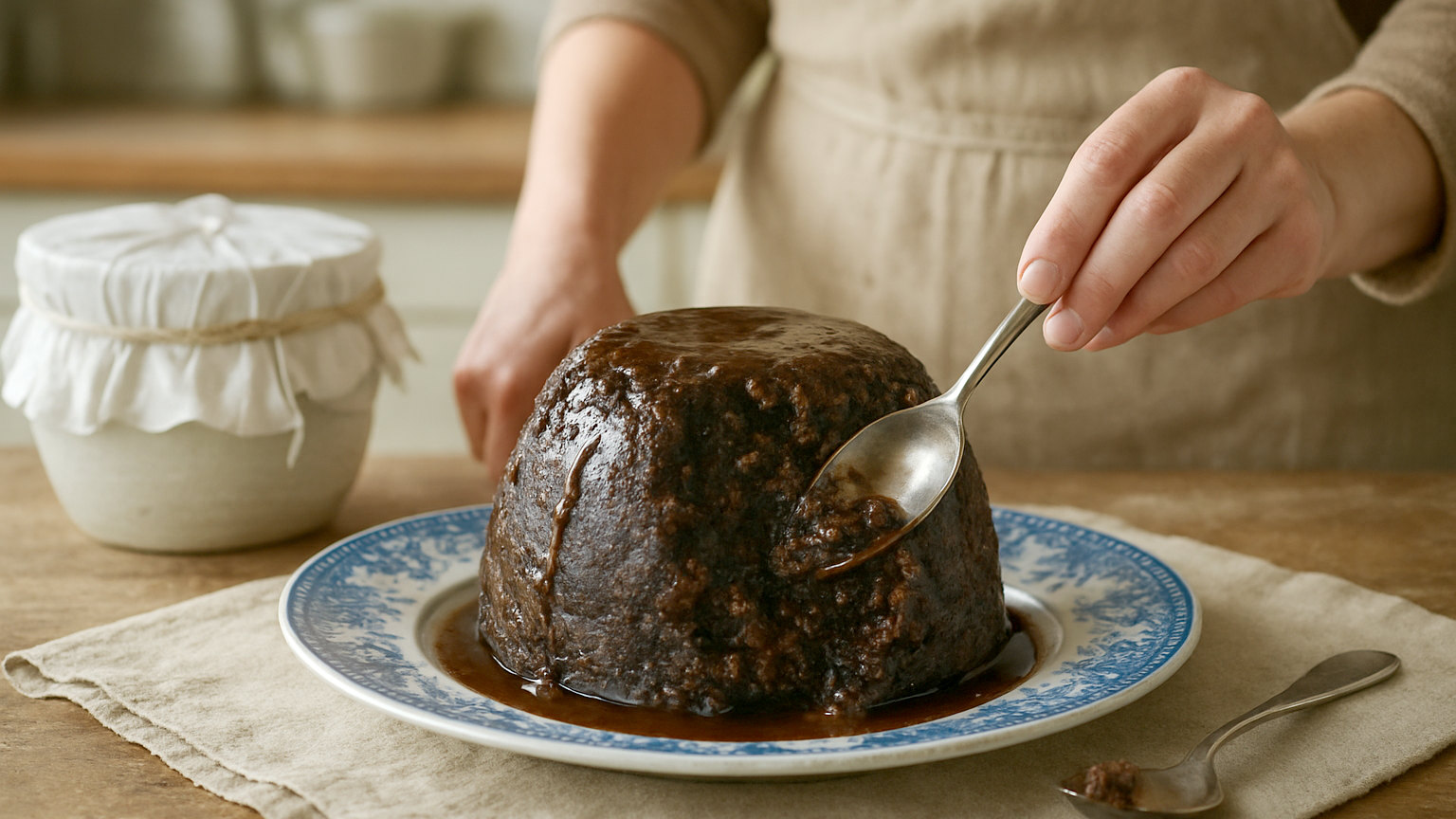
A traditional Christmas pudding is a dark, dense steamed pudding packed with dried fruit, suet, spices and brandy, steamed for several hours, then matured for weeks and steamed again on Christmas Day. It is made well in advance, which is part of its appeal, and the long maturing is what turns a good pudding into a great one.
When should you make it?
Traditionally on Stir-up Sunday, the last Sunday before Advent, which falls in late November. That gives four to five weeks of maturing, which is ample. Many people make it earlier, and a pudding made in September or October will be all the better for it. Even a pudding made a week ahead is worth the effort.
What ingredients do you need?
Serves 8 to 10.
- 350g mixed dried fruit
- 150g raisins
- 100g mixed peel
- 75g glacé cherries, halved
- 150ml brandy, plus extra for feeding
- 175g shredded suet, beef or vegetable
- 175g dark brown soft sugar
- 125g fresh white breadcrumbs
- 100g self-raising flour
- 2 tsp mixed spice
- 1 tsp ground cinnamon
- 2 large eggs, beaten
- 1 tbsp black treacle
- Finely grated zest of 1 orange and 1 lemon
- 1 apple, grated
How do you make Christmas pudding?
- Soak all the dried fruit in the brandy overnight, covered.
- Mix the suet, sugar, breadcrumbs, flour and spices in a very large bowl.
- Stir in the soaked fruit, eggs, treacle, zests and grated apple until evenly combined.
- Spoon into a greased 1.5 litre pudding basin and press down firmly.
- Cover with pleated baking paper and foil and tie securely with string, making a string handle.
- Steam over simmering water for six hours, topping up with boiling water every hour.
- Cool completely, then re-cover with fresh paper and foil and store in a cool, dark cupboard.
- On Christmas Day, steam again for two hours before turning out.
Never let the pan boil dry: six hours is a long time, and a dry pan will scorch and can crack the basin. Set a timer for every 45 minutes and top up with boiling water.
Should you put a coin in it?
The tradition of hiding a silver coin or charm in the pudding is a genuine one, but a coin is a choking hazard, particularly for children and older people. If you want to include one, use a clean coin wrapped in greaseproof paper, add it after cooking by pushing it into the base, and tell everyone at the table before serving.
How do you feed and store it?
Once cool, unwrap the top, pierce the pudding with a skewer and spoon over a tablespoon of brandy. Re-cover with fresh baking paper and foil. Repeat every two or three weeks. Store somewhere cool, dark and dry, not the fridge. A well-made pudding keeps for a year, though most are eaten the same Christmas.
Does it contain a lot of alcohol?
Yes. Between the soaking and the feeding, a Christmas pudding contains a considerable amount of brandy, and steaming does not remove all of it. It is not suitable for children, anyone pregnant or anyone avoiding alcohol. For an alcohol-free version, soak the fruit in orange juice or strong tea and feed with the same.
Is it safe to set alight?
Warm two tablespoons of brandy in a small pan, light it carefully with a long match and pour it flaming over the pudding. Do it away from curtains and anything overhanging, keep children back, tie back long hair and never pour spirits from the bottle onto a lit pudding, as the flame can travel back into the bottle.
How long does it keep?
Wrapped and stored in a cool cupboard, it keeps for months and improves with age. Once steamed on the day, leftovers keep for a week in the fridge. Fried slices in butter are excellent, and leftover pudding freezes for three months.
What should you serve with it?
Brandy butter is traditional, made by beating butter with icing sugar and brandy and chilling it until firm, so it melts over the hot pudding. Brandy sauce, rum sauce, custard and clotted cream are all common. Most families have a firm view and stick to it.


