
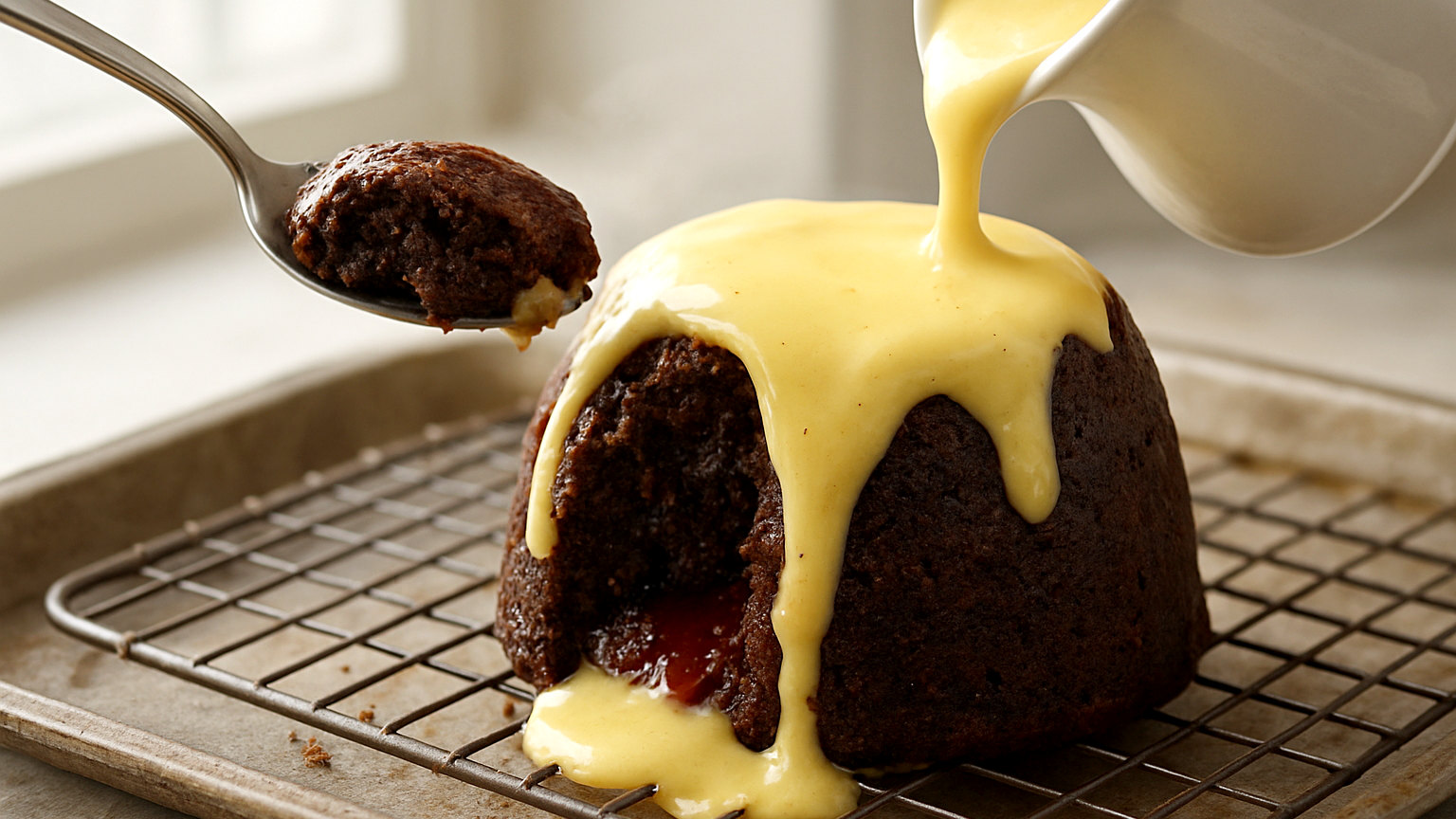
Guards pudding is a steamed pudding made from breadcrumbs, suet, jam and a spoonful of bicarbonate of soda, which reacts with the acid in the jam to give a surprisingly light, open texture. It is darker and softer than most suet puddings, and it takes only a few minutes to put together. It is associated with British army messes, which is where the name comes from.
Why is it so light?
The bicarbonate of soda reacts with the acid in the jam to produce carbon dioxide, which aerates the mixture as it steams. Combined with breadcrumbs rather than flour, which absorb moisture and steam readily, the result is much lighter than a conventional suet pudding. It is a clever piece of old kitchen chemistry using only store cupboard ingredients.
What ingredients do you need?
Serves 6.
- 125g fresh white breadcrumbs
- 125g shredded suet, beef or vegetable
- 125g caster sugar
- 6 tbsp raspberry jam
- 3 large eggs, beaten
- 1 tsp bicarbonate of soda
- 2 tbsp milk
- Butter, for greasing
- Extra jam and custard, to serve
How do you make Guards pudding?
- Grease a 1.2 litre pudding basin well and put a spoonful of jam in the base.
- Mix the breadcrumbs, suet and caster sugar in a large bowl.
- Stir in the jam and the beaten eggs until evenly combined.
- Dissolve the bicarbonate of soda in the milk and stir it through quickly.
- Spoon straight into the basin, leaving 3cm at the top for rising.
- Cover with pleated baking paper and foil and tie securely with string.
- Steam over simmering water for two hours, topping up with boiling water as needed.
- Turn out onto a warm plate and serve with warmed jam and custard.
Get it into the steamer quickly: the bicarbonate of soda starts reacting the moment it meets the jam. Waiting around loses the lift, so have the basin and steamer ready first.
Which jam works best?
Raspberry is traditional and its acidity is what activates the bicarbonate of soda most effectively. Blackcurrant, damson and plum all work well and are similarly sharp. A very sweet, low-acid jam gives less lift, so if you use one, add a teaspoon of lemon juice to compensate.
Do you have to use suet?
Suet gives the traditional texture, melting slowly during the long steam and leaving small pockets that keep the pudding light. Vegetable suet works identically and makes it suitable for vegetarians. Melted butter can be substituted at a push, though the pudding becomes denser and more cake-like.
Why breadcrumbs rather than flour?
Breadcrumbs absorb the eggs and jam without forming gluten, so the pudding stays tender rather than becoming chewy. They also give the characteristic soft, slightly open crumb. Use fresh white breadcrumbs from day-old bread blitzed in a processor; dried crumbs stay hard and gritty.
Can you bake it instead of steaming?
Yes, though the texture changes. Bake in a greased dish at 170°C (150°C fan), gas 3, for about 45 minutes, covered with foil for the first half. Baked, it is drier and firmer, closer to a jam sponge. Steaming gives the soft, moist texture the pudding is known for.
How long does it keep?
It keeps for three days in the fridge and reheats well by steaming for 30 minutes, or in the microwave for a minute or two. It freezes for three months. Serve it hot with plenty of custard, which is how it would have been served in a mess hall.
Can you make individual puddings?
Yes. Divide the mixture between six greased 175ml moulds, each with a spoonful of jam in the base, and steam for 45 minutes. Individual puddings turn out neatly and reheat in a few minutes, which makes them practical for a dinner party.
Why does the pudding sink slightly?
A little settling is normal once the pudding comes out of the steamer, as the gas produced by the raising agent escapes. A pudding that collapses badly has usually been under-steamed, so give it the full two hours and check that the water has never stopped simmering.


