
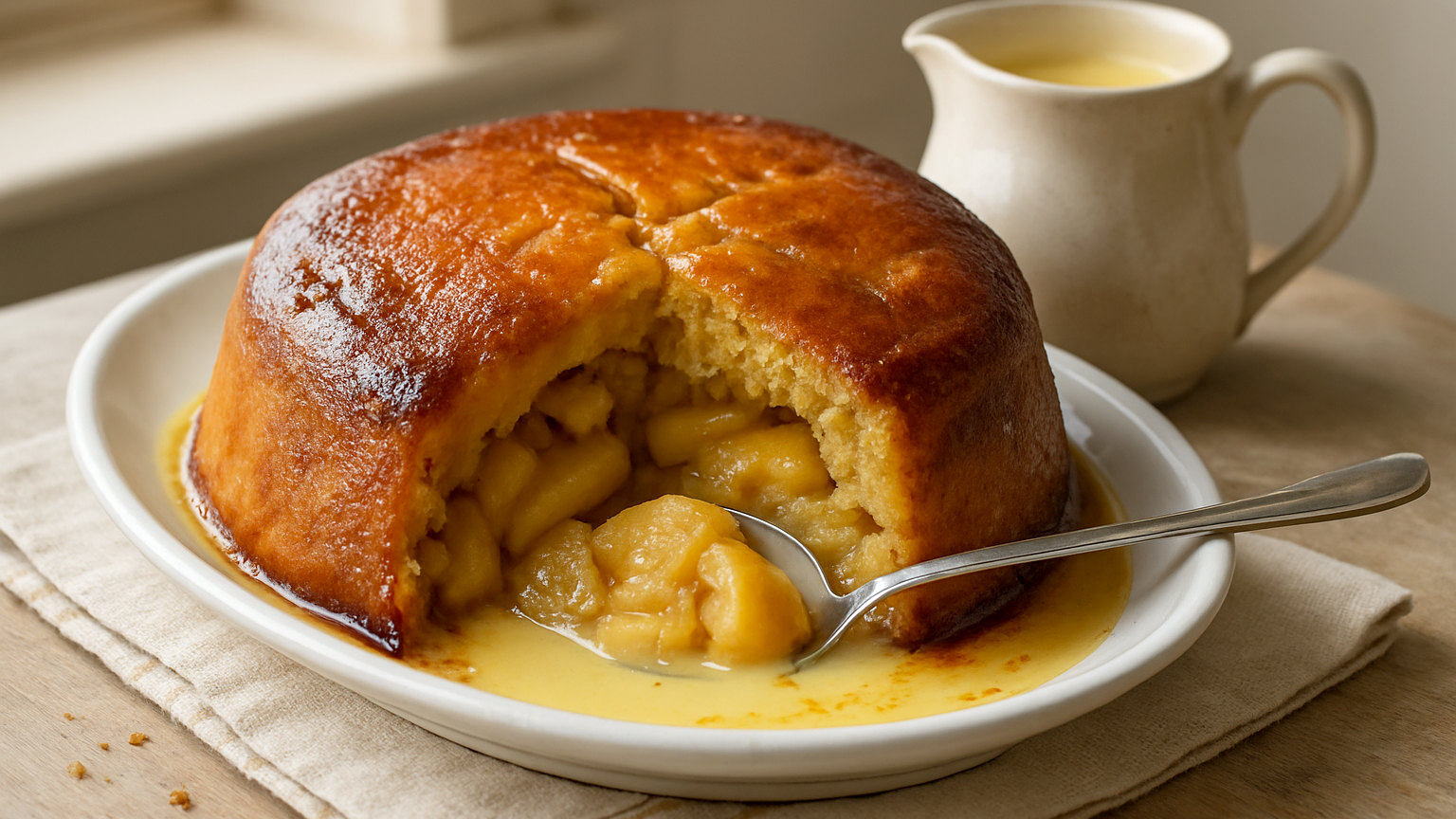
Malvern pudding is a gentle, old-fashioned dish from the Malvern Hills in Worcestershire: a layer of sharp stewed apple topped with a lemon-scented custard, baked until just set and usually served cold. It is quieter than most British puddings, with no meringue, pastry or sauce, and it depends entirely on good apples and a properly set custard.
Where does it come from?
The pudding is associated with Malvern in Worcestershire, an area long known for its orchards and fruit growing. Recipes appear in West Country and Midlands collections, and it belongs to a family of English puddings that combine stewed fruit with a baked custard topping. Like many regional puddings, it was a way of using a glut of apples.
What ingredients do you need?
Serves 6.
For the apple layer
- 750g Bramley apples, peeled, cored and sliced
- 75g caster sugar
- 25g unsalted butter
- 1 tsp ground cinnamon
For the custard
- 400ml whole milk
- 100ml double cream
- Finely grated zest of 1 lemon
- 4 large egg yolks
- 75g caster sugar
- 2 tbsp cornflour
- Grated nutmeg, to finish
How do you make Malvern pudding?
- Cook the apples with the sugar, butter and cinnamon in a covered pan for 12 to 15 minutes, until collapsed.
- Beat to a rough purée and cook uncovered for a few minutes if it looks watery. Cool slightly.
- Heat the oven to 160°C (140°C fan), gas 3. Grease a 1.2 litre baking dish.
- Spread the apple over the base of the dish.
- Heat the milk, cream and lemon zest until steaming, then leave to infuse for 10 minutes.
- Whisk the egg yolks, sugar and cornflour together in a bowl.
- Pour on the warm milk while whisking, then return to the pan and cook over a medium heat, stirring, until thickened.
- Pour the custard over the apple and level the surface.
- Grate nutmeg over the top and bake for 25 to 30 minutes, until just set.
- Cool completely, then chill before serving.
Thicken the custard on the hob first: poured on thin, it seeps into the apple and the two layers merge. Cooking it to a thick pouring consistency keeps them distinct.
Why is it served cold?
The custard firms up as it chills, so cold slices hold their shape and the two layers stay clearly separated. Served hot, the pudding is looser and more like a stewed apple with custard poured over, which is pleasant but loses the point. Most traditional recipes specify cooling it completely.
Why add cornflour to the custard?
Cornflour lets the custard be brought to the boil without curdling, which is what thickens it enough to sit on top of the apple rather than sinking in. A pure egg custard would need to be baked very gently and would still be softer. This is the same principle used in crème pâtissière.
Which apples should you use?
Bramley apples give the sharpness that balances the sweet custard, and they collapse into a soft purée. Other cooking apples work well. If you use eating apples, add the juice of half a lemon and cook them longer, mashing well, as they are sweeter and hold their shape.
Can you flavour it differently?
Orange zest instead of lemon works well, as does a vanilla pod infused in the milk. A pinch of ground cloves in the apple layer suits it. Some versions add a spoonful of blackberry jam or a handful of blackberries to the fruit, which turns the layer a deep purple.
How long does it keep?
It keeps in the fridge for three days and is arguably better on the second day, once the custard has fully set and the flavours have settled. It does not freeze, as baked custard separates when thawed. Serve it cold, on its own or with a little pouring cream.
Can you make it in individual dishes?
Yes. Divide the apple and custard between six ramekins and bake for 15 to 20 minutes, until just set. Individual puddings chill faster, which is useful given that this one is served cold, and they look neat with a grating of nutmeg on each.


