
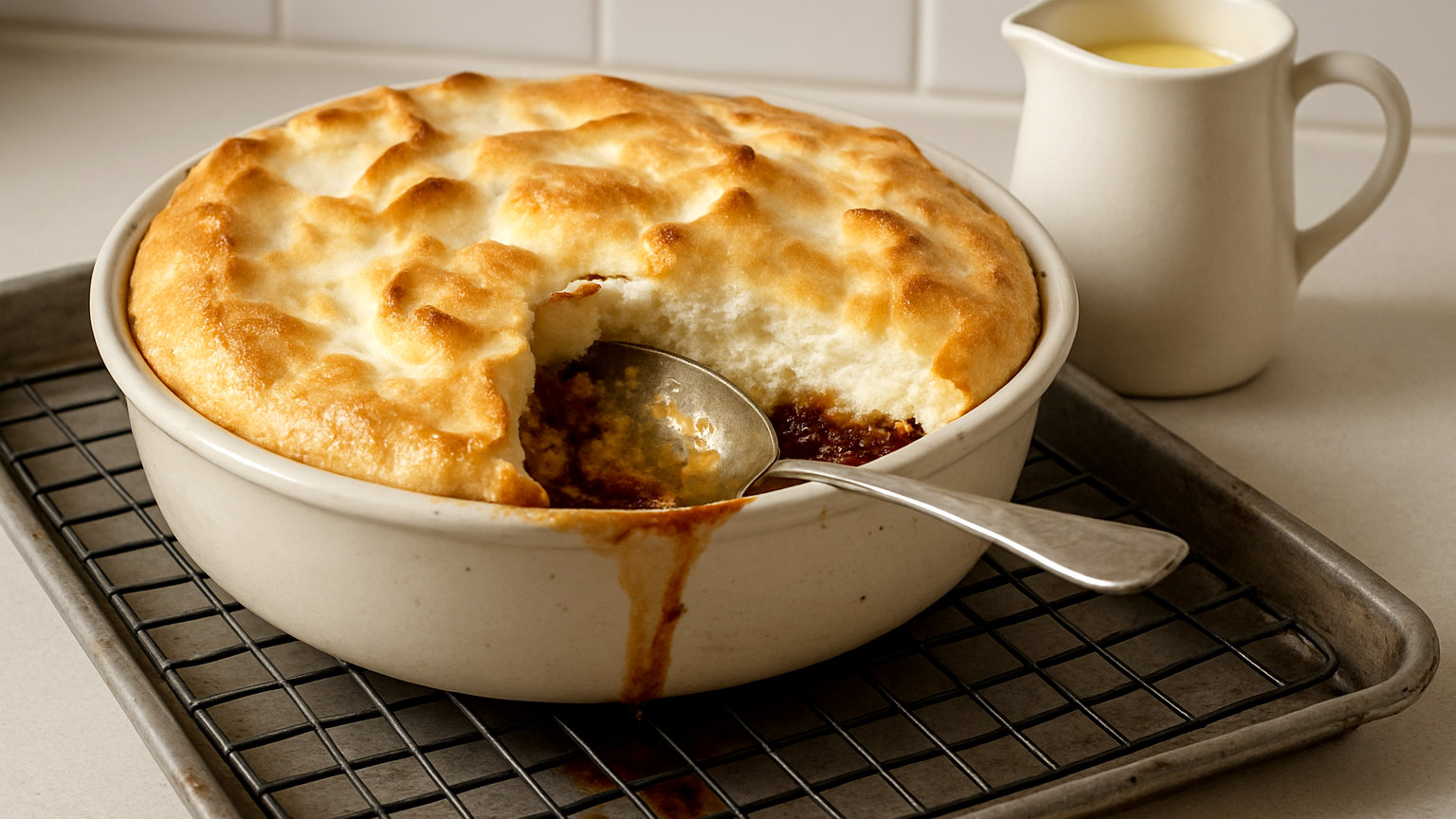
Monmouth pudding is a Welsh dish of layered breadcrumbs soaked in sweetened milk, jam and meringue, built up in a dish and baked until the top is golden. It is closely related to queen of puddings but lighter and simpler, with the layers repeated rather than a single custard base. It is a thrifty pudding that looks far prettier than its ingredients suggest.
Where does it come from?
The pudding takes its name from Monmouth in south-east Wales, and it appears in Welsh and Border cookery collections. Like most puddings built on breadcrumbs and jam, it was a way of using stale bread and whatever preserve was in the cupboard. Similar layered breadcrumb puddings appear across Britain under various regional names.
How is it different from queen of puddings?
Queen of puddings has a single thick base of breadcrumb custard set with egg yolks, then jam and meringue on top. Monmouth pudding uses breadcrumbs soaked in sweetened milk without egg yolks, and the breadcrumbs, jam and meringue are layered two or three times through the dish. It is lighter, less custardy and quicker to make.
What ingredients do you need?
Serves 6.
- 600ml whole milk
- 50g unsalted butter
- Finely grated zest of 1 lemon
- 175g fresh white breadcrumbs
- 50g caster sugar
- 6 tbsp strawberry or raspberry jam
- 4 large egg whites
- 200g caster sugar, for the meringue
How do you make Monmouth pudding?
- Heat the oven to 170°C (150°C fan), gas 3. Grease a 1.5 litre baking dish.
- Heat the milk with the butter and lemon zest until the butter melts and the milk steams.
- Pour over the breadcrumbs and 50g caster sugar, stir and leave for 20 minutes until thick and soft.
- Whisk the egg whites to soft peaks, then add the 200g sugar a spoonful at a time and whisk to stiff, glossy peaks.
- Spread half the soaked breadcrumbs in the dish, then half the jam, then a third of the meringue.
- Repeat with the remaining breadcrumbs, jam and another third of the meringue.
- Spoon the last of the meringue over the top and swirl into peaks.
- Bake for 25 to 30 minutes, until the meringue is golden and set.
Warm the jam before spreading: cold jam drags the soft breadcrumb layer up with it. Twenty seconds in the microwave makes it spreadable without making it runny.
Why is there no egg yolk in the base?
Monmouth pudding uses only the whites, which go into the meringue, so the base is thickened by the breadcrumbs alone rather than set as a custard. That gives a lighter, softer base and means the whole pudding uses the same four eggs with nothing left over, which was part of its appeal as a thrifty dish.
Which jam works best?
Strawberry and raspberry are both traditional, and a good jam with plenty of fruit makes a noticeable difference. Blackcurrant gives a sharper contrast against the sweet meringue. Whatever you use, warm it slightly and spread it in an even layer so each portion gets some in every spoonful.
Can you see the layers when serving?
Yes, if you spoon it out carefully rather than digging in. Serving it in a glass dish shows the alternating bands of pale breadcrumb, dark jam and white meringue, which is much of the pleasure. Use a large spoon and take a portion straight down through all the layers.
How long does it keep?
It is best served warm on the day it is made. Leftovers keep in the fridge for two days, though the meringue softens and may weep a little. It does not freeze. Serve with a jug of pouring cream or on its own.
Can you use a different jam?
Raspberry jam is the most common choice, and strawberry works equally well. Blackcurrant is sharper and gives a stronger contrast against the meringue. Whichever you use, a good jam with a high fruit content makes a noticeable difference in a pudding this simple.


