
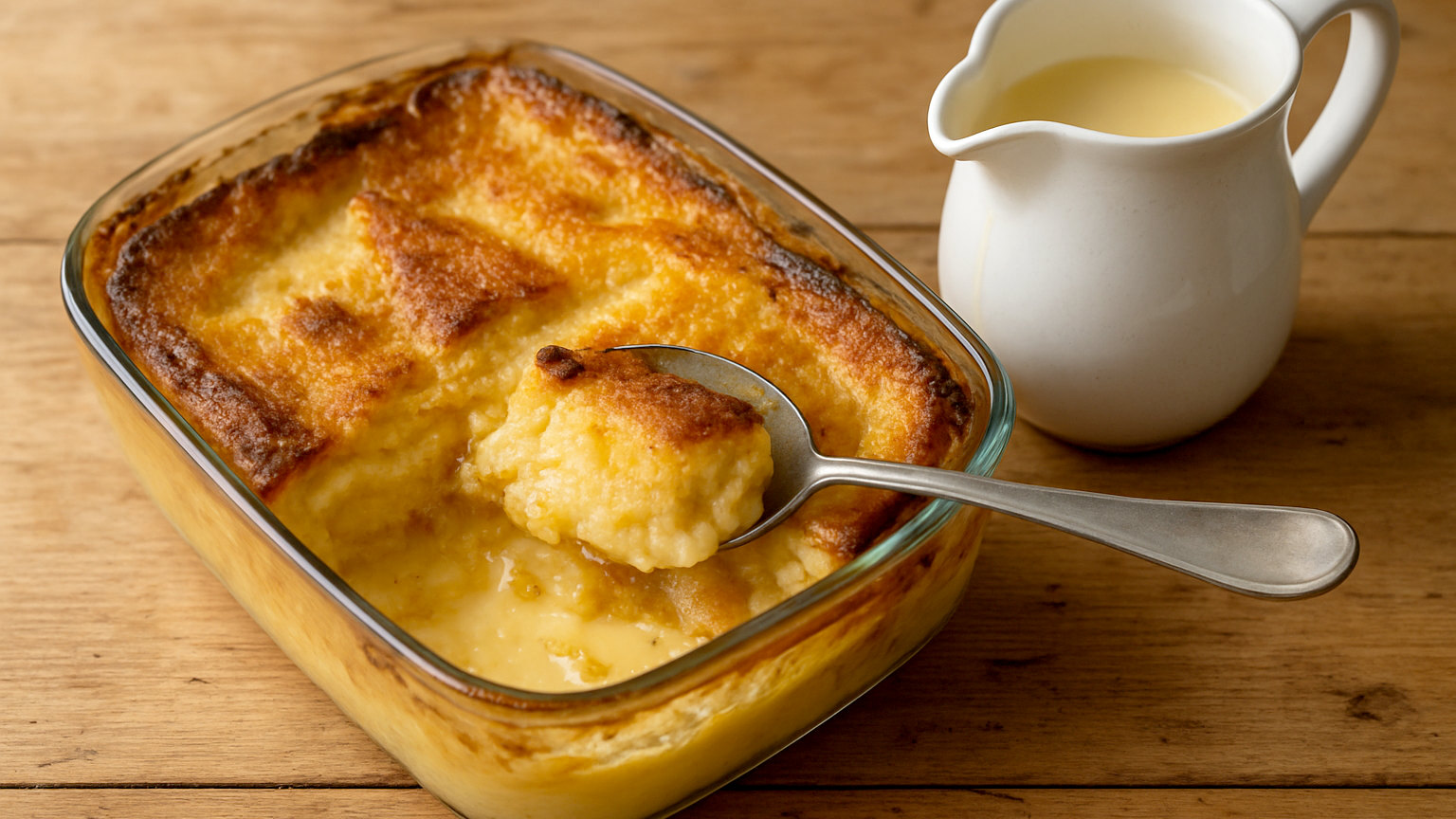
Osborne pudding is a bread and butter pudding made with marmalade rather than dried fruit, so the custard is threaded with bitter orange. The marmalade caramelises slightly at the edges and cuts the richness of the custard, which makes it noticeably more interesting than the plain version. It is a Victorian recipe and one of the best uses for a jar of marmalade that has been sitting in the cupboard.
Where does the name come from?
The pudding is generally said to be named after Osborne House on the Isle of Wight, the seaside home of Queen Victoria and Prince Albert. A number of Victorian dishes carry the name. As with most puddings named after royal residences, the connection is traditional rather than documented, but the name has stuck since the nineteenth century.
What ingredients do you need?
Serves 6.
- 10 slices of white bread, crusts removed
- 100g unsalted butter, softened
- 6 tbsp orange marmalade
- 400ml whole milk
- 200ml double cream
- 4 large eggs
- 75g caster sugar
- Finely grated zest of 1 orange
- 1 tsp vanilla extract
- 2 tbsp demerara sugar, for the top
How do you make Osborne pudding?
- Grease a 1.5 litre baking dish.
- Butter each slice of bread, then spread with marmalade and cut into triangles.
- Arrange the triangles in the dish in overlapping layers, marmalade side up.
- Heat the milk and cream until steaming but not boiling.
- Whisk the eggs, caster sugar, orange zest and vanilla together, then pour on the warm milk while whisking.
- Strain the custard through a sieve over the bread.
- Press the bread down gently and leave to soak for 30 minutes.
- Heat the oven to 170°C (150°C fan), gas 3.
- Sprinkle with demerara sugar and bake for 40 to 45 minutes, until puffed, golden and just set with a slight wobble.
- Rest for 10 minutes before serving.
Let it soak for half an hour: dry bread floating in custard bakes into a hard layer on top and a puddle underneath. Soaking lets it swell so the whole pudding sets evenly.
Which marmalade should you use?
A thick-cut bitter Seville orange marmalade gives the best contrast against the sweet custard. Fine-cut marmalade spreads more easily and distributes the flavour more evenly. Avoid very sweet breakfast marmalades, which lose their character in the custard. Ginger or three-fruit marmalades both work well for a change.
Why strain the custard?
Straining catches the stringy chalazae from the eggs and any small pieces of cooked egg, which gives a smoother, silkier custard. It takes seconds and makes a noticeable difference to the texture. It also catches any lumps of marmalade peel that have found their way in.
How do you know when it is set?
The custard should be just set with a slight wobble in the centre, and the top puffed and golden. A knife inserted at the edge should come out clean. Overbaked, the custard curdles and weeps water, so take it out while there is still movement in the middle.
Can you use different bread?
A plain white sandwich loaf is traditional and reliable. Brioche makes a much richer pudding, and panettone at Christmas is excellent, though both are already sweet, so reduce the sugar. Stale bread absorbs custard better than fresh, so this is a good use for a loaf that is a day or two old.
How long does it keep?
It is best warm from the oven. Leftovers keep in the fridge for two days and reheat covered with foil at 160°C for 15 minutes. It does not freeze, as baked custard turns watery when thawed. Serve with cream or a little more marmalade warmed and spooned over.
Can you add dried fruit as well?
You can, though it moves the pudding back towards a standard bread and butter pudding. A handful of sultanas scattered between the layers works well with the marmalade, and chopped candied peel reinforces the orange. Keep it modest, as the marmalade should stay the dominant flavour.


