
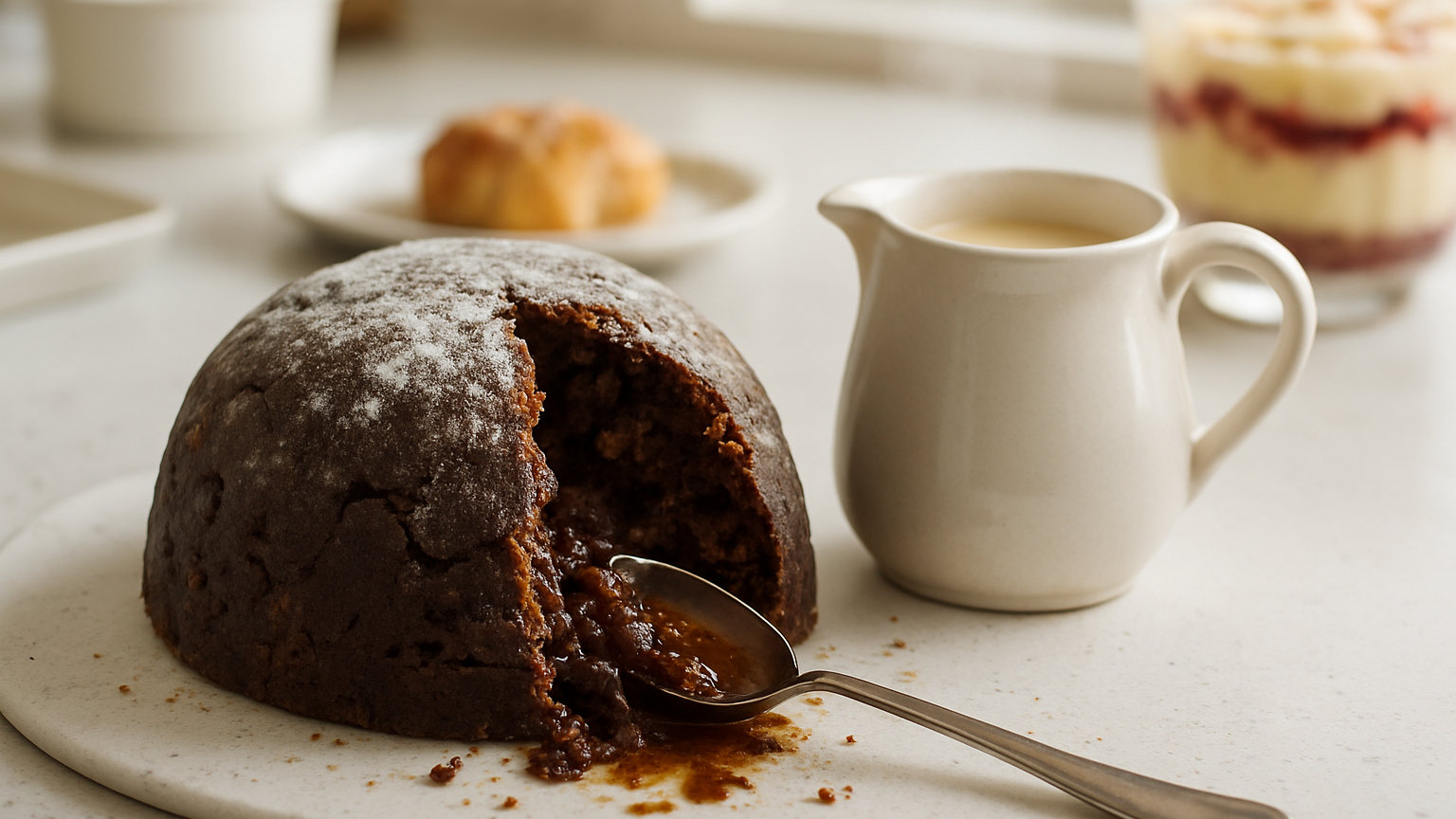
A clootie dumpling is a dense, dark, spiced fruit pudding boiled in a floured cotton cloth rather than a basin. The cloth, or cloot, is what gives the dumpling its name and its characteristic dark, slightly leathery skin, which is quite unlike anything a steamed basin pudding produces. It is a Scottish celebration pudding, made for Hogmanay, birthdays and Burns Night.
What is a cloot?
Cloot is a Scots word for a piece of cloth. A square metre of clean cotton, such as an old pillowcase or a large tea towel, is scalded in boiling water, dusted with flour and used to wrap the pudding mixture before it is boiled. The flour and water form a seal that keeps the water out and creates the skin.
What ingredients do you need?
Serves 10.
- 250g plain flour
- 125g fresh white breadcrumbs
- 125g shredded suet, beef or vegetable
- 175g dark brown soft sugar
- 350g mixed dried fruit
- 2 tsp mixed spice
- 1 tsp ground cinnamon
- 1 tsp bicarbonate of soda
- 1 tbsp black treacle
- 2 large eggs, beaten
- About 200ml buttermilk or milk
- Extra flour, for the cloth
How do you make a clootie dumpling?
- Bring a very large pan of water to the boil and drop in a clean cotton cloth for a minute to scald it.
- Lift it out with tongs, wring it out carefully and lay it flat. Dust the centre generously with flour.
- Mix all the dry ingredients in a large bowl, then stir in the treacle, eggs and enough buttermilk to give a soft dropping consistency.
- Spoon the mixture onto the floured centre of the cloth.
- Gather the cloth up around it, leaving a little room for expansion, and tie tightly with string.
- Lower into the boiling water, resting on an upturned plate so it does not touch the base, and simmer for three hours.
- Top up with boiling water as needed so the dumpling stays covered.
- Lift out, dip briefly in cold water to loosen the cloth, then unwrap onto a plate.
- Dry the skin in a low oven at 150°C for 15 minutes.
Keep the pan topped up: the dumpling must stay covered in simmering water for the whole three hours. A pan that boils dry will scorch the cloth and ruin the pudding.
Why does it have a skin?
The flour dusted on the damp cloth forms a paste against the surface of the pudding, which cooks into a thin, dark, slightly chewy skin. This is the defining feature of a clootie dumpling and the reason it is boiled rather than steamed. Drying it briefly in the oven afterwards firms the skin properly.
How is it different from Christmas pudding?
Christmas pudding is steamed in a basin, contains more fruit and often alcohol, and is matured for weeks. A clootie dumpling is boiled in cloth, is lighter and less rich, contains more flour and breadcrumbs, and is eaten fresh. Both are suet puddings, but the texture and the skin are quite different.
Can you use a pudding basin instead?
Yes, and many people do, steaming it for the same length of time. It will taste the same, but you will not get the skin, which is much of the point. If you want the traditional result, the cloth method is worth the extra effort at least once.
How do you serve leftovers?
Slices of cold clootie dumpling fried in butter until crisp on both sides are a Scottish tradition, often eaten for breakfast the next morning. It is genuinely excellent. Otherwise, reheat slices by steaming or in the microwave, and serve with custard or cream.
How long does it keep?
It keeps for a week wrapped in the fridge and freezes for three months. Because it is dense and sweet, it keeps better than most puddings, and many people think the flavour improves after a day or two.
Is it eaten only at Hogmanay?
It is strongly associated with Hogmanay and Burns Night, but it is made throughout the year in Scotland for birthdays and family occasions. Silver coins wrapped in greaseproof paper were traditionally hidden in the mixture for children to find, in the same way as with Christmas pudding.


