
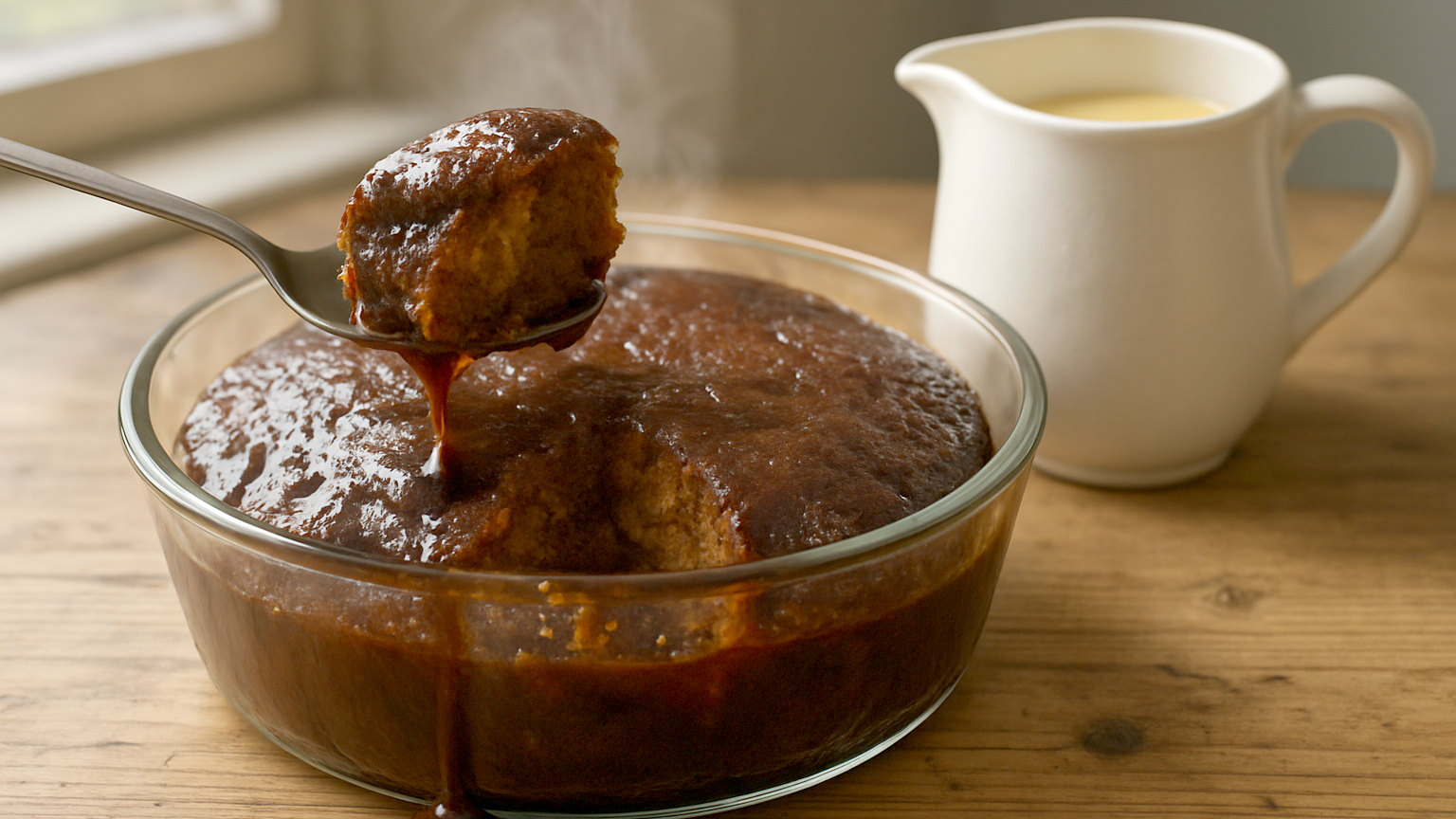
Sticky ginger pudding is a dark, treacly sponge packed with ground and stem ginger, served with a hot ginger cream sauce poured over. It has the same comforting appeal as sticky toffee pudding but with a proper warming kick, which makes it a better choice on a genuinely cold evening. It is baked rather than steamed, so it takes well under an hour.
What ingredients do you need?
Serves 8.
For the sponge
- 175g unsalted butter
- 175g dark brown soft sugar
- 100g black treacle
- 100g golden syrup
- 2 large eggs, beaten
- 250ml whole milk
- 275g self-raising flour
- 3 tsp ground ginger
- 1 tsp ground cinnamon
- 1 tsp bicarbonate of soda
- 3 balls stem ginger, finely chopped
For the sauce
- 150ml double cream
- 75g light brown soft sugar
- 50g unsalted butter
- 2 tbsp stem ginger syrup
How do you make sticky ginger pudding?
- Heat the oven to 170°C (150°C fan), gas 3. Grease a 20cm square baking dish.
- Melt the butter, dark brown sugar, treacle and golden syrup together in a pan over a low heat. Cool for 10 minutes.
- Whisk the eggs into the milk.
- Sift the flour, ground ginger, cinnamon and bicarbonate of soda into a bowl.
- Pour in the melted mixture and the milk, and whisk until smooth. The batter will be very runny.
- Stir in the chopped stem ginger and pour into the dish.
- Bake for 40 to 45 minutes, until risen and a skewer comes out clean.
- For the sauce, melt the cream, sugar, butter and ginger syrup together and simmer for two minutes.
- Prick the hot pudding all over and pour over a third of the sauce. Serve with the rest.
Cool the melted mixture before adding the eggs: pour hot syrup straight onto beaten egg and it will scramble into threads through the batter.
How much ginger is too much?
Three teaspoons of ground ginger plus three balls of stem ginger gives a pudding with a genuine, warming heat that most people enjoy. For something milder, halve the ground ginger and use two balls of stem ginger. For a real kick, add a pinch of ground black pepper, which sharpens the heat without tasting peppery.
Why use both ground and stem ginger?
They do different things. Ground ginger gives an even background warmth through the whole sponge. Stem ginger, preserved in syrup, provides sweet, fiery pockets and a little texture, and its syrup is useful in the sauce. Using only ground ginger gives a flatter, more one-dimensional flavour.
Why is the batter so runny?
The melted butter, syrups and milk together make a batter closer to a thick pouring custard than a cake mixture, and that is correct. A wet batter bakes into a dense, moist, sticky sponge rather than a light cake. It also needs the longer, gentler bake at 170°C rather than a hotter oven.
Can you steam it instead?
Yes. Pour the batter into a greased 1.5 litre pudding basin, cover with pleated paper and foil, and steam for two hours. Steaming gives an even softer, more traditional pudding. Check the water level regularly and top up with boiling water so the pan does not run dry.
What should you serve with it?
The hot ginger sauce is the main event. Beyond that, pouring cream, custard or vanilla ice cream all work, and the contrast between the hot pudding and something cold is part of the appeal. A little chopped stem ginger scattered on top adds a final kick.
How long does it keep?
It keeps for four days in an airtight container and improves after a day as the ginger mellows and the top becomes stickier. Reheat portions covered with foil at 160°C for 15 minutes. Both sponge and sauce freeze for three months.
Can you make it in individual portions?
Yes. Divide the batter between eight greased 175ml pudding moulds and bake for 20 to 25 minutes. Individual puddings can be turned out onto plates and look smart for a dinner party. Prick and soak each one with the hot sauce in the same way as the large version.


