
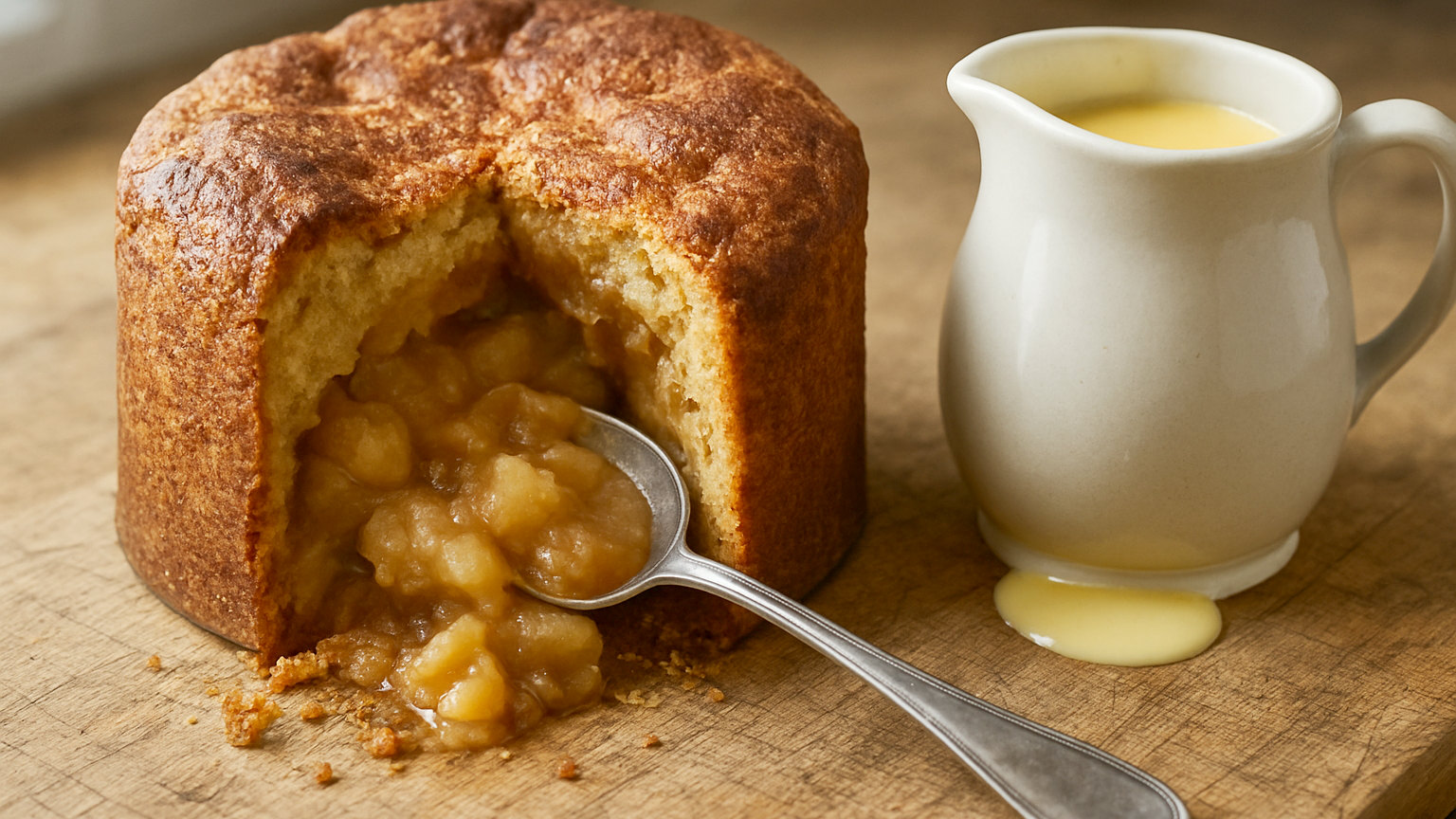
An apple charlotte is a mould lined with buttered bread, filled with thick, spiced apple purée and baked until the bread turns crisp and deep golden. It is then turned out so the crust becomes the outside, giving something that looks like a golden dome and cuts into wedges. It is a very old British pudding and a superb use for a glut of cooking apples.
Where does the name come from?
The pudding is usually said to be named in honour of Queen Charlotte, the wife of George III, who was known as a patron of apple growers. It appears in English cookery writing from the late eighteenth century. A different dish, the charlotte russe, was created later by the French chef Carême and uses sponge fingers and Bavarian cream rather than bread and apple.
What ingredients do you need?
Serves 6.
- 1.5kg Bramley apples, peeled, cored and chopped
- 100g caster sugar
- 50g unsalted butter
- 1 tsp ground cinnamon
- Finely grated zest of 1 lemon
- 10 to 12 slices of white bread, crusts removed
- 150g unsalted butter, melted, for the bread
How do you make apple charlotte?
- Cook the apples with the sugar, 50g butter, cinnamon and lemon zest in a covered pan for 15 minutes, until collapsed.
- Uncover and cook for another 10 minutes, stirring, until very thick with no free liquid. Cool slightly.
- Heat the oven to 190°C (170°C fan), gas 5. Grease a 1.2 litre charlotte mould or deep cake tin.
- Cut a circle of bread for the base and strips for the sides.
- Dip each piece in melted butter and press into the mould, overlapping the strips slightly so there are no gaps.
- Spoon in the apple purée and press down firmly.
- Cover the top with more buttered bread, tucking the edges down inside.
- Bake for 35 to 40 minutes, until deep golden and crisp.
- Leave to stand for 10 minutes, then turn out onto a plate.
The filling must be very thick: any free liquid soaks into the bread and the charlotte collapses when turned out. Cook the apples down until a spoon leaves a clear channel.
Which apples should you use?
Bramley apples are ideal, as they collapse into a fluffy purée and their sharpness balances the buttery bread. Other cooking apples work too. Eating apples hold their shape and stay sweet, so if you use them, cook them for longer, mash well and add extra lemon juice.
Why does it need to stand before turning out?
Ten minutes lets the structure settle and the filling firm up slightly, so the charlotte holds its shape when inverted. Turned out immediately, it can slump. Any longer than about 20 minutes and steam softens the crust, so the window matters.
What bread works best?
A plain white sandwich loaf, a day or two old, is ideal. It is firm enough to hold its shape and absorbs the butter well. Very fresh bread tears, and heavily seeded or sourdough loaves have too strong a flavour. Cut the slices about 1cm thick and remove the crusts.
How is it different from a brown Betty?
A brown Betty layers apple with buttered breadcrumbs and is served from the dish, with a soft, crumbly texture throughout. A charlotte lines a mould with whole slices of bread and is turned out, so it has a distinct crisp crust and a soft interior. The ingredients are similar; the construction is not.
How should you serve it?
Warm, with custard, pouring cream or vanilla ice cream. It is at its best within half an hour of baking, while the crust is still crisp. Leftovers keep in the fridge for two days and can be reheated in a hot oven, though the crust never quite returns.
Can you make it in a cake tin?
Yes, and most people do, as proper charlotte moulds are uncommon now. A deep 18cm round cake tin, preferably not loose-bottomed, works well. Grease it thoroughly. A loose-bottomed tin risks butter leaking out during baking, so stand it on a tray if that is all you have.


