
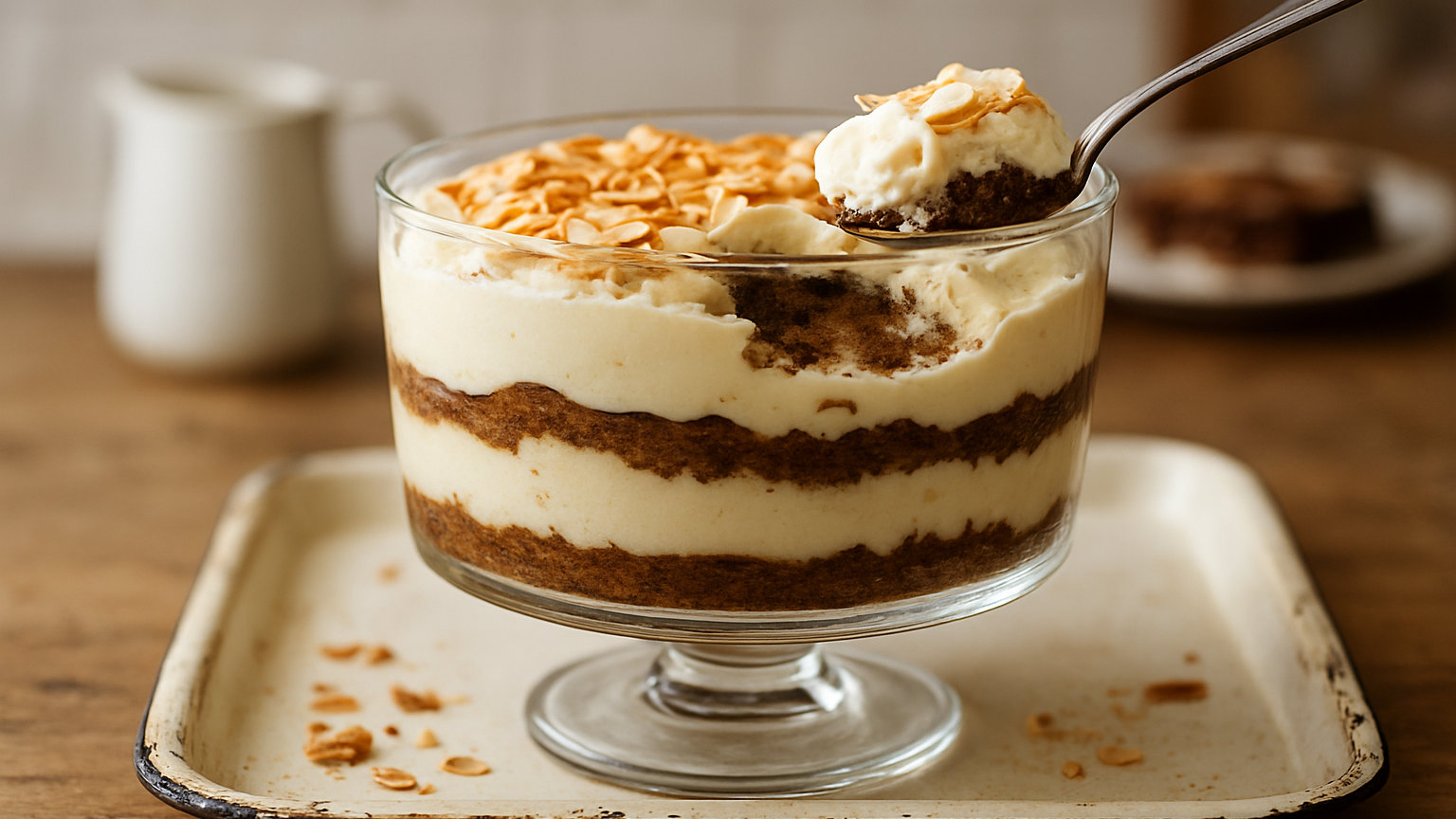
Tiramisu is sponge fingers dipped in strong coffee, layered with a sweetened mascarpone cream and dusted with cocoa. It needs no baking and no setting agent, and it is better made a day ahead, which makes it one of the most useful desserts to know. The name means pick me up, a reference to the coffee.
What ingredients do you need?
Serves 8.
- 4 large egg yolks
- 100g caster sugar
- 500g mascarpone, at room temperature
- 300ml double cream
- 300ml strong black coffee, cooled
- 3 tbsp coffee liqueur or Marsala, optional
- About 24 sponge fingers
- 3 tbsp cocoa powder
How do you make tiramisu?
- Put the egg yolks and sugar in a heatproof bowl over a pan of barely simmering water.
- Whisk continuously for six to eight minutes, until pale, thick and reaching about 70°C.
- Take off the heat and whisk until cool.
- Beat in the mascarpone a spoonful at a time until smooth.
- Whip the double cream to soft peaks and fold it in gently.
- Mix the coffee with the liqueur in a shallow dish.
- Dip each sponge finger briefly, about one second a side, and lay them in a 20 by 25cm dish.
- Spread over half the mascarpone cream, then repeat with a second layer of fingers and cream.
- Cover and chill for at least six hours, or overnight.
- Dust generously with cocoa powder just before serving.
Dip the fingers for one second only: they absorb liquid instantly, and a finger left in the coffee for even three seconds turns to mush and collapses the layer.
Are the eggs safe?
Cooking the yolks over simmering water to about 70°C, as above, makes them safe for everyone, including anyone pregnant, elderly or very young. Many traditional recipes use raw yolks. If you follow one of those, use British Lion eggs, which come from vaccinated flocks, and avoid serving it to vulnerable people.
What coffee should you use?
Strong espresso is ideal, or instant coffee made at double normal strength. It must be properly strong, since the mascarpone cream is rich and sweet and will swamp anything weak. Let it cool completely before dipping, as warm coffee softens the fingers even faster and melts the cream.
Which sponge fingers?
Italian savoiardi, sold as sponge fingers or ladyfingers, are dry and crisp and designed to absorb liquid without collapsing. Soft sponge fingers from a supermarket bakery are too tender and turn to paste. If you can only find soft ones, dip them even more briefly, barely touching them to the coffee.
Should you add alcohol?
Marsala is traditional, and coffee liqueur, amaretto or dark rum all work. Three tablespoons gives a clear flavour. It is not cooked off, so the tiramisu is then unsuitable for children. Left out entirely, the dessert is still excellent, and the coffee carries plenty of flavour on its own.
Why must it chill for so long?
The sponge fingers continue absorbing moisture from the cream, softening from biscuit into something closer to cake, and the layers settle into one another. Six hours is the minimum and overnight is better. A tiramisu eaten after two hours tastes fine but has a noticeably drier, more separated texture.
When should you dust the cocoa?
Just before serving. Cocoa powder absorbs moisture from the mascarpone and turns damp and patchy within a few hours. Use a fine sieve and tap it gently for an even, velvety layer. Keep a little back to re-dust any portion that looks bare after serving.
How long does it keep?
It keeps for three days in the fridge, covered, and is at its best on the second day. It freezes surprisingly well for a month, as the high fat content protects the texture; defrost overnight in the fridge and dust with fresh cocoa.
Why must the mascarpone be at room temperature?
Cold mascarpone is stiff and splits into lumps when you try to beat it into the egg mixture, and those lumps never disperse. Take it out of the fridge half an hour before you start, and beat it in a spoonful at a time rather than adding it all at once.


