
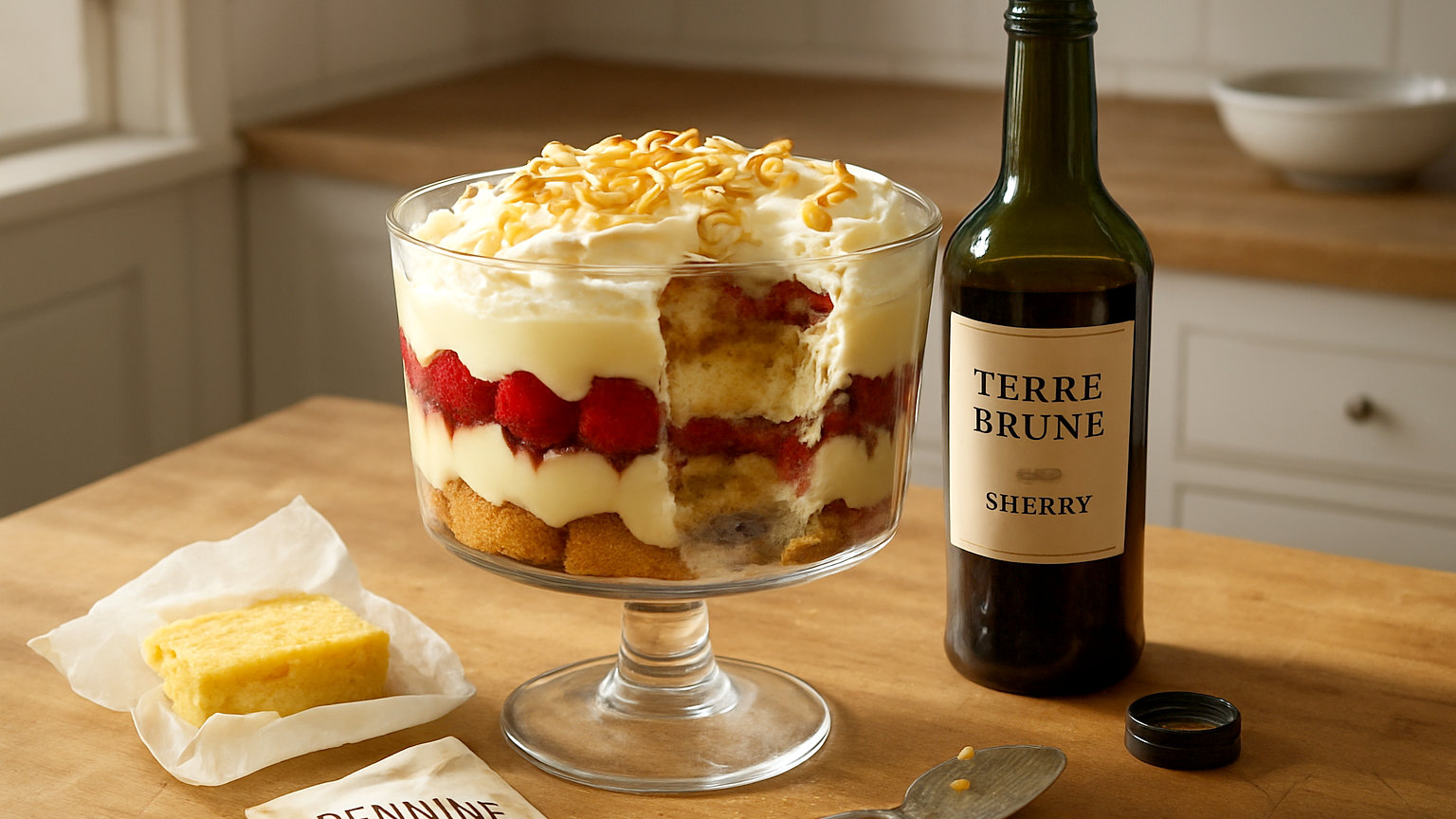
A classic sherry trifle is layers of sponge soaked in sherry, raspberries, thick set custard and whipped cream, built in a glass bowl so the bands show through the sides. It is the centrepiece of a great many British Christmas tables and it must be made a day ahead, which is part of its appeal when you are cooking for a crowd.
What ingredients do you need?
Serves 10.
- 8 trifle sponges, or 1 plain sponge cake, broken up
- 4 tbsp raspberry jam
- 150ml sweet sherry
- 400g raspberries, fresh or frozen
- 1 quantity thick trifle custard, about 800ml, cold
- 500ml double cream
- 2 tbsp icing sugar
- 50g flaked almonds, toasted
How do you make a sherry trifle?
- Split the trifle sponges and sandwich them with the raspberry jam, then arrange them in the base of a 3 litre glass bowl.
- Spoon over the sherry and leave for 20 minutes, so it soaks in completely.
- Scatter the raspberries over the sponge, pressing a few against the glass so they show.
- Spoon the cold custard gently over the fruit and spread it to the edges with the back of a spoon.
- Chill for at least two hours, until the custard is firm.
- Whip the double cream with the icing sugar to soft peaks and spread over the custard.
- Chill overnight.
- Scatter with toasted flaked almonds just before serving.
Use cold custard and chill between layers: warm custard sinks into the sponge and the cream slides into the custard. Patience between layers is what gives clean bands.
How much sherry should you use?
150ml for a trifle this size gives a clear sherry flavour without the sponge being sodden. Sweet or cream sherry is traditional. The alcohol is not cooked off at any point, so a trifle made this way is not suitable for children or anyone avoiding alcohol. Make a separate small bowl with orange juice for them.
Which sponge should you use?
Shop-bought trifle sponges are designed for this and absorb liquid without collapsing, which is why they exist. A plain Victoria sponge, a stale Madeira cake or leftover sponge fingers all work. Avoid anything very rich or buttery, which turns greasy when soaked, and anything iced.
Should there be jelly in it?
This is a genuine point of disagreement in British households. The older, more traditional recipe has no jelly, using sherry-soaked sponge and fruit alone. Jelly became common in the twentieth century and many people consider it essential. Neither side is going to convince the other, so make the version you grew up with.
Why does the custard need to be thick?
A pouring custard soaks straight into the sponge and leaves no layer at all. Trifle custard is thickened with cornflour as well as egg yolks and cooked until it boils, so it sets firmly enough to hold the cream above it. It should be almost cuttable when cold.
Can you make it ahead?
Yes, and you should. A trifle needs at least overnight in the fridge for the flavours to settle and the layers to firm up. It can be made up to two days ahead, though add the toasted almonds only just before serving, or they soften.
How long does it keep?
It keeps for three days in the fridge, covered. The cream gradually weeps a little and the sponge softens further, but it remains very good. It does not freeze, as both the custard and the cream separate when thawed.
Can you make individual trifles?
Yes, and they are practical for a dinner party. Build the same layers in six or eight glass tumblers, which need only two hours of chilling rather than overnight because the layers are shallower. They also solve the problem of serving neatly, since nobody has to dig through a large bowl.
Why is it served in a glass bowl?
Because the layers are the point. A trifle in an opaque dish tastes identical but loses the striped effect that makes it worth building this way. A straight-sided glass bowl shows the bands most clearly, and pressing a few raspberries against the glass as you go makes the fruit layer visible.


